



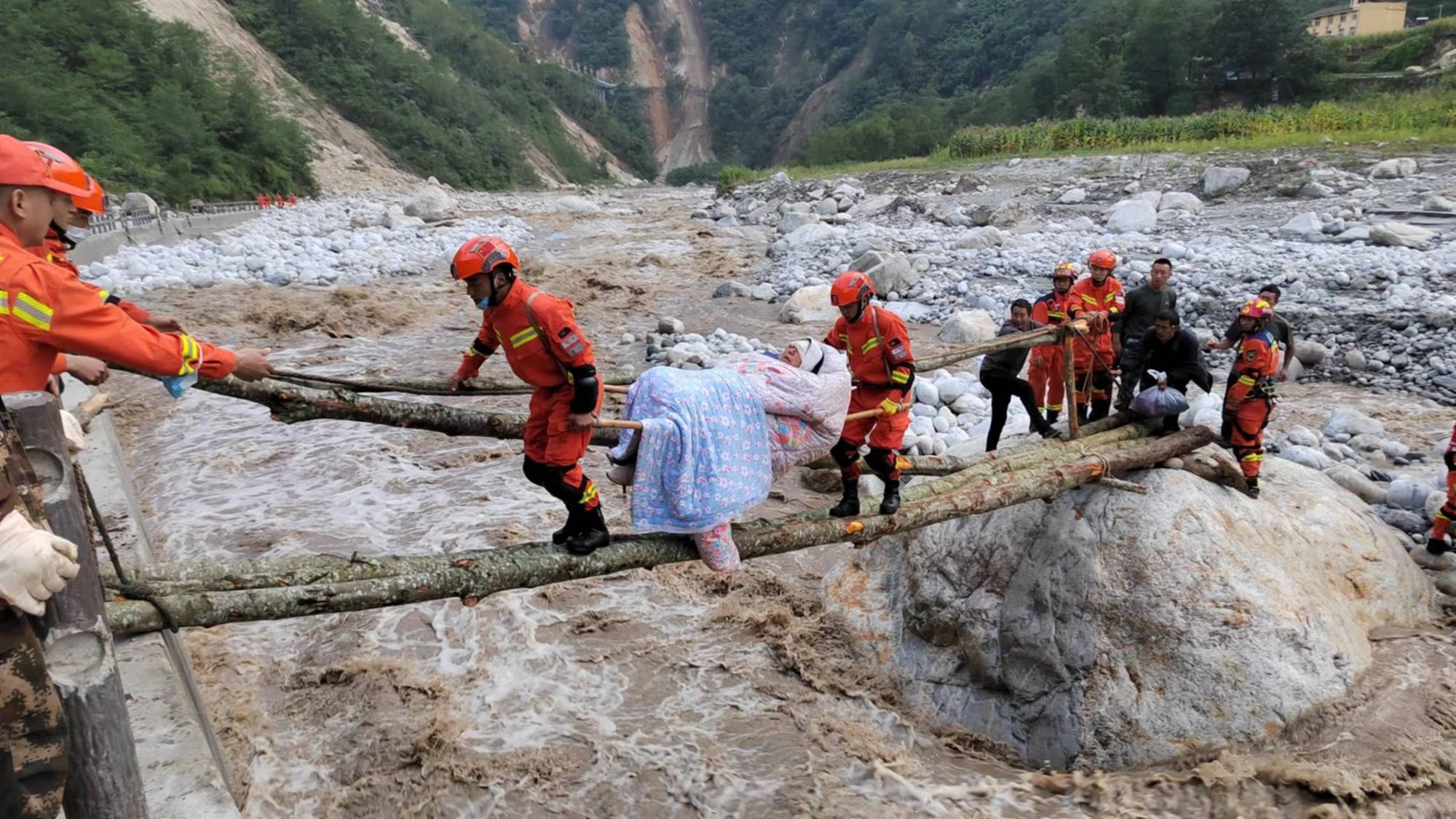
Chengdu, China- A 6.8-magnitude earthquake that hit Luding County in southwest China’s Sichuan Province on Monday has killed 46 people.
According to the China Earthquake Networks Center, the epicentre was monitored at 29.59 degrees north latitude and 102.08 degrees east longitude, at a depth of 16km.
State media also reported that several aftershocks were recorded in nearby areas. A smaller 4.6-magnitude tremor struck eastern Tibet less than an hour after the initial quake.
As a result, Chinese President Xi Jinping has ordered all-out rescue efforts to minimize casualties.
“(Local authorities should) make saving lives the first priority, go all out to rescue people in disaster-stricken areas and minimize loss of life,” said the President.
Already, emergency funds have jointly been allocated by the Ministry of Finance and the Ministry of Emergency Management.
The funds will be used for emergency rescue and disaster relief efforts, focusing on searching, rescuing and relocating disaster-stricken people, detecting secondary disasters, and repairing damaged houses, among other tasks.
Relief supplies, including some 3 000 tents and 10 000 folding beds, have been allocated to Luding County, where the epicentre was located.
Seven people were killed in Luding County, Ganzi Tibetan Autonomous Prefecture, and the other 14 were killed in Shimian County, Ya’an City.
The earthquake on Monday is the latest in a series of troubles to afflict Sichuan Province in the past month. Local authorities locked down the province’s huge capital, Chengdu, with 21 million people, last Thursday, in an attempt to control the COVID-19 outbreak.
From late June to late August the province also endured its worst heat wave on record, and the usual summer rains failed to arrive. A severe drought not only parched farms but left so little water in rivers such that the province’s huge hydroelectric dams could not generate nearly as much electricity as usual.
That led to the closure of many factories for nearly two weeks in late August, as well as blackouts that left residents without electricity for air conditioning as temperatures repeatedly soared past 100 degrees. Some rain finally reached the province last week, but not enough to end the drought.
Moreso, satellite maps indicate a topography somewhat similar to the area of northern Sichuan Province where a much more powerful earthquake struck less than three months before the 2008 Summer Olympics in Beijing. The earlier earthquake, with a magnitude of 7.9, killed at least 69 000 people, including thousands of children who died when their schools collapsed.
Follow Canada News Media
Get the day's top Canadian stories and our two daily 60-second news videos wherever you scroll.
X Threads Facebook Instagram LinkedIn TikTok YouTube Pinterest Reddit Substack Flipboard Newsletter RSS