





Advertisement
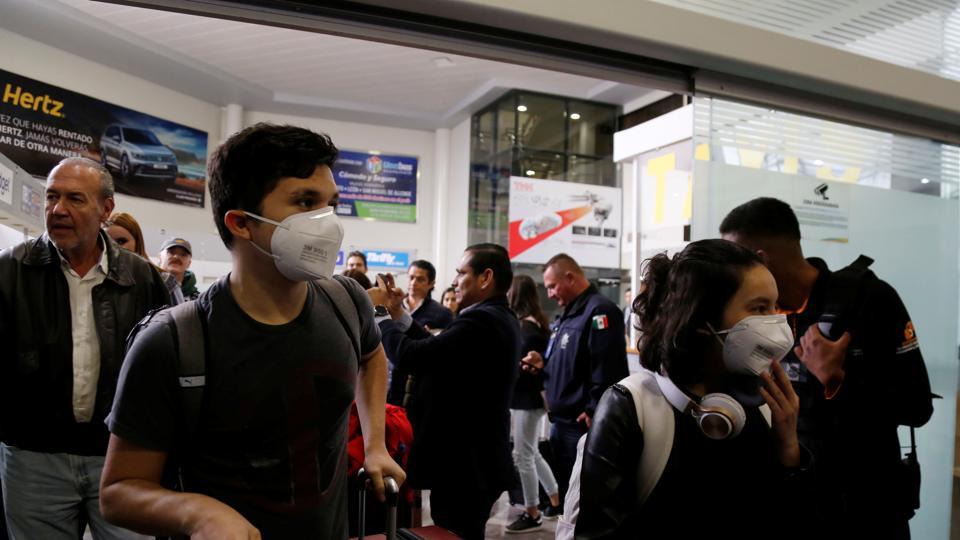
The growing fear of the novel corona virus (2019-nCoV), which infected at least 12,000 people and killed around 305 within a month, has resulted in China blocking entire provinces and the U.S. and Australia’s entry of foreigners who recently traveled to China are temporarily prohibited.
Even asymptomatic people can spread the infection to other regions and countries, making it necessary to quarantine Indian students who have been evacuated from China for at least two weeks until they are free of the infection.
According to the World Health Organization (WHO), however, corona viruses do not survive long on items such as packages and letters. In this way, companies can be remotely controlled from home or in the office outside of China.
Advertisement
According to a new model study published on Friday in The Lancet, the numbers are far above the official figures. By January 25, an estimated 75,800 people were affected by coronavirus (2019-nCoV) in Wuhan. Local outbreaks in Guangzhou, Beijing, Shanghai and Shenzhen, which together account for more than half of all outbound international air travel from China, await in the city before the closure , on what is happening. The study used mathematical models based on officially reported cases. Domestic and international travel (train, air, road) and the assumption that the 2019-nCoV serial interval estimate (time to other people’s infection) is identical to severe acute respiratory syndrome (Sars-CoV), which is also a type of coronavirus.
“If the transferability of 2019-nCoV is similar nationally and in terms of time, it is possible that epidemics will already occur in several large Chinese cities with a delay of one to two weeks after the Wuhan outbreak. Large overseas cities with close traffic links to China could potentially become epicentres for outbreaks as pre-symptomatic cases spread significantly, ”said lead author Professor Joseph Wu of the University of Hong Kong.
In the past, the two other novel corona viruses that have emerged as global health threats since 2002 have not affected India despite the outbreaks in neighboring countries. The Sars-CoV spread to 37 countries and caused more than 8,000 infections and 800 deaths in 2002, primarily in Southeast Asia, while the coronavirus (Mers-CoV; in 2012) spread to 27 countries and 2,494 people in the Middle East infected and caused 858 deaths. India remained intact. Like 2019-nCoV, both viruses cause fever and moderate to severe respiratory problems that can lead to pneumonia.
“Both Sars-CoV and Mers-CoV have little potential for permanent transmission in the community. Outbreaks can die if they are treated successfully. However, coronaviruses can also trigger an excessive number of foci of infection. This allows infected people to be quarantined for two weeks until they are free of infection, which is non-negotiable, ”said a health official who refused to be named.
Coronavirus (2019-nCoV): what to expect when symptoms start?
Common symptoms: fever (98% of patients), cough (75%), myalgia or fatigue (44%) and others
Day 0: onset of symptoms
Day 7: hospital stay
Day 8: shortness of breath,
Day 9: Acute respiratory distress syndrome
Day 10-11: Admission to the intensive care unit
Advertisement


