



But everything changed for Fischer that March. He felt the pandemic personally — his wife was one of the first people in Louisville diagnosed with covid-19 and was hospitalized before recovering. That same month, the city’s police, as part of a drug probe, burst into 26-year-old Breonna Taylor’s apartment after midnight, believing that a person under investigation was having packages shipped to her home. Not knowing who was entering, Taylor’s boyfriend fired a shot and hit one of the officers, leading the officers to fire back, killing Taylor, who was not under investigation.
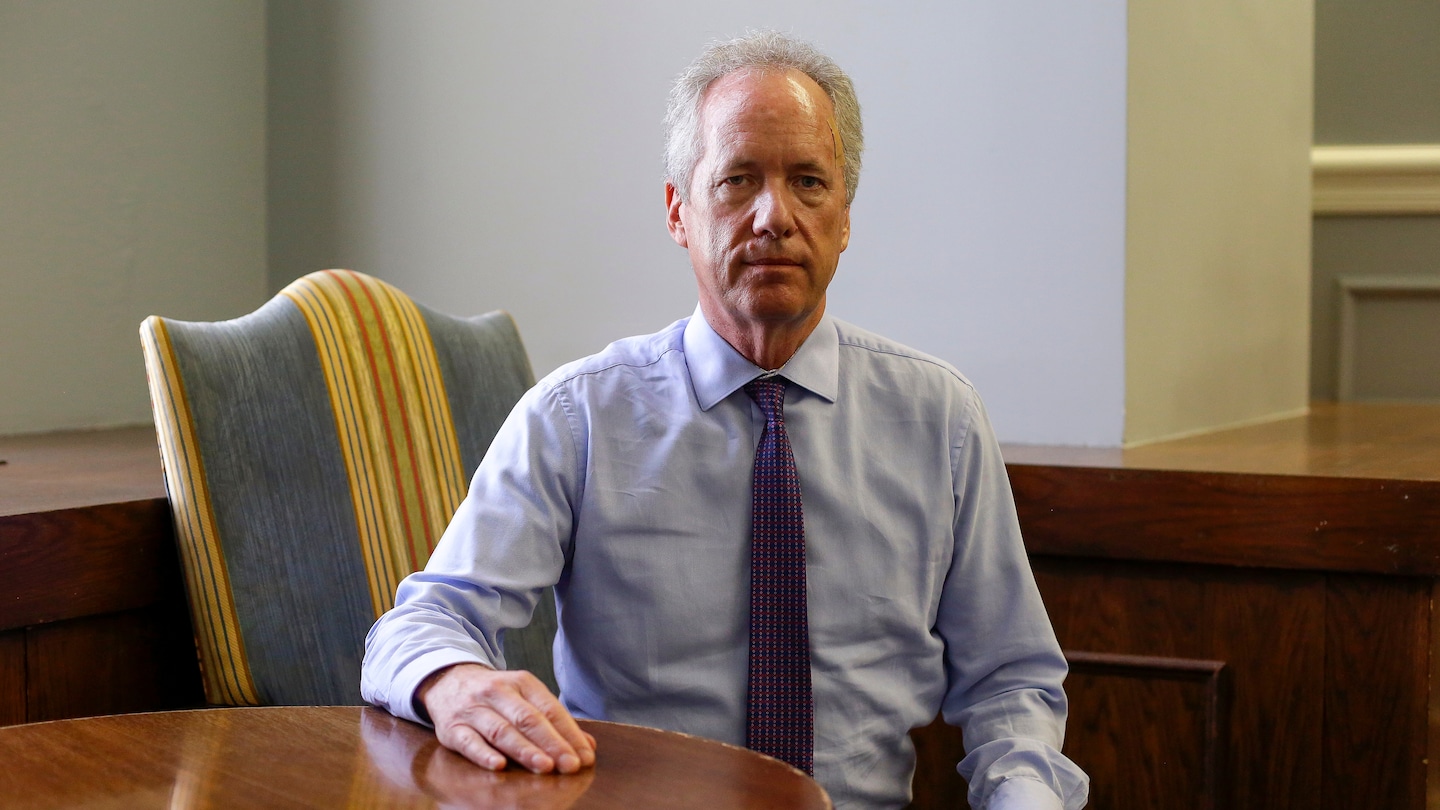
“It was unusual in that it was a female involved,” Fischer told me during an interview in his office last week, describing his initial reaction when the police chief told him of the killing that would come to define his tenure.
Louisville activists led protests of Taylor’s killing, and those demonstrations grew dramatically after George Floyd’s murder with residents joining a national and international movement condemning police violence and systemic racism.
Follow Perry Bacon Jr.‘s opinions
Follow“What I saw from that was a justified response from our citizens toward general injustice and specific issues that were happening in our time, the time of 2020, that brought all of this to a boil,“ Fischer said. “For us then, it’s like ‘Okay, how do you manage through what really is an unprecedented collision of events?’ ”
A community united — in opposition to the mayor
All of this created deep dissatisfaction with Fischer. Police and many Republicans in the city said the mayor was being too lenient on protesters and creating a climate of lawlessness. Business leaders said the protests were keeping people from going downtown and hurting the city’s economy, already reeling from covid-19. Protesters said that Fischer had condoned a culture of overly aggressive policing. Black leaders, including some who had previously aligned with Fischer, said that he had long ignored racial disparities in the city. They all agreed that Fischer was not leading the city effectively at a tense time. In a 22-to-4 vote, the city’s heavily Democratic council approved a no-confidence resolution blasting him.
“What Louisville was hungry for was leadership that went out and was with the community and acknowledged the pain and acknowledged the problem not in an intellectual way but in an emotional way,” said Cassie Chambers Armstrong, who joined the City Council this year.
Here, many of the problems of the past two years have been cast as shortcomings of Fischer and his leadership style. But because of his post with the national mayors group, Fischer knew his struggles were not unique. Activists in New York City were furious that Mayor Bill de Blasio, who had won his initial campaign by pleading to rein in police, did little as the cops at times roughed up protesters. Atlanta’s Mayor Keisha Lance Bottoms, considered a rising star in Democratic politics, opted not to run for a second term this year amid tensions between her and the city’s police. Minneapolis’s Jacob Frey did run for reelection, but had to overcome an aggressive effort from fellow Democrats to oust him. Big cities throughout the country are beset with high homicide rates and reduced downtown activity after the pandemic.
“We had our own support group,” Fischer said, referring to his conversations the past two years with other mayors.
‘Equity’ or the status quo?
Being a mayor has always been challenging, of course. But it’s perhaps more challenging than ever in this era.
The Democratic Party has moved to the left on just about every issue. Most Democratic elected officials (state legislators, members of Congress, etc.) can cheer on the latest progressive slogan without worrying about how to implement it. But the majority (64 of 100) of the nation’s largest cities are run by Democrats. So these mayors are tasked with achieving racial equity, keeping crime rates down while making sure police don’t abuse people, treating the homeless humanely while getting suburbanites to come downtown, and attracting new businesses and residents to their cities without gentrification that displaces those already there. And in red states such as Kentucky, they also face state-level GOP politicians who work to blunt or subvert the mayor’s initiatives.
“So much has been devolved down to them. There is nothing that doesn’t fall on the feet of the mayor,” said Amy Liu, who runs the metropolitan policy program at the Brookings Institution. “They have to try to solve a lot of structural challenges.”
Fischer is a 63-year-old White man, but he was very aware of the history of redlining and other discrimination against Black people in Louisville before Taylor’s death. In 2019, he launched an initiative called “Lean Into Louisville” — a series of events designed to highlight the city’s racial disparities and get White residents in particular invested in addressing them. “I knew almost all of the protesters,” the mayor said, referring to his long-standing relationships with some of the activists who ended up criticizing him.
But actually fixing these issues, at least in the short term, was too much for Fischer — and probably would have been for anyone else, too. The police department in Louisville, like their counterparts in other cities, are effectively their own power center, too aggressive and punitive toward Black people and deeply resistant to scrutiny and accountability. That made a killing like that of Taylor and the resulting friction between the police and the community almost inevitable. The protests brought attention to the racial inequality in virtually every realm of life in Louisville — issues present in cities everywhere and ones that require money and political support to address that are present virtually nowhere.
“Even before George Floyd and Breonna Taylor, ‘equity’ was a huge buzzword for mayors. It was quite clear that the growth in cities was not equally shared,” said Governing Magazine’s Alan Greenblatt. “Did anyone have a good solution? Not that I heard.”
That said, the front-runner to be Louisville’s next mayor is Craig Greenberg, a middle-aged White Democratic businessman who has long been part of the city’s political establishment.
In other words, Louisville is frustrated with Fischer, but may choose a Fischer-like mayor to succeed him. Many other cities are also either sticking with incumbent mayors or settling on establishment replacements. That’s in part due to the lack of other strong candidates — many up-and-coming figures among Louisville Democrats didn’t run because they understand how hard the job actually is.
But there is also a lack of clarity and agreement about what exactly people in Louisville (and other cities) want from their mayor. It is hard to satisfy both the police and activists who are inherently skeptical of them, both advocates of the homeless and people who want downtown cleared of homeless people, both big corporations and people who are wary of big corporations. Our urban status quo isn’t working but that’s in part because there isn’t agreement on how it should change.
“All that being said,” Fischer said, referring to the challenges he and other mayors have faced, “I didn’t lose my daughter. Breonna Taylor should not be dead.”
“Out of this tragedy, we’ve got to make something good happen,” Fischer added. “And that really will be the reckoning question for my time in office … in our city, in our country.”

Follow Canada News Media
Get the day's top Canadian stories and our two daily 60-second news videos wherever you scroll.
X Threads Facebook Instagram LinkedIn TikTok YouTube Pinterest Reddit Substack Flipboard Newsletter RSS