


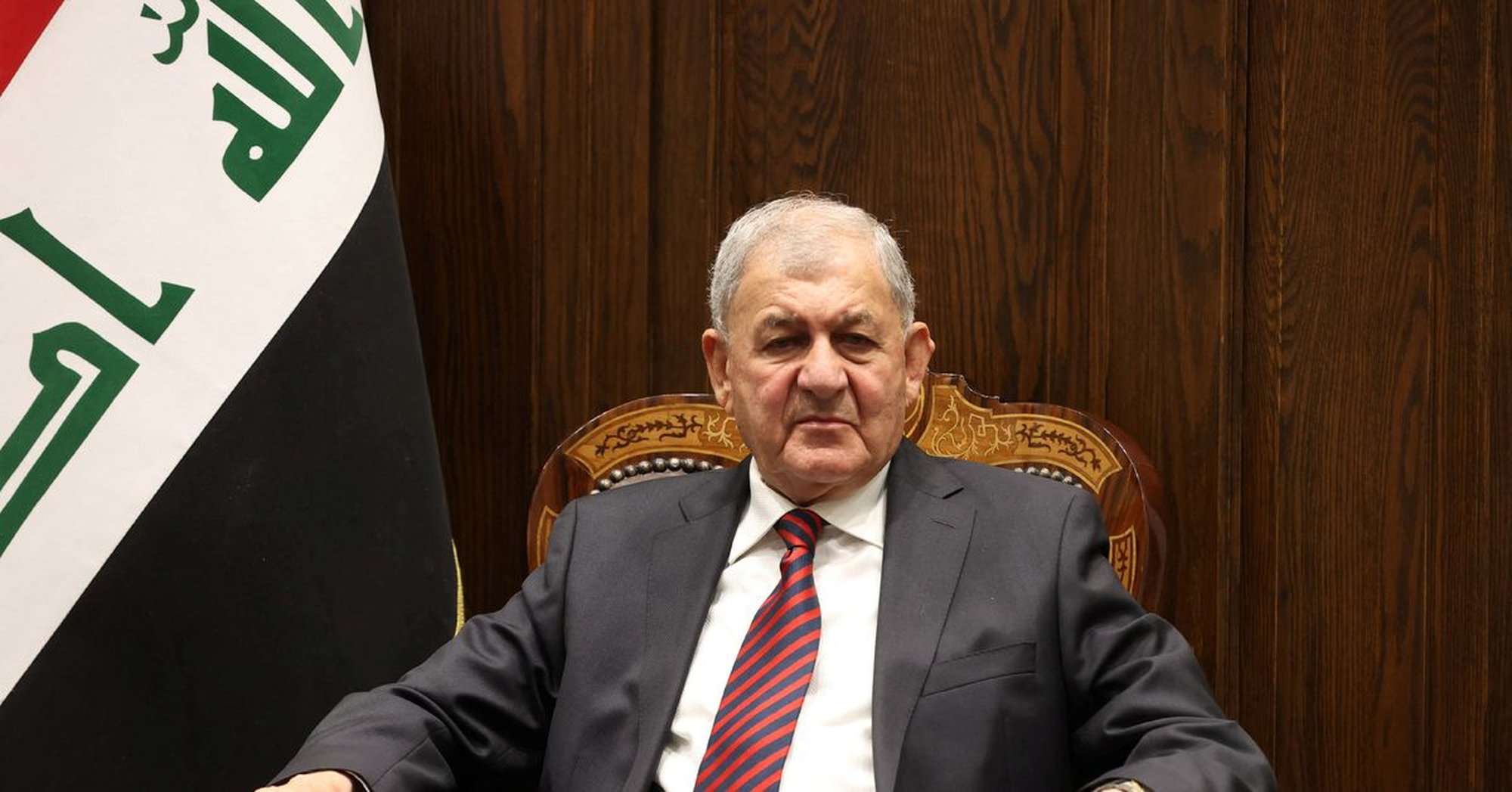
Baghdad, Iraq- Abdul Latif Rashid was on Thursday elected as the country’s new President by the country’s Parliament.
Rashid won 162 out of 269 votes, beating out current President Barham Salim, who only obtained 99 votes.
Members began voting less than an hour after Katyusha rockets targeted the heavily guarded Green Zone, where Parliament is based, and other areas of Baghdad, including near the train station.
While the position of President is largely ceremonial, the move by Parliament was the first step in forming a new government.
After a President is elected, he invites the largest political bloc in Parliament to nominate a Prime Minister, who then proposes a Cabinet that must be approved within 30 days by lawmakers.
A political bloc called the Coordination Framework, which is made up of mostly Iran-backed Shiite parties, is considered the biggest alliance in Parliament and it nominated Prime Minister Mohammed Shia al-Sudani, who served as Human Rights Minister and then Labor Minister as well as Governor of the southern Maysan Province.
The vote on Thursday marks the end of the longest political deadlock Iraq has seen since 2003, the year former leader Saddam Hussein was overthrown by United States forces.
Politicians have struggled to form a government since the elections in October 2021. That contest saw Shia Muslim cleric Moqtada al-Sadr’s party come out victorious, winning more than 70 seats and, with them, considerable influence in creating a government. Al-Sadr’s attempts at forming a ruling coalition, however, foundered amid opposition from rival blocs and months of political paralysis followed.
According to some analysts, Iraq’s political system is designed around sectarian power-sharing, in which the President is a Kurd, the Prime Minister a Shia Muslim and the Speaker of Parliament a Sunni Muslim and because of its reliance on consensus, it leads to constant horse-trading between factions competing for top government jobs and sources of patronage.
“Just because they have managed to bring together Sunni, Shia and Kurdish leaders to form a government (this) doesn’t address the deep political tensions in the country, and it doesn’t address the deep sense of alienation of the Iraqi people from the political elite.
Today is being heralded as a breakthrough for the stalemate, but we are still seeing the same cast of characters dominating the political scene since 2003, who have stifled reform and sanctioned political corruption which harms Iraqis every day,” said Renad Mansour, Iraq initiative director at Chatham House.
Follow Canada News Media
Get the day's top Canadian stories and our two daily 60-second news videos wherever you scroll.
X Threads Facebook Instagram LinkedIn TikTok YouTube Pinterest Reddit Substack Flipboard Newsletter RSS