

The researchers are now working on a first-of-its kind blood test that could diagnose long COVID.

Some people who have been infected with the virus experience long-term effects, ranging from brain fog and fatigue, to respiratory and heart symptoms, to neurological symptoms. Women are more likely than men to have the condition, as are those who were hospitalized with severe COVID-19.
It is estimated 30 to 40 per cent or more of people who get acute COVID infections will have some form of prolonged symptoms lasting weeks and months. For some people, long COVID symptoms are so severe that they can no longer work or resume regular functions of daily life.
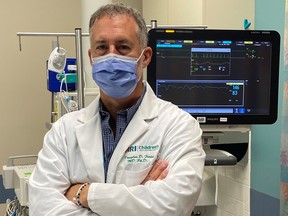
Dr. Douglas Fraser, Lawson Health scientist and critical care physician at London Health Sciences Centre, who is lead researcher of the paper published this past week in Molecular Medicine, cited statistics from the United States showing that an estimated 110,000 people were being diagnosed with long COVID every day and 15 per cent of the workforce was currently off with long COVID.
Fraser said his team’s research was an important step toward better understanding, quickly diagnosing and possibly treating long COVID.
A simple way to diagnose long COVID is crucial to patients, who are sometimes treated as if their symptoms are psychosomatic, he said. For doctors, he said, it can also be difficult to know how to understand a patient’s symptoms because symptoms can be so diffuse, often leading to multiple tests.
Fraser and his team’s work focused on the blood vessels, which he calls the common denominator among organ systems affected in long COVID. Fraser’s team were among the first researchers to demonstrate that the coronavirus causing COVID-19 could directly infect the cells lining the blood vessels, adding to the understanding that COVID-19 is a disease of the blood vessels.
The researchers are now working on a first-of-its kind blood test that could diagnose long COVID.
Fraser said the test, using a drop of blood, could come up with a diagnosis in 10 to 20 minutes. He said the diagnosis could tell patients whether they have had COVID-19 as well as whether they have long COVID.
Fraser said patients should know that damage to their blood vessels would improve with time. He also said knowing there was a potential diagnostic tool should give them hope.
Dr. Michael Nicholson, associate scientist at Lawton, a respirologist at St. Joseph’s and associate professor at Schulich Medicine and Dentistry, said the research advanced the understanding of long COVID with the potential to improve diagnosis and patient care.
“Long COVID is a relatively new condition and we have much to learn about it.”
The research was supported by funding from the London Health Sciences Foundation, the London Community Foundation and provincial innovation funding.