


Sault Area Hospital continues to see a “steady” number of children with respiratory infections, and “fortunately” the region’s principal health-care facility has not exceeded its bed or staffing numbers – yet, says the facility’s chief of pediatric and neonatal services.
“So, we predict the number of emergency room visits and hospital admissions will increase,” he told the Sault Star Thursday.
Algoma Public Health reported Nov. 3 the first two confirmed cases of influenza A this respiratory season in the Sault Ste. Marie area.
“Our experience so far suggests that patients are staying in the hospital longer to recover from respiratory infections, especially when they have multiple viruses at the same time,” DellaVedova said.
Ontario children’s hospitals are especially reporting longer-than-usual wait times as providers see rising rates of respiratory illness amid dropped public health measures and ongoing worker shortages, and experts say the situation could worsen as cold and flu season ramps up.
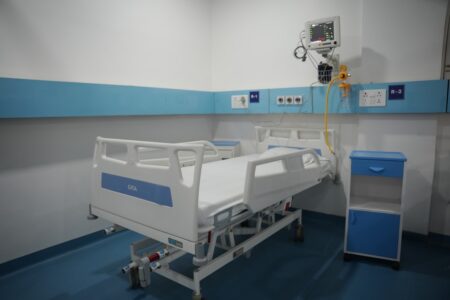
Currently, SAH still has open beds to care for infants, children and adolescents, whether for respiratory infections or other reasons.
“To my knowledge, there are no children in our ICU, which is designed for adults,” said DellaVedova, but added the province has directed the hospital to keep critical adolescents, aged 14-17, there rather than transferring them to a children’s hospital.
“Given that all pediatric ICU beds in the province are currently full, it is not clear what would happen day-to-day if we had a critically ill child under 14 years who needed an ICU bed,” DellaVedova said.
For example, a perfect storm of illness – COVID-19, the flu and a respiratory syncytial virus (RSV) to which children are especially vulnerable – has put more strain on London, Ont.’s already-burdened hospitals and is only likely to get worse, officials warn.
“We anticipate significant ongoing pressures in the coming weeks and support the government’s recommendation for individuals to mask in public places, as we know masking is one of the most effective tools for preventing disease transmission,” London Health Sciences Centre said in a statement on Wednesday.
LHSC said occupancy at Children’s Hospital is at 115 per cent, the highest it’s ever been. Non-urgent patients in the Children’s Hospital emergency room can expect average wait times of six to eight hours, mainly due to the large volume of patients coming in with RSV and influenza symptoms.
DellaVedova said he is aware of “some” Sault Ste. Marie parents travelling to nearby Michigan to acquire children’s acetaminophen and ibuprofen.
“In that respect, we have a slight advantage over other communities in the province,” he added. “Keep in mind Sault Ste. Marie, Mich., is also a small community, and this option is only available to families with the means.”
Drug shortages in Canada started as early as last spring, but the supply crunch has been exacerbated in recent months by soaring demand amid the spread of influenza, RSV and COVID-19. Lingering pandemic supply chain snags have also contributed to the problem. Panic buying as news of the lack of availability for the medicines spread compounded the issue
DellaVedova said he is unable to comment on SAH’s overall supply of children’s fever medications.
“But they have always been available when I have called for them,” he added.
The increase in the number of children ending up at hospitals’ emergency rooms prompted Ontario’s chief medical officer of health, Kieran Moore, on Monday, to ask Ontarians to wear masks in all indoor settings to help overwhelmed children’s hospitals and reduce the spread of respiratory illnesses.
If the situation gets worse, Moore said he would consider mandating masks, especially in day-care centres. Most of the sick children in hospital are aged four and under. Moore urged Ontario residents to help protect children by wearing a mask, getting flu and COVID-19 vaccinations, staying home when sick and washing their hands.
“Doctors and nurses are very empathetic to pandemic fatigue … we share it, too,” he added. “However, we also spend our days face-to-face with children who are struggling to breathe. By comparison, masking seems like a minor inconvenience.”
Masking for a short period of time could help flatten the curve of not just COVID but influenza and RSV, DellaVedova said.
“This could prevent a dangerous accumulation of cases in a short time span,” he added. “It is already too late for southern Ontario, but not too late for us.
“Keep in mind there is another other tool to prevent each of COVID-19 and influenza, which is a safe, effective, free and publicly-available vaccine.”