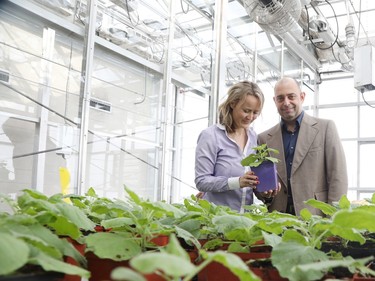



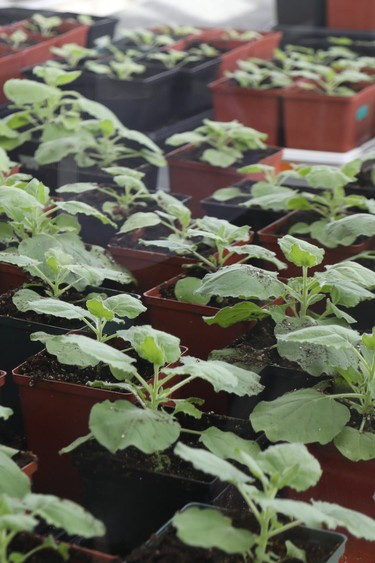
Inside a greenhouse perched atop a University of Ottawa building, there are hundreds of plants that are part of a vaccine revolution offering hope for an end to the pandemic.
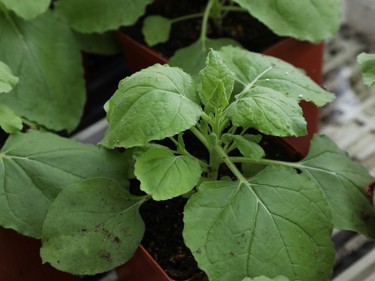
The Nicotiana benthamiana plants growing in the university greenhouse — weeds in their native Australia — work as a vaccine bio-factory to produce viral proteins that act as antigens to create an immune response against COVID-19.
The nasal vaccine would act as a booster for those who have already received an mRNA COVID vaccine or have been infected, said Langlois, a professor in the faculty of medicine at the university and executive director of the Coronavirus Variants Rapid Response Network.
Eventually, studies in humans are needed to further develop a potential plant-based mucosal vaccine, which would require additional funding, said Langlois.
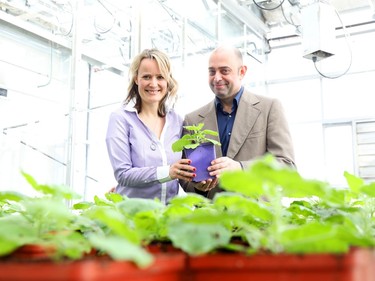
Scientists at McMaster University in Hamilton are further along in developing a mucosal vaccine for COVID-19.
The McMaster mucosal vaccine has demonstrated broad, long-lasting protection against the original strain of SARS-CoV-2 as well as variants of concern. It is currently being tested in healthy adults who already received two doses of a COVID mRNA vaccine.
Mucosal vaccines — which work by blocking infection where the virus enters the body in areas such as the mouth and nose — have the potential to prevent infections and transmission of COVID-19. That is something existing intramuscular vaccines, which produce neutralizing antibodies that circulate throughout the body, cannot do very well. Mucosal vaccines are typically sprayed in the nostrils or the mouth while traditional vaccines are injected.
Current COVID-19 vaccines administered via needles, produced within months of pandemic declarations, were approved for emergency use based on proof that they could prevent severe disease and deaths, which they did. They did not entirely stop infection or transmission.
With COVID-19 transmission continuing at high levels, Deonandan said the possibilities of mucosal vaccines are exciting.

In the best-case scenario, they could end the pandemic, he said. “I think in the end it depends on what they end up looking like. But that is the hope.”
Deonandan sees them as the next generation of COVID-19 vaccines, but notes there has been a lack of enthusiasm by governments and drug companies about underwriting the financial risk, as they did with the first-generation of vaccines.
“There are still very large gaps in knowledge in what makes a good antigen for a mucosal vaccines,” said Langlois. “We are decades behind the standard intramuscular vaccines in terms of our understanding of what makes a good mucosal vaccine.
Mucosal vaccines in general are relatively new and research to make effective vaccines is ongoing, said Langlois. It is important work toward making Canada more self-sufficient when it comes to vaccine development and production, he said.
The goal of Canada becoming less reliant on foreign industry was delivered a blow last month when Medicago, a plant-based COVID-19 vaccine manufacturer, shut down its operations in Quebec after its sole shareholder decided to no longer invest in the company. Medicago’s COVID-19 vaccines had been approved by Health Canada but the World Health Organization initially rejected the vaccine because of its ties to tobacco company Phillip Morris.
MacLean, an assistant professor in the department of biology at the university and the biologist collaborating with Langlois, called it a big loss for Canada in the burgeoning field of biopharming — the use of plants to produce pharmaceuticals.
“Not only are we trying to develop a mucosal vaccine, we are trying to do it in plants,” said MacLean.
There is still work to be done to get plants to produce similar amounts of viral proteins as eggs or animal cells, which are used more commonly in vaccine production, MacLean said. But the advantages of using plants are numerous. Among them, plant-based vaccines are inexpensive and quick to produce and contamination is less likely than with vaccines produced in eggs and animal cells.
“Plants are dead cheap to work with; you need soil, you need a bit of fertilizer, you need sun and water, and that’s it,” said MacLean.