


Happy Tuesday! Send Oscars hot takes to your second favorite tech policy reporter and send news tips to: [email protected].
Below: A consumer advocacy group urges enforcement against Twitter, and a new filing claims social media executives were aware of their platforms’ potential harms to children. First:
The tech sector’s political leanings have emerged as a flash point in the debate over the decision to rescue Silicon Valley Bank from collapse, with Republicans accusing the Biden administration of “bailing out” a “woke” institution with ties to liberal policy initiatives.
Federal regulators announced Sunday that depositors at the bank — known for serving venture capitalists and start-ups from the technology industry — would still have access to their funds after its crash triggered fears of a broader economic downturn, as my colleagues reported.
President Biden said in a televised address early Monday that the actions by financial regulators mean that small businesses “can breathe easier knowing they’ll be able to pay their workers and pay their bills, and their hard-working employees can breathe easier as well.”
But the decision to aid one of Silicon Valley’s biggest banks is drawing blowback from conservatives, who have long accused Democrats of being too cozy with the tech sector, even as party leaders have pushed for tighter regulation.
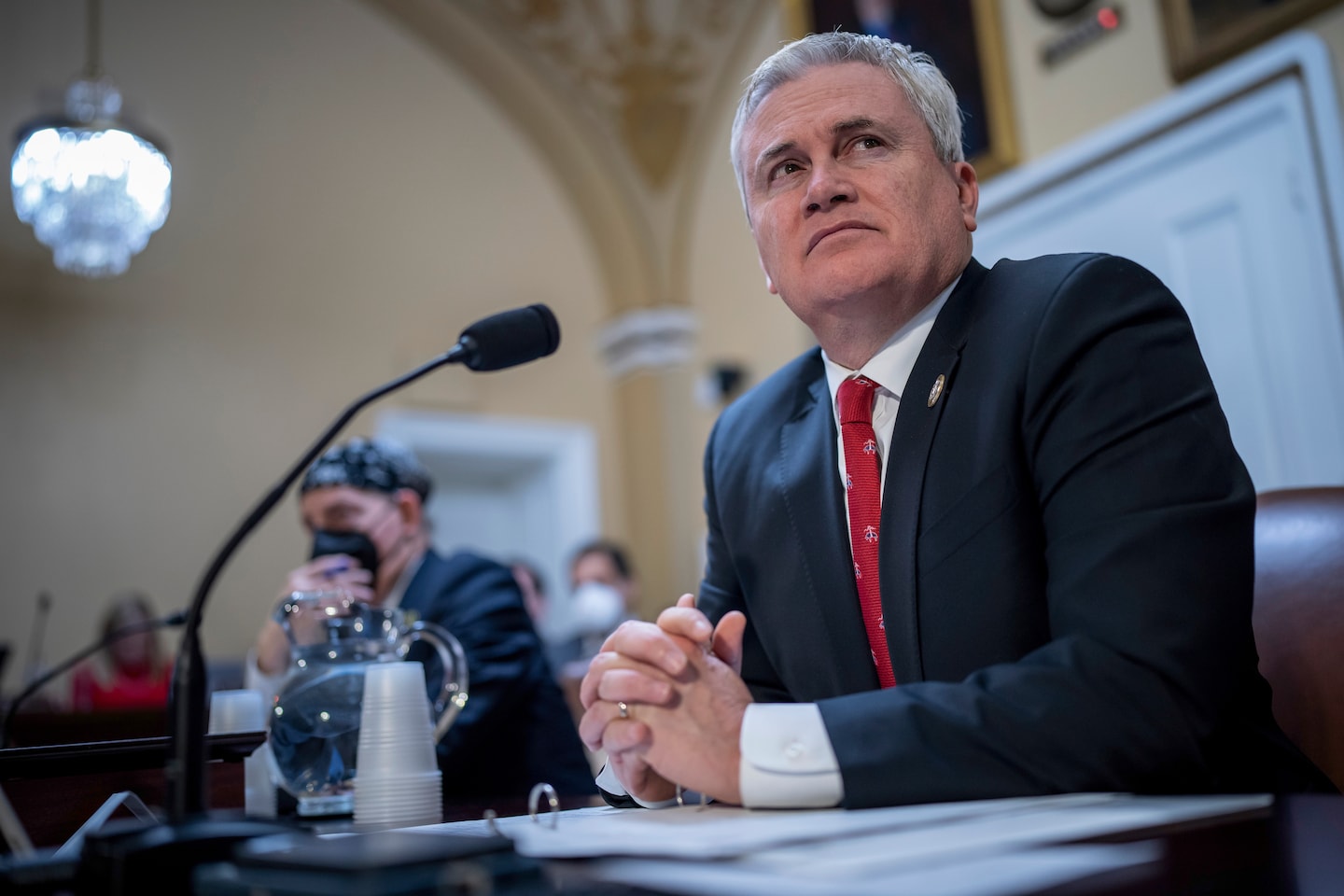
House Oversight Committee Chair James Comer (R-Ky.) criticized the move in an interview with Fox News on Sunday, calling Silicon Valley Bank “one of the most woke banks” for embracing considering social, environmental and corporate governance factors in investing — an approach that has become a common target of conservative ire.
Sen. Roger Marshall (R-Kan.) suggested that federal regulators were seeking to “bail out Silicon Valley billionaires.” Rep. Virginia Foxx (R-N.C.) called it a “woke Silicon Valley bailout.” Rep. Darrell Issa (R-Calif.) tweeted that “Biden is bailing out one of Big Tech’s favorite banks.”
Rep. Matt Gaetz (R-Fla.) took the critique a step further, suggesting in a tweet that the move served to benefit Democratic political donors in Silicon Valley.
The Treasury Department referred a request for comment to a joint interagency statement saying the response “will ensure that the U.S. banking system continues to perform its vital roles of protecting deposits and providing access to credit to households and businesses.”
The rebukes highlight how appearing to lock arms with Silicon Valley can be politically hazardous in Washington, even during significant economic upheaval.
And it follows a broader trend of Republicans attacking Democrats over allegations they are catering to the whims of leaders in Silicon Valley, and vice versa.
Comer’s remarks drew backlash online after it was revealed that an investment firm led by Peter Thiel, PayPal co-founder and a major Republican donor, withdrew millions of dollars from Silicon Valley Bank as it spiraled downward last week, according to Bloomberg News.
Twitter chief Elon Musk, another prominent GOP ally in the tech sector, separately suggested last week he was “open to the idea” of buying the bank and folding it into Twitter.
Other GOP officials, meanwhile, have voiced support for the Biden administration’s response.
After federal regulators unveiled their plan on Sunday, Sen. Mitt Romney (R-Utah) tweeted, “Right decision.” House Financial Services Committee Chairman Patrick McHenry (R-N.C.) said in a statement that he has “confidence in our financial regulators and the protections already in place to ensure the safety and soundness of our financial system.”
Biden and other Democratic leaders have responded to the bank’s collapse by renewing calls for more federal guardrails on the financial sector.
The president tweeted Monday that he plans to ask “Congress and banking regulators to strengthen the rules for banks to make it less likely that this kind of bank failure happens again.”
And they have taken aim at Republican leaders for leading efforts to loosen banking regulations during the Trump administration, suggesting they could have helped avert a financial crisis.
“During the Obama-Biden Administration, we placed tough requirements on banks to make sure the crisis we saw in 2008 wouldn’t happen again,” Biden said in a post. “Unfortunately, my predecessor rolled some of those back.”
Sen. Elizabeth Warren (D-Mass.), an outspoken critic of the deregulatory push under Trump, wrote in a New York Times op-ed on Monday that the bank’s CEO Greg Becker “was one of the many high-powered executives who lobbied Congress to weaken the law.”
Consumer advocacy group Public Citizen wrote a letter to FTC Chair Lina Khan and Attorney General Merrick Garland urging enforcement action against Twitter for alleged violations of its 2011 privacy and security consent decree.
Public Citizen asked if Twitter filed a sworn compliance notice with the FTC after Elon Musk acquired the platform in October, as well as whether the Justice Department and FTC believe Twitter still maintains a comprehensive privacy and security framework after a mass layoff of data governance and security staff.
The FTC for months has been investigating Twitter as part of a broader probe into the company’s privacy practices, following a whistleblower complaint accusing the company of violating a 2011 settlement and letting several security processes lapse.
More recently, the investigation has expanded following Musk’s takeover as the layoffs of key staff may affect the company’s ability to uphold privacy requirements for the FTC. Following the departure of a key Twitter moderation and safety executive in November, the FTC said it was “tracking recent developments at Twitter with deep concern.”
FTC spokesperson Doug Farrar said they received the letter but declined additional comment. The Justice Department did not return a request for comment.
New claims unveiled in a court filing suggest employees at Meta and ByteDance were warned of their platforms’ harms to children and teenagers but disregarded or undermined them, including Meta CEO Mark Zuckerberg, Bloomberg News’s Joel Rosenblatt reports.
The claims were made previously but were redacted from public view, Rosenblatt writes. The filing is one of many in Oakland, Calif., that alleges major social media platforms such as Instagram, TikTok, Snapchat and YouTube contributed to depression, anxiety and sleeping disorders among young people.
The new filing shows that TikTok parent ByteDance was aware that its viral challenges were more likely to be tried by young people because of their inability to fully form and process risks. Similarly, the filing shows Zuckerberg was warned of these issues on Facebook and Instagram, and that the problems “will follow us into the Metaverse,” the report says.
The unsealed filing also claims that Meta defunded its mental health team instead of investing further resources into addressing children’s use of Instagram.
Meta in the report said the details surrounding the investments into children’s mental health are false, while representatives from Snap and TikTok did not return a request for comment.
The collapse of Signature Bank, which is based in New York, is poised to turn regulators’ heads, our colleagues Pranshu Verma and Jacob Bogage report.
Signature Bank’s collapse, due in part to the collapse of Silicon Valley Bank last week, is a symbolic blow to the digital assets industry because the institution helped provide legitimacy to the cryptocurrency world, experts told Pranshu and Jacob.
“It’s very dark days at present for crypto,” said Yesha Yadav, who studies digital financial regulation and is an associate dean at Vanderbilt University Law School in the report.
The Federal Deposit Insurance Corporation intervened to protect the bank’s clients’ assets, though the impact on other operations in the bank remains unclear due to Signature’s large presence in processing cryptocurrency transactions.
The debate continues over whether the Silicon Valley Bank rescue was a bailout. Our colleague Jeff Stein:
New York Times financial columnist Andrew Ross Sorkin:
It is a bailout. Not like 2008. But it is a bailout of the venture capital community + their portfolio companies (their investments). That’s the depositor base of SVB. It is the right thing to do in the moment, but there will be ramifications + new regs. VC’s should say thank you
— Andrew Ross Sorkin (@andrewrsorkin) March 13, 2023
Bill Ackman, CEO of Pershing Square Capital Management:
This was not a bailout. During the GFC, the gov’t injected taxpayer money in the form of preferred stock into banks. Bondholders were protected and shareholders were diluted to varying degrees. Taxpayer money was put at great risk. Many people who screwed up suffered minimal to… https://t.co/mjwcnVRV9X
— Bill Ackman (@BillAckman) March 13, 2023
- Julia Pollak, chief economist at ZipRecruiter, and Nicholas Bloom, professor of economics at Stanford University, join Washington Post Live at 11 a.m. for The Post’s “Tech at Work” series to discuss how employees and companies can thrive in hybrid workplaces.
- Matthew Gentzkow, Landau Professor of Technology and the Economy at Stanford University, speaks about digital addiction at the Stanford Cyber Policy Center at 3 p.m.
- The Wall Street Journal commences its CIO Network Summit in Palo Alto, Calif., beginning at 11 a.m.
That’s all for today — thank you so much for joining us! Make sure to tell others to subscribe to The Technology202 here. Get in touch with tips, feedback or greetings on Twitter or email.