
:format(webp)/https://www.therecord.com/content/dam/therecord/news/waterloo-region/2023/03/16/waterloo-region-economy-expected-to-avoid-recession-outpace-provincial-gdp/dsc_7038.jpg)
KITCHENER — Waterloo Region’s economy will avoid a recession in 2023 and outpace provincial economic activity for the year, according to a new report.
The Conference Board of Canada, an Ottawa-based think-tank, released its annual economic projections for the region this week, predicting a slowdown in the economy mostly due to national challenges including rising interest rates, a cooling housing market and the threat of a Canadian recession.
But while the region’s output is slowing, it is still expected to outpace the provincial economy.
After a red-hot 2021 and 2022, the region’s gross domestic product growth is expected to slow to 1.5 per cent in 2023, jumping back up to 3.5 per cent in 2024 and 2.4 per cent in 2025.
That’s above the projections for Ontario, with the provincial government forecasting growth around 0.5 per cent in 2023, 1.6 per cent in 2024 and 2.1 per cent in 2025.
Over the last two decades, the region has been one of the province’s economic engines, with its economy expanding faster than the province’s in 18 of the last 21 years.
“It isn’t a surprise to me that Kitchener and surrounding area is expected to outpace the provincial economy throughout our forecast,” said Robin Wiebe, an economist with the conference board who is originally from Kitchener. “It is a vibrant community with an economy with multiple sectors, and it has a history — at least over the last 21 years — of outperforming the province.”
The regional government also has a favourable projection for the area, with spokesperson Scott Cressman noting the low industrial vacancy rate, steady construction activity, and ability to draw workforce talent as reasons for optimism.
“The Region of Waterloo’s diversified economy has allowed for ongoing growth in the Waterloo Region, enabling us to be fairly optimistic about the projection,” said Cressman.
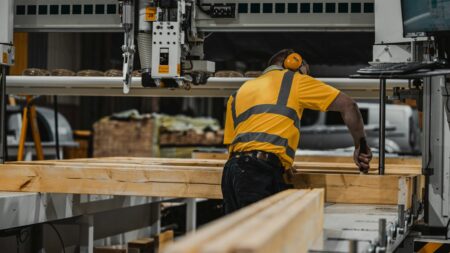
Manufacturing, which makes up 18 per cent of the region’s economy, is expected to return to pre-pandemic levels by 2024.
And while tech layoffs may temporarily hinder the region’s tech sector, continued unfilled job openings should mean local laid-off employees can quickly find new work.
“I think what this reporting is highlighting is the importance of our diverse economy,” said Art Sinclair, vice-president of the Greater Kitchener Waterloo Chamber of Commerce.
“After the early impact of the pandemic, what we’re seeing is we’re moving back to original pre-pandemic conditions, where we were a consistent economic driver of the province.”
Despite a potential slowdown in the year ahead, Sinclair said a top concern for local employers remains finding workers.
The region’s unemployment rate stood at 5.5 per cent in 2022, down considerably from 9.6 per cent in 2020 and 6.5 per cent in 2021.
It is expected to reach about 5.8 per cent in 2023.
But the report highlights other possible headwinds that could limit the projected growth for the region.
Real estate prices are forecast to continue dropping in 2023 after the frenzy between 2020 and 2022.
According to new monthly statistics from the Waterloo Region Association of Realtors, the average price for all property types in the region is to $758,698. That’s down about 25 per cent from the February 2022 peak of $1,012,930.
“That could be made worse if there is a change in direction with Toronto companies and their work-from-home models,” said Wiebe. “If there is a mass return to the office in Toronto, that could put an end to the large amounts of people fleeing the city, and cause prices to drop even further.”
The region also continues to take in a large share of new immigrants, he said, expected to fuel the region’s growth over the next three years. He expects the population will grow by 2.4 per cent in 2023, followed by 1.8 per cent in 2024 and 1.7 per cent in 2025.
“I think the one area for concern for the region is that it likely can’t keep growing forever without having some hiccups,” said Wiebe.
“They likely won’t be able to build housing quick enough to meet the population demands, and there’s also the impact on existing infrastructure and services from these increased numbers.”
There’s also one other major consideration that could upend all future regional projections.
If the country moves into a full-blown recession, he said, the region will not be immune, and the conversation could soon turn from one of optimism to one of desperation.
Key Waterloo Region economic projections:
- The population will grow by 2.4 per cent in 2023, 1.8 per cent in 2024 and 1.7 per cent in 2025.
- The local GDP grew by a 21-year high of 5.1 per cent in 2021 and expanded a further four per cent in 2022.
- Forecasts indicate local GDP growth of 1.5 per cent in 2023, 3.5 per cent in 2024 and 2.4 per cent in 2025.
- The unemployment rate will increase to 5.8 per cent in 2023 from 5.5 per cent in 2022. Both are down considerably from 9.6 per cent in 2020 and 6.5 per cent in 2021.
- For all of 2022, employment rose by 10,700 jobs — an increase of 3.3 per cent — to a record 332,140. This followed a 2021 increase of 15,250 jobs, or five per cent.
- Overall employment is expected to increase by one per cent in 2023, led by gains of 4,250 jobs in finance, insurance, and real estate; and 3,300 jobs in manufacturing.