

For Ottawa distilleries and breweries, April 1 each year brings, rather than jokes or pranks, increases in the federal excise duty they must pay. This year, the especially steep hike is no laughing matter.
The result, Ottawa distilleries and breweries say, will be more expensive alcoholic beverages for consumers, including restaurants, bars and the general public, as manufacturers who are still coping with pandemic-induced pressures, are forced to recoup the latest additional expenses.
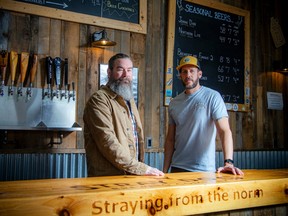
“It’s pretty much a foregone conclusion that prices across the board have to go up. They have to,” says Marc Plante, a co-owner of Stray Dog Brewing Company in Orléans. “It’s not going to be, ‘Boom! Here comes the increase,’ and everyone’s going to see it. It will be slow. It will be subtle.”
Still, Plante says the beers his micro-brewery makes will be more expensive “eventually,” although he can’t when the hike will happen or how big it will be. Stray Dog, which launched in 2017, has held its prices stable for several years, absorbing increased expenses and even debts incurred during the pandemic, Plante says.
He compares his company’s efforts to cope with COVID-19 to “a death by a thousand cuts.”
“Unfortunately, there’s only so much that small businesses like mine can absorb, and so we have to start passing some of those costs down to the consumers,” he says.
Plante says he feels sorry for consumers. “The way inflation is right now, consumers are the ones getting the hits the hardest,” he says. Calling beer “one of the few pleasures in life,” and adds: “When you start pricing that out of people’s wallets, what do they have left?”
He adds that he feels worse for distilleries, who face a tougher tax regimen than do breweries and wineries.
“I would never get into that business,” he says.
The Ontario Spirits Tax is 61.5 per cent on the cost of the goods. Given that, Adam Brierley, founder of Ogham Craft Spirits in Kanata, says that if he tries to recoup the extra 25 cents of excise duty per bottle imposed this year, he’ll be taxed provincially for that effort and need to raise his prices again to break even.
The increased excise duty hits distillers even as the costs of bottles, labels, grains, botanicals and more are getting more expensive, driving down profit margins, says Brierley, who launched Ogham in late 2021.
He figures that he will maintain the prices of some of his products until the current batch is sold, and then re-assess. The price of upcoming products will increase, he says, giving the example of Ogham’s maple eau de vie, currently priced at $60 but likely to rise by $5 or more due to the excise hike and the increased cost of maple syrup.
Still, he faults the increased excise duty for helping to increase liquor prices and, with them, inflation.
Brierley contends that while excise duty increases are pegged to inflation, he would have liked to have seen the federal government freeze the increase at two per cent, as in recent years.
Greg Lipin, a co-founder of North of 7 Distillery on St. Laurent Boulevard, says Canadian craft distillers as a whole want relief from the federal excise regimen, which applies equally to mega-distilleries and to comparatively much smaller operations such as theirs.
During its decade of being in business, North of 7 has not changed its prices, preferring to absorb tax hikes, Lipin says.
“I haven’t entertained raising the prices of my products. But I will at some point, with these increases,” he says.
Rod Castro, the owner of 10Fourteen and Pubblico Eatery, two Wellington Street West restaurants, said the spike in the excise duty should not be surprising, as it follows on recent reports on the negative impact of alcohol and revised recommendations for alcohol consumption.
Still, he says: “As is usual, the government fails to really show they have a care or have a pulse for small- and medium-sized businesses and burden us as they do the consumer.”