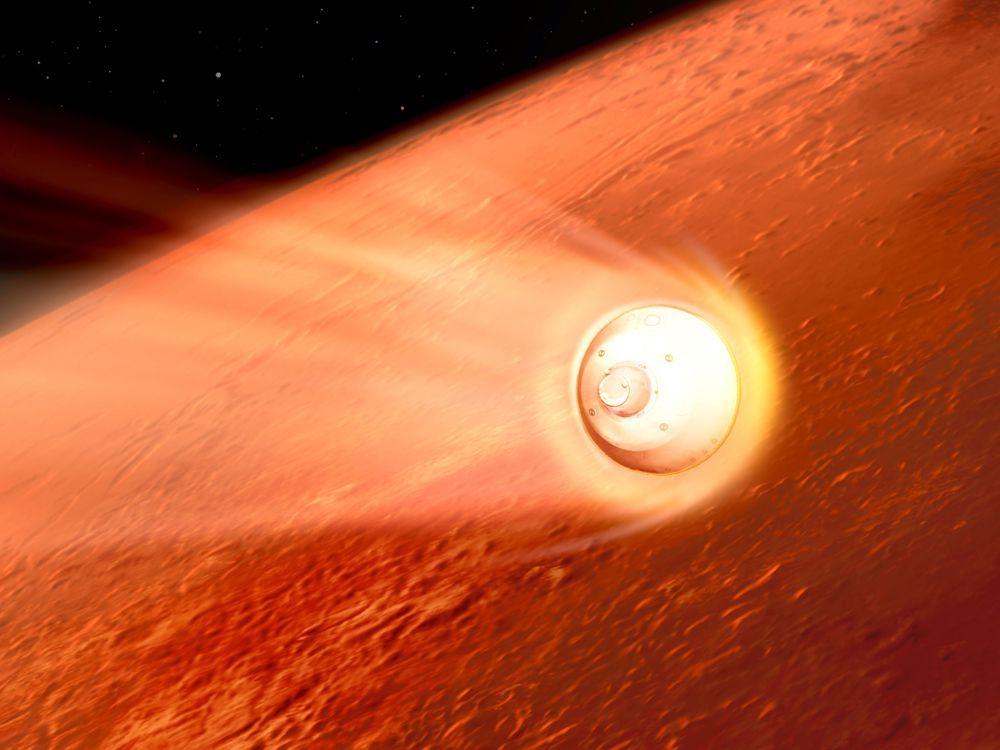
The Mission on Mars for University of Alberta researcher Chris Herd is to help choose 30 rock samples from the Red Planet to bring back to Earth for analysis.
The ‘return sample scientist’ will help decide which rocks can answer the most questions about Mars, not the least of which is whether it has ever been home to living things.
“It’s absolutely phenomenal for me to be involved in such a huge mission, where we get to explore and get information about the rocks and the geology while at the same time sampling and looking forward to bringing those samples back,” said Herd, a professor in the Department of Earth and Atmospheric Sciences, in a recent news release. “That’s what sets this mission apart.”
Perseverance, exploring Mars since 2020, can only bring back samples about the size of a piece of chalk, weighing up to about 10 grams each. The samples are stored airtight on Perseverance to await a future mission to bring them back to Earth.
“There are ways we can analyze a sample that gives us incredible detail about when the rock formed, how it was modified, whether there’s any organic matter that could be evidence of life,” said Herd. “There’s a host of things we can tell from tiny amounts.”
Researchers will compare the samples with some of roughly 175 Martian meteorites discovered on Earth. The sedimentary samples will fill a gap in knowledge about Martian geology since no sedimentary rocks from the Red Planet currently exist here.
But the earliest the samples are expected to arrive on Earth for analysis is 2033.
Before then, a facility will be needed to house the samples safely because there may be potentially harmful Martian contaminants. Earthly contamination of the samples also needs to be prevented.
“There’s a lot that we have to do to make sure we don’t contaminate the samples with signatures of life from Earth and misinterpret that signature as life on Mars,” Herd says. “We need to get this right because this is answering a huge question.”