The lottery deities did not favour the Toronto Raptors on Tuesday night. They had a one percent chance of snagging the top pick and a 4.7 percent shot at moving into the top four. Neither hit, and they are slotted 13th in the 2023 NBA Draft, which is held on June 22. The San Antonio Spurs own three future Raptors draft picks and get to take Victor Wembanyama. Not fair.
All is not lost. This is an intriguing class, with a lot of guards in play right around where the Raptors project to pick. Here are my 13 initial thoughts (OK, closer to 11) on where the Raptors stand.
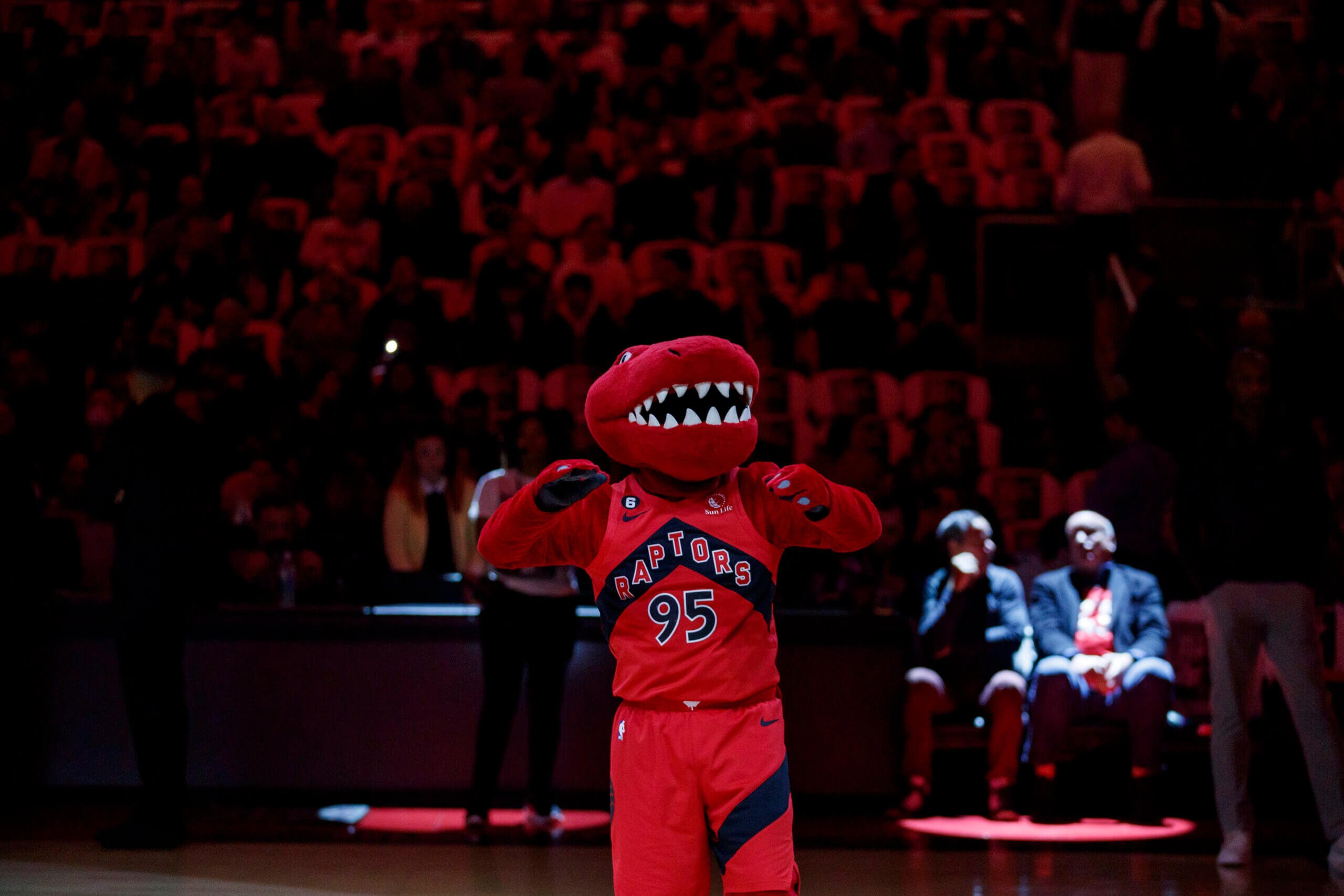
1. Raptors general manager Bobby Webster and vice president of basketball operations and player development Teresa Resch did not get the job done. They were, respectively, the on-screen representatives and drawing-room representatives for the Raptors. They must be held accountable. Next time, send The Raptor.
2. We can still make jokes, right?
3. I would be very surprised if the Raptors ended up trading out of the first round. It is not that they don’t want help in the present — they do. Of course, most rookies are unlikely to produce much in terms of winning basketball. However, having given up the 2024-first-rounder (top-six protected) for Jakob Poeltl, they need some more young talent. As has been proven over the last few years, that cannot all happen with second-rounders (of which they have none until 2026 anyway) and undrafted free agents.

4. To the same point, they have a financial incentive to keep the pick, too. Quite simply, they need to find contributors on rookie-scale contracts. Other than Scottie Barnes, none of their developmental pieces have delivered consistently over the past two years. The Raptors surely still have faith in some of those players, most notably Precious Achiuwa. In order to function in the NBA, especially as the new CBA makes it more punitive to go over the tax, you need to draft well.
5. The Raptors have picked 13th once before. They took Ed Davis, who was the night’s unexpected draft faller, despite having a glut of forwards. Boss move. (That’s for OGs.)
6. However, it is obviously possible the Raptors make a trade to move spots — up or down. On the court, either Brandon Miller or Scoot Henderson would be phenomenal fits for the Raptors. If they had real conversations with Portland for O.G. Anunoby last year, I wonder if they could be revisited, either for Anunoby or Pascal Siakam, in a bigger trade that would include the Trail Blazers’ third pick.
7. Houston is the other obvious candidate to move down or out of the first round. The Rockets are picking fourth. However, they are planning to use their cap space and don’t have many players with meaningful salaries to trade. Same deal for Orlando, who has the sixth and 11th picks.
8. I am almost always of the mindset that a team should take the best player available, and that doesn’t change for the Raptors in this position. With so many unknowns, you might as well just pick the best guy and figure out the fit later. That comes with two caveats. The first: No rim-running centres. They want to bring Poeltl back in free agency and took Christian Koloko early in the second round last year. If they feel the need to add more depth there, it is usually a position that can be addressed cheaply in free agency.
9. The second caveat: Place extra importance on shooting. Not enough to pick a player who is clearly a tier below another, but as maybe the most important attribute. The two players I’m most confident will be Raptors next year, at least from last season’s core: Poeltl and Barnes. The Raptors need all the shooting they can get.
10. With all of that in mind, let’s try to narrow down to the four most likely picks at 13, at least for now. (This is an evolving process.) I’ll defer to The Athletic’s draft guru, Sam Vecenie, and go with Kentucky combo guard Cason Wallace first. That is who Vecenie has going 13th in his post-lottery mock, and also happens to be John Hollinger’s 13th-ranked prospect. He shot just 34.6 percent from 3 in his freshman year, but shot better than 75 percent from the free-throw line, suggesting some more shooting potential. He could help defensively, too. He had a back injury in college, which is concerning. (As it turns out, I ended up taking him in The Athletic’s beat writer mock draft, too.)
11. Vecenie called Kansas’s Gradey Dick the best shooter in the class, and that’s enough for me to circle him three times. He’s 6-foot-8, he took seven 3s per 40 minutes and shot better than 40 percent on them. He doesn’t have a huge upside, but he can shoot, cut and play hard defensively, even if he’s not the quickest defender when left on an island.
12. Michigan’s Kobe Bufkin is another guard, but more of a shooting guard than a lead guard. He needs to increase his attempts, but he bumped up to 35.5 percent from 3 this past year. He will absolutely need to fill out physically, but that is true of almost every rookie. He’s also got that big wingspan that the Raptors seem to like, plus the quickness to be a solid defender.
13. Finally, if the Raptors want to go big and long, they could look to local product Leonard Miller, who spent last year with G League Ignite. He was a double-double machine in the second half of the season, a big accomplishment given he was playing older players. He also showed more of a shot than he previously flashed, although it was on very low volume. Overall, he has a lot of similarities to Barnes, but he could be an obvious upside play.
Did I mention him only because the first high school he attended was Thornlea Secondary School, my alma mater? You’ll never know. Go Thunder. (Thornlea, not Oklahoma City.)
(Top photo of Gradey Dick: Ed Zurga / Getty Images)