



It’s hot. You’re sweaty, tired and a mite cranky. What’s the solution? An art gallery. The dead heat of summer is an ideal time to visit a local exhibition. Most art galleries are quiet, cool and there’s usually a place to sit down.
The bonus is that you also get to see art!
The summer season is an interesting time for galleries. In addition to local folks, reams of tourist types are wandering the streets looking for experiences. In this fashion, summer exhibitions are designed to appeal to a broad array of audiences. The uniting factor, whether you live here or are simply here for a spell, is the desire for something transformative, fascinating, confounding even.
Vancouver galleries have got you covered, offering a gamut of exhibitions that run from the conventional to the out-there-on-the-edge-type stuff.
You might just emerge refreshed, inspired and brimming with images that linger long after you’ve left the gallery space.
Amidst car detailers and marine supply stores, great art
The second part of the Gerd Metzdorff’s remarkable collection is currently on offer at the Griffin Art Projects in North Vancouver. This gallery is a little off the beaten track, but don’t let that fact deter you. Just past the marine supply stores, nouveau diners and car detailing places is one of the most interesting galleries in the city. Jump on a bus or ride your bike and super interesting art viewing can be yours.
The Griffin regularly hosts extraordinary shows. Per Diem Part II is one such exhibition. Over the course of his career as a flight attendant, Metzdorff used the money from his on-the-job per diem to buy work in the cities that he travelled to, amassing a collection of some of the most important artists of the past century. In fact, Metzdorff accrued so much work that two separate exhibitions at the Griffin were necessary to see the bulk of his collection.
While the previous exhibition mainly focused on photography and sculpture, this latest iteration features paintings, prints and drawings, plus some sculptural work to round things out. It’s an eclectic group of artists, ranging from Canadian greats such as Gordon Smith, Jack Shadbolt and Ken Lum to Andy Warhol, Lynda Benglis and Gathie Falk. And that’s just for starters.
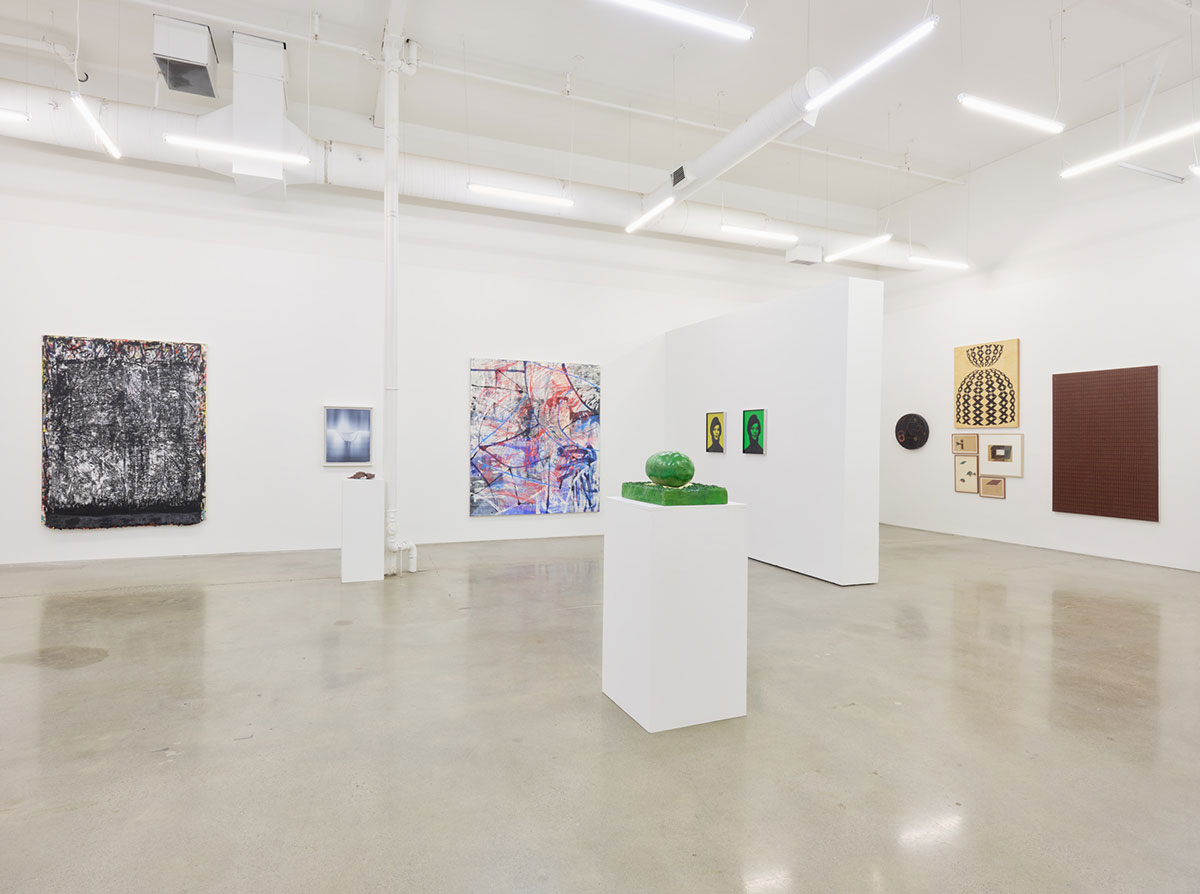
Photo by Rachel Topham Photography.
With more than 60 different works on display, it’s an abundance of ideas, images and experiences. It’s the experiential part that is most impactful. The moment I walk into a gallery, I feel my blood pressure drop and species of calm and contentment emerge. This is especially the case when taking in such a diverse body of work.
It is remarkable that Metzdorff managed to find enough space in his West End apartment to both display and store this collection. I’m picturing artwork in the bathroom, under the bed, in closets and so on. Any collection reveals something of the collector, themselves, and in this instance, certain qualities of the different pieces and artists coalesce. Pattern, layering, density.
Some of the most charming work is sometimes the most modest, like a curious little drawing from Winnipeg’s Marcel Dzama or a watercolour painting of a bottle of Crown Royal from Tim Gardener.
Aside from the exhibition itself, the Griffin is simply a lovely place to spend a few hours. So, go and drink up some long cool glasses of culture!
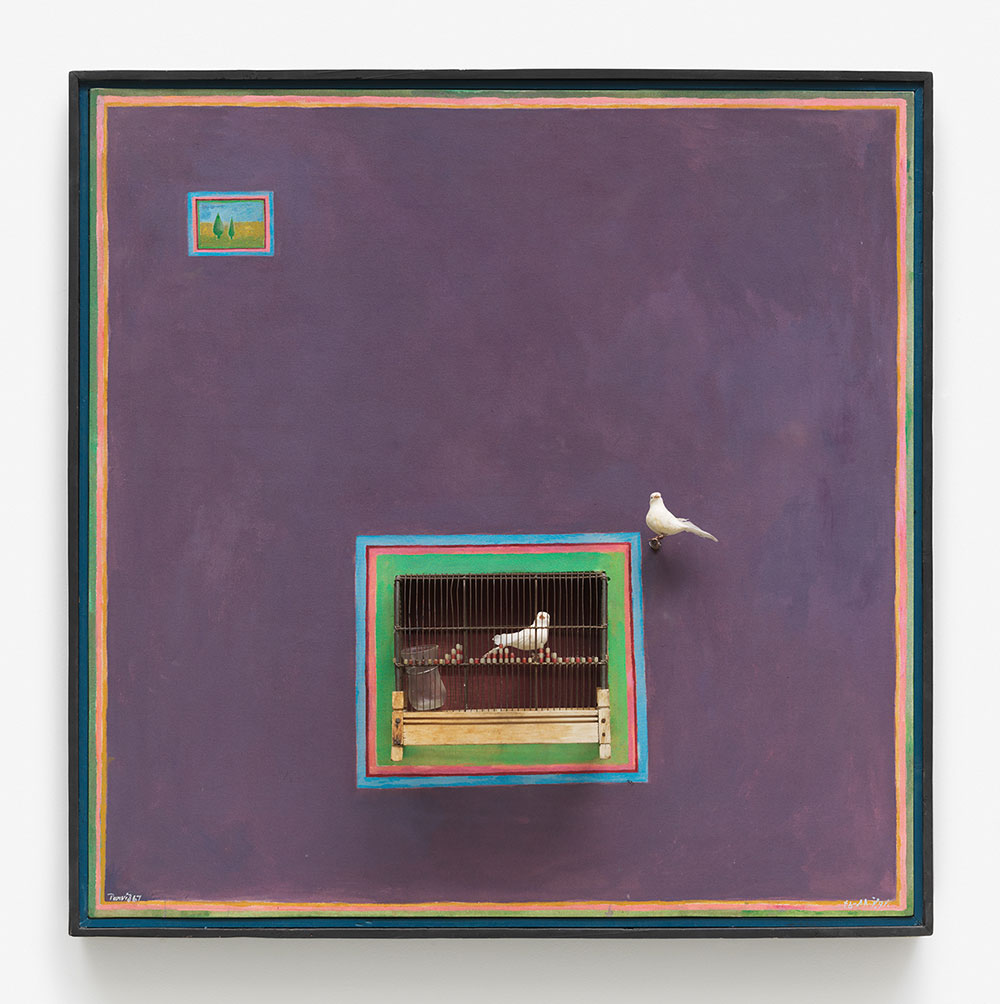
Parviz Tanavoli, Bird and Cage, 1967, mixed media. Courtesy of the Tanavoli Family Collection.
The fruits of an artful friendship
The curious relationship that can spring up between an artist and a collector is at the centre of a new exhibition at the Vancouver Art Gallery entitled Parvis Tanavoli: Poets, Locks, Cages. Tanavoli has lived in Vancouver for more than three decades, but his work speaks to his home country and culture of Iran. It takes a while to get to the informing ideas in this extensive collection, although the main points are summed up in the show’s title.
Tanavoli’s early career paralleled that of the Saqqakhana School, emerging out of Iranian cultural traditions. The term itself refers to a type of water fountain dating from 680 AD that honoured the battle of Karbala. The fountains were decorated with sacred objects. They featured a grill that people could attach locks and other markers of devotion to, and became synonymous with a group of Iranian artists in the early 1960s.
As Tanavoli explains of his iconic Heech sculptures from the period: “Mine was the nothingness of hope and friendship, a nothingness that did not seek to negate. In my mind, it was not life that amounted to nothing, but rather nothing which brimmed with life itself.”
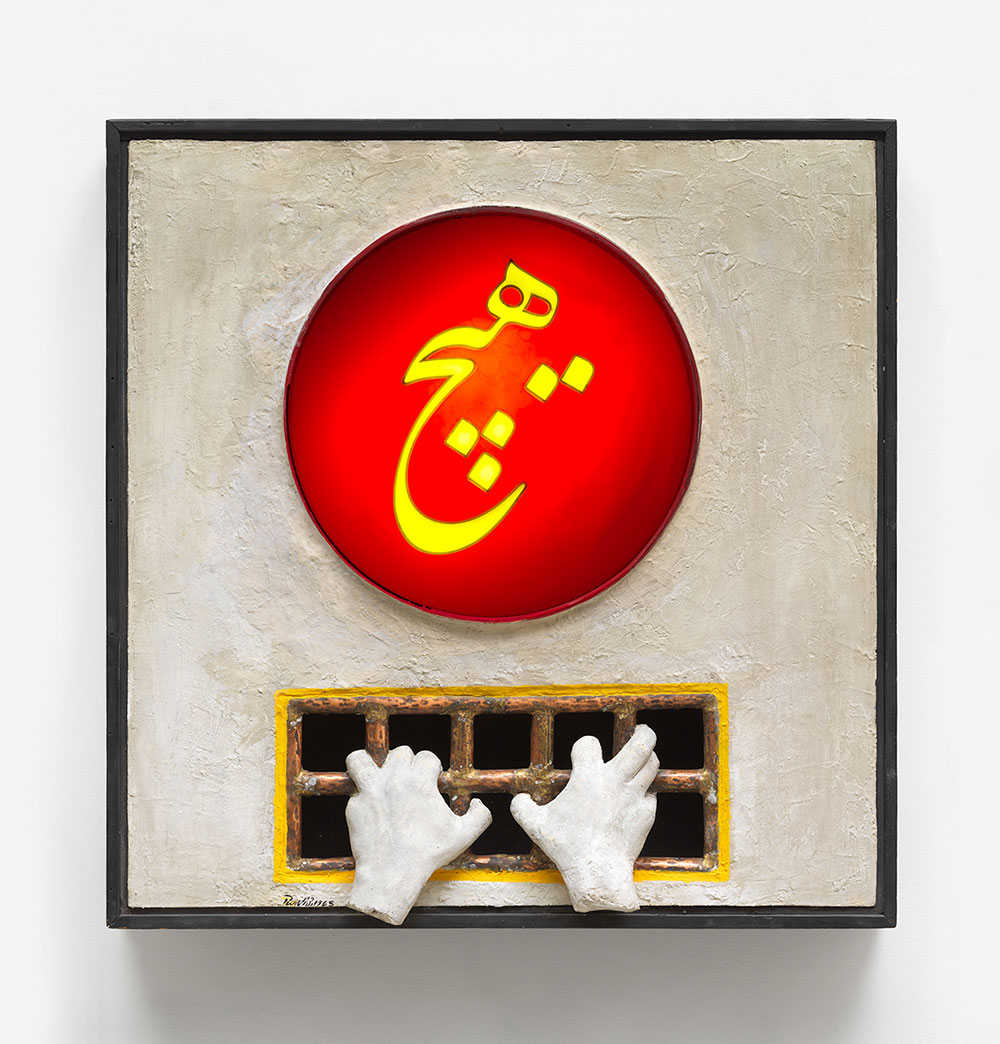
Parviz Tanavoli, Heech and Hands, 1965, mixed media. Courtesty of the Manijeh Collection.
In some of the information about Tanavoli’s work and career, his long-standing relationship with a woman named Abby Weed Grey is referenced. Grey came to collecting after the death of her husband, evincing an openness and curiosity that seemed slightly ahead of its time.
In an interview about her collecting instincts, she stated: “I didn’t know where to look or exactly what to look for, but whatever it was going to be, it had to express the response of a contemporary sensibility to contemporary circumstances… In every country, I asked ‘Where are your working artists? What are they doing? How are they breaking with the past to cope with the present?’”
Over the years of friendship, artist (Tanavoli) and collector (Grey) blurred the boundaries between mentorship, support and mutual aid.
Some of the fruits of this relationship are in evidence at the Vancouver Art Gallery, with more than a hundred works on display. It is a fascinating journey not only into Iranian culture but also the development of a singular artistic vision.
A conversation across generations
Bright Futures, currently on offer at the Bill Reid Gallery in downtown Vancouver until Jan. 14, 2024, is a collection of contemporary Indigenous artists, creating work in reaction to Reid’s own creative output. Although Reid died in 1998, his legacy continues to ripple out, affecting successive waves of artists. Many of the prints, painting and sculptures on display bear the marks of this powerful creative force.
The instigating question of the exhibition was “How does Bill Reid’s work continue to influence contemporary Northwest Coast art being produced today?”
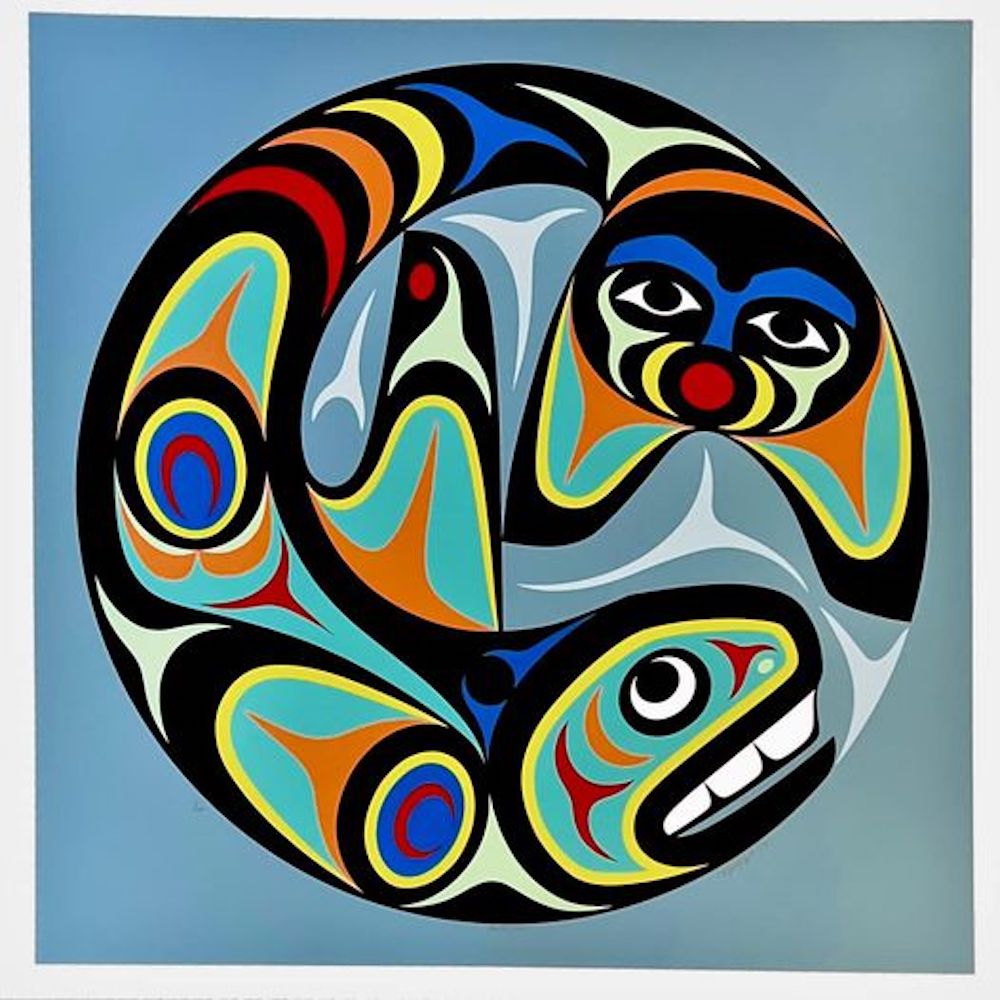
Maynard Johnny Jr. Protector, 2023 silkscreen print, 35 x 35 inches. Courtesy of the artist.
It is the conversations that spring up between Reid’s work and younger artists that proves most fascinating. They reveal a continuity of issues and ideas explored, everything from identity to family, as well as a reinvestigation of tradition that manifests in new materials and innovative ways of doing things.
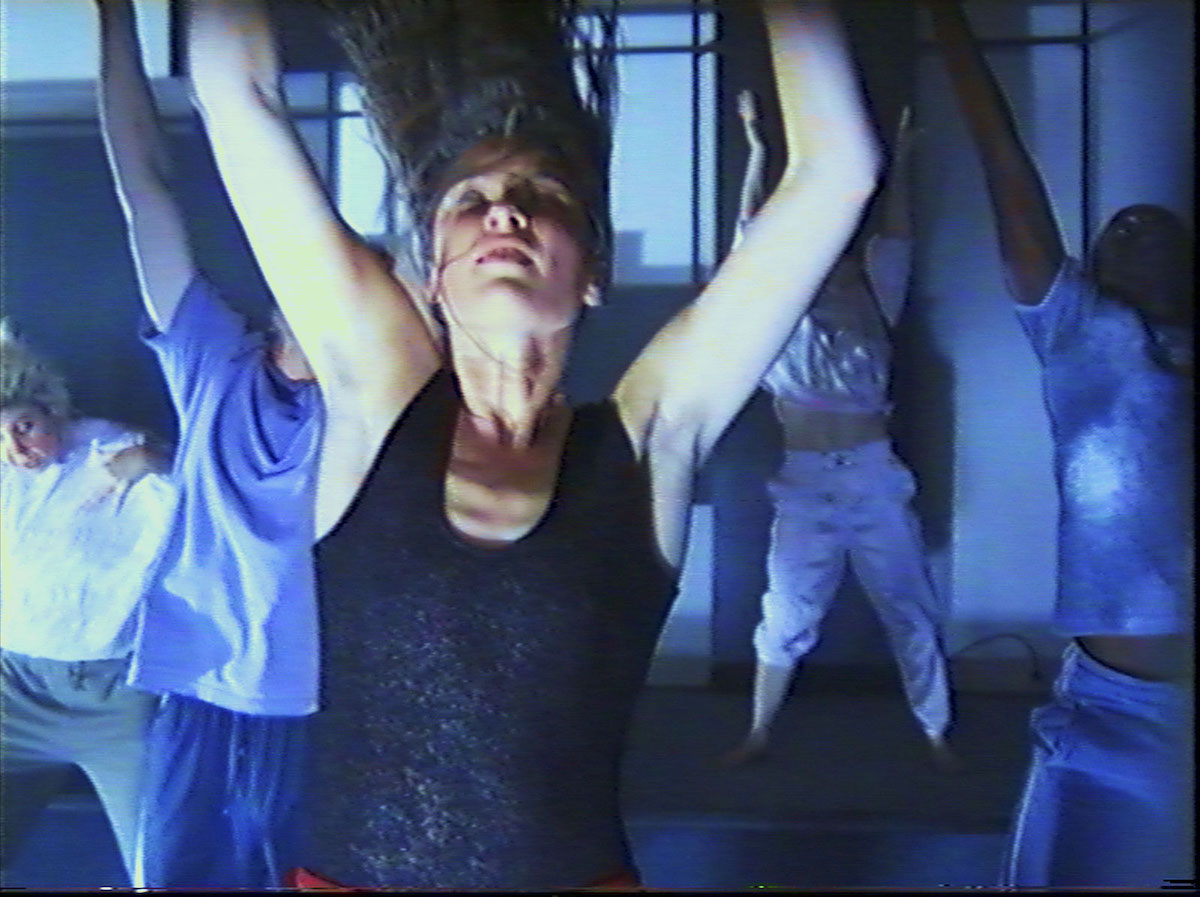
Jeremy Shaw, Phase Shifting Index, 2020, seven-channel video, sound and light installation. Courtesy of the artist and Macaulay & Co. Fine Art.
Just dance
Jeremy Shaw’s Phase Shifting Index at the Polygon in North Vancouver is a reminder that art is a very subjective experience. I saw the show, thought it was interesting and recommended it to a pair of friends who hated it and stalked out in high dudgeon. This is actually a good thing, I think. A reaction, for good or bad, is still something. It’s also a reminder that if you want to opine about things, first you have to see them.
So, if you want to get into cultural fisticuffs with your friends or soon-to-be enemies, take in the show and then line up your arguments about how art isn’t always about entertainment. And vice versa.
If you simply need entertainment, the Polygon is organizing a series of film screenings throughout the summer. It’s a wildly eclectic mix of films, from John Carpenter’s bananas B-movie Big Trouble in Little China to loftier fare such as Jafar Panahi’s No Bears.
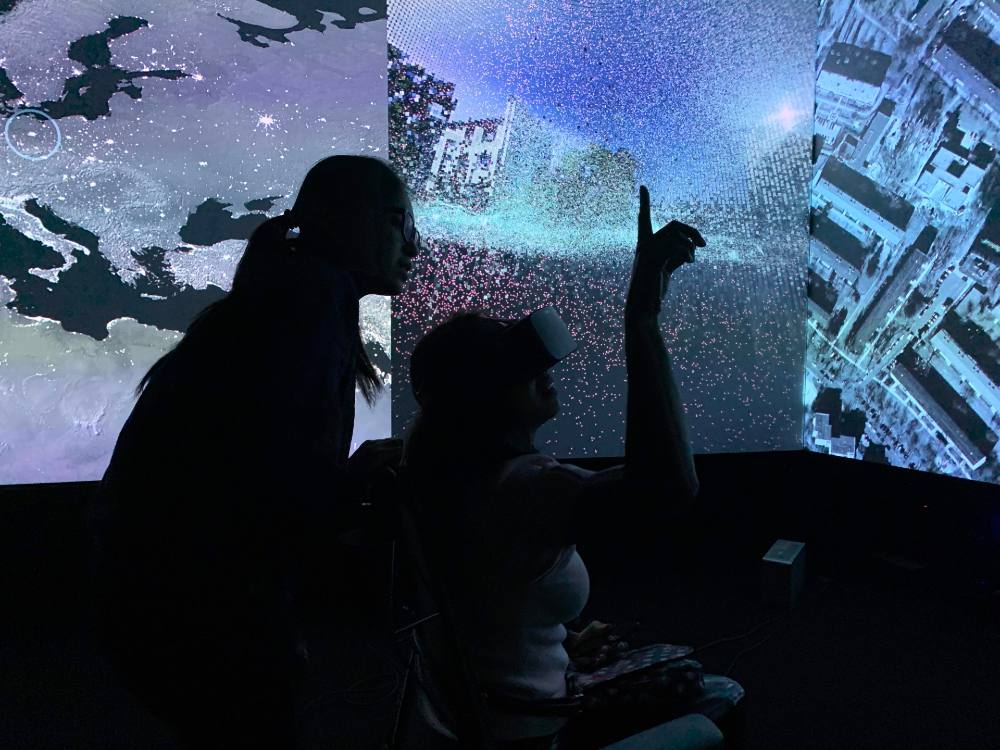
Photo via the New Media Gallery.
The New Media Gallery
As always, this is still the most fascinating gallery in town and a quick trip, via SkyTrain, to New Westminster.
One of the most curious things about the exhibitions that I’ve seen at the New Media Gallery is that details of them surface, months and even years later, long after other shows have faded into Dust.
The experience of seeing great art can do that. Art embeds itself in the heart and mind, infusing the everyday with something more complex, gesturing towards the infinite, the unseen. The things that make life more interesting. ![[Tyee]](https://thetyee.ca/design-article.thetyee.ca/ui/img/yellowblob.png)

