


One of the biggest spectacles of the year is returning to the night sky.
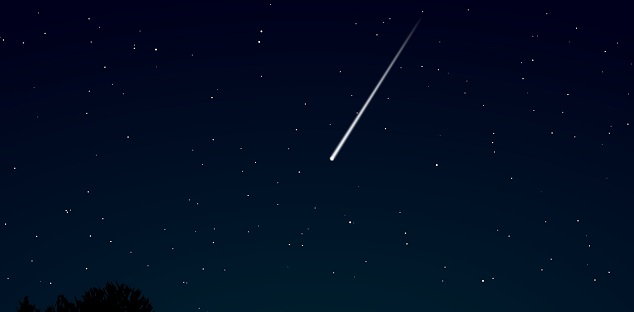
The Perseid meteor shower will peak during the early hours of Sunday. There may be around two meteors a minute, depending on where you view them.
The travelling blazes of light are caused by particles of dust burning up in the Earth’s atmosphere, according to Dr. Rupinder Brar, a senior teaching professor in physics and astronomy at Ontario Tech University.
“Oftentimes, we think of ‘space’ as something external to our experience,” noted Dr. Brar, during an interview with Durham Radio News. “But there are some events [where] you don’t need any fancy equipment; you don’t need to be an astronaut and go into space. We can appreciate [them] here on the surface of the earth.”
“I think it connects us to our greater environment, from the earth to the solar system and even beyond,” he added.
You will be able to see the most meteors around 3 a.m. or 4 a.m. Sunday.
“If you’re an early bird, you’re going to get the best show,” said Dr. Brar. “But if you’re a night owl, I’d still recommend maybe getting outside at [11 p.m.], sometime around midnight, and looking up.”
However, it’s okay if clouds get in the way; the Perseids are a days-long event and there will still be plenty of meteors over the next few nights.
“If we end up with clear skies on Sunday night or Monday night, absolutely give it a try,” he said. “It might be one [meteor] every few minutes, or maybe one every ten minutes or so – which is still far, far more than you typically get on any given night in the year.”
You may want to drive away from the city, where light pollution tends to blot out smaller objects in the sky.
The Perseids are caused by debris left over from Comet Swift-Tuttle, whose orbit brings it near the Sun every 133 years.
“When a comet is far, far away from the Sun, it is a solid chunk of ice,” explained Dr. Brar. “But as it gets closer and closer to the Sun […] it basically starts to melt. And little, tiny bits and pieces of it come off. And they just stick around in our solar system until the Earth goes through them.”
Every August, the Earth passes through that debris field. Those dust particles then enter the atmosphere.
“These ones in particular are so small that none of them actually reach the surface of the Earth,” said Dr. Brar. “They all enter the Earth’s atmosphere and, due to friction, they burn in this spectacular light show.”
If you miss the Perseids this year, you can still brave the cold and catch the Geminids in December.
Meantime, a total solar eclipse is expected to reach southern Ontario in April 2024. Durham Region is just outside the eclipse’s path of totality, but much of the sun will still be eclipsed by the moon, for those who have the right viewing equipment.
If you have found a spelling error, please, notify us by selecting that text and pressing Ctrl+Enter.