



/arc-anglerfish-tgam-prod-tgam.s3.amazonaws.com/public/ROON5DIZY5GUDGLXQUMBTDSRDM.jpg)
Hello,
There’s been a number of significant announcements from the federal government today of measures undertaken to slow the spread of the novel coronavirus. The government says Canadians should avoid all non-essential international travel.
The government is working on limiting international flights to a smaller number of airports. It is also looking at whether to restrict flights based on their country of origin. Both measures are still being worked out and details are not available.
Cruise ships with more than 500 people on board will not be allowed to dock at Canadian ports until at least July 1. In the Arctic, they will not be allowed to dock at all.
The Bank of Canada cut its key interest rate for the second time this week, to 0.75 per cent. More economic stimulus plans will be coming soon, following on the $1-billion package announced on Wednesday.
Officials also repeated their public-health recommendations from earlier in the week on social distancing, washing hands and the like.
“The actions you take today will save lives,” Health Minister Patty Hajdu said.
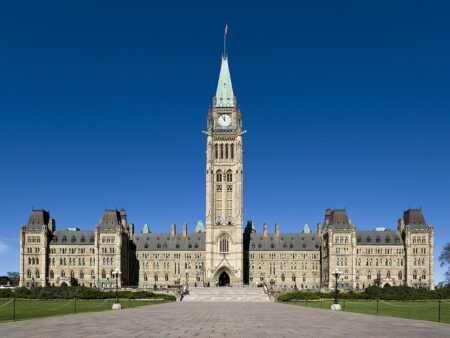
Parliament has wrapped up for five weeks, returning April 20. Before leaving, MPs and Senators hastily passed the ratification bill for the U.S.-Mexico-Canada trade agreement. The House also passed some supply bills and an opposition motion from the NDP calling on the government to adopt universal pharmacare.
Sophie Grégoire Trudeau has tested positive for the novel coronavirus. Prime Minister Justin Trudeau is working at home for the next two weeks. He said doctors said there was no reason for him to be tested too because he hasn’t demonstrated any symptoms.
The Royal Bank of Canada is warning that a recession is looming. The coronavirus and the public-health measures to contain it will have enormous economic impacts on businesses small and large in the coming days, weeks and months.
Soldiers are not allowed to travel internationally for business or pleasure
Ontario’s schools are closed until at least April. The Quebec government will close all schools and daycares for at least two weeks.
Canada’s largest producer of toilet paper says they can keep up with the increased demand.
And Michael Kovrig, a Canadian detained in China for geopolitical reasons, was allowed to call his ill father.
Doug Saunders (The Globe and Mail) on the strain on the health-care system: “This comes down to the way governments think of future needs. Funding of hospitals by Canadian provinces tends to be calculated in order to meet current needs – and then sometimes only barely. The most populous provinces have severe problems with emergency-ward overcrowding even during quiet, non-pandemic periods. Canada’s shortage of critical-care beds and ventilators, and its lack of capacity to handle a pandemic, has been a known problem for years. But too often, provincial health departments instead worry about having too many unused ICU beds during normal times.”
Andrew Willis (The Globe and Mail) on the economic ripple effect: “Rather than playoff wins and championships, professional sports owners may set the tone in coming weeks for the way they deal with the unexpected human consequences of a major health crisis.”
Raymond J. de Souza (National Post) on the social cost: “We are discovering now, in the face of a global pandemic that’s moving at a frightening speed, what a culture of safety looks like when taken to a necessary extreme. After this pandemic recedes, it remains to be seen what the long-term results will be.”
Andrew MacDougall (Ottawa Citizen) on the messages from Conservative leadership contenders: “Not that you’d know either potential disaster is unspooling if your sources of information are the Peter MacKay and Erin O’Toole Twitter feeds. Canada was a few days on from its first coronavirus death, with transmission increasing, and the two front-runners hadn’t so much as tweeted about how to wash your hands properly to combat infection. Public service, innit?”
Andrew Coyne (The Globe and Mail) on the big picture: “Of all the ties that connect us, the most valuable and most fragile one is trust: that willingness, indeed, to let down our guard, to work with rather than against one another. The high degree of social trust in liberal societies – trust in the state to defend us, trust in others not to harm us – is their greatest strength and their greatest weakness. Trust, however long it might have taken to form, can disappear overnight.”
Follow Canada News Media
Get the day's top Canadian stories and our two daily 60-second news videos wherever you scroll.
X Threads Facebook Instagram LinkedIn TikTok YouTube Pinterest Reddit Substack Flipboard Newsletter RSS