

The K-index ranges from 0 to 9, with higher numbers correlating to conditions that may allow auroras to dip farther south in latitude.
If this geomagnetic storm lives up to its full potential, much of Canada and a large swath of the northern United States might be able to see the northern lights on Saturday night. The solar storm should peak between 2100-0300 GMT, based on the SWPC’s forecast on Saturday. This means that the best viewing should last through about 10:00 p.m. Eastern Time, or 7:00 p.m. Pacific Time.
The big wild card, as always, is the potential for clouds scuttling the view.

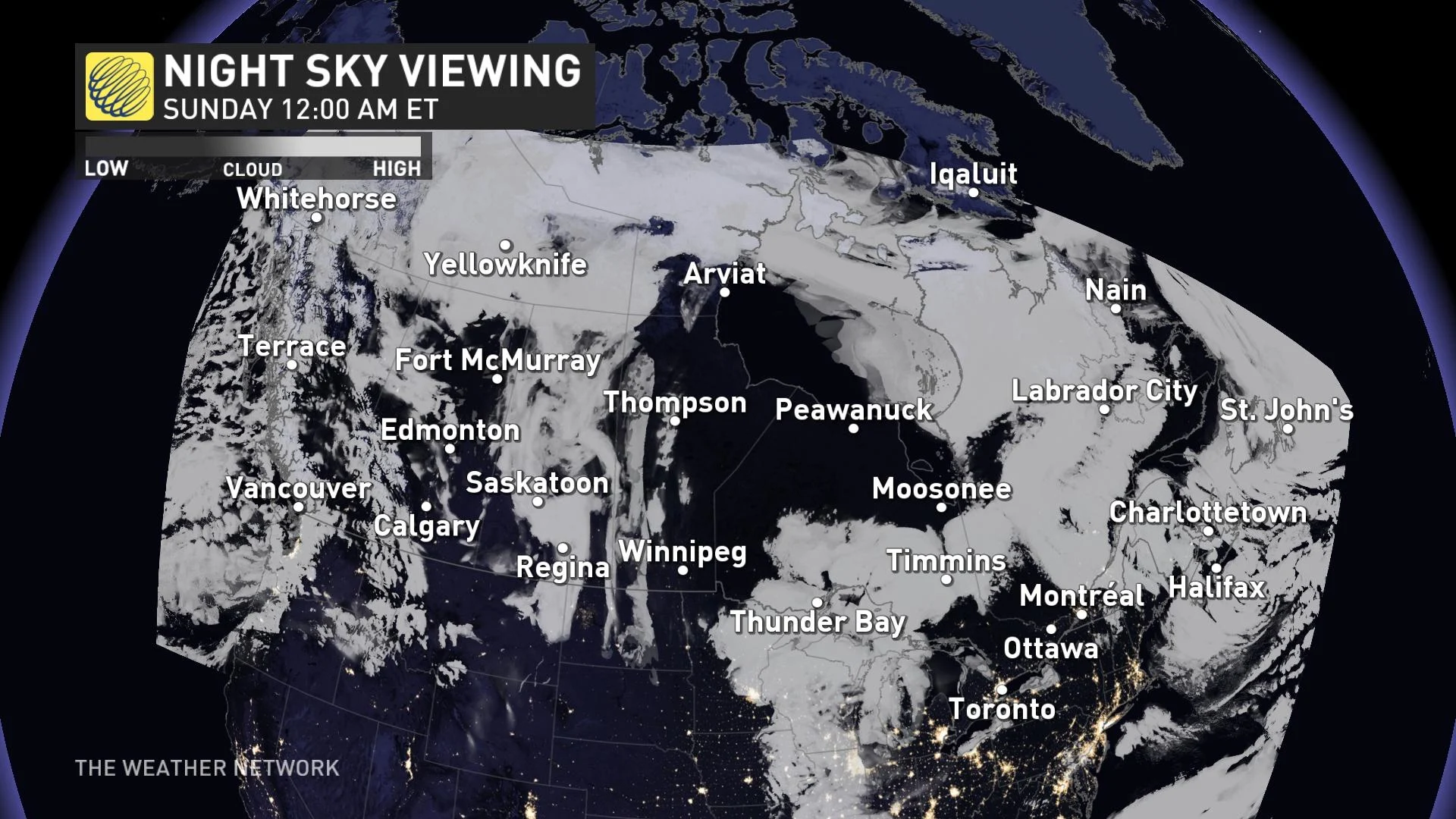
Scattered clouds will dot the skies across the western half of Canada on Saturday evening, with the greatest cloud cover expected across the territories, much of Saskatchewan, as well as lower elevations in British Columbia.
We’re likely going to get a decent show across eastern Manitoba and much of northern Ontario, where the only obstacles will be light pollution and the progress of the aurora itself.
Folks across southern portions of Ontario and Quebec may also have the opportunity to see the northern lights between scattered clouds, especially if the event lives up to its full potential.