

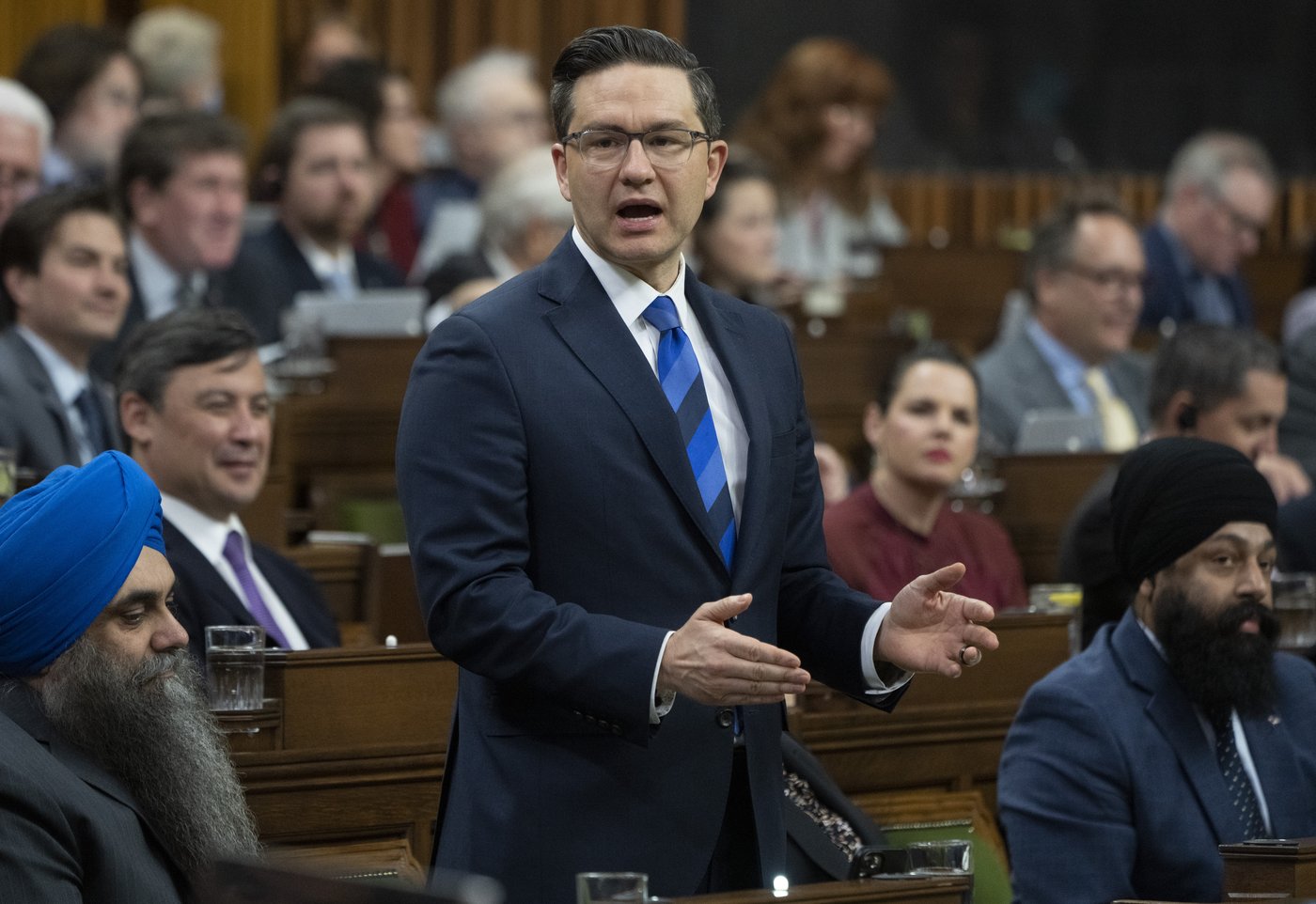
In the corridors of Canadian politics, a recent incident involving Pierre Poilievre has sparked conversations about race and systemic challenges faced by Black individuals in political spaces. Poilievre, a prominent Conservative Member of Parliament, inadvertently used the racial slur ‘nigger’ during a speech, emphasizing the need for a transparent investigation into the death of a Sikh leader, Nijjar, in Surrey, British Columbia. This incident, though seemingly trivial, serves as a lens through which to examine deeper issues embedded in Western institutions, particularly in politics.
The slip of the tongue occurred while Poilievre was urging the House Speaker and Canadians for a thorough investigation into Nijjar’s death, calling for transparency in the Indian government’s involvement. The paradox of racial insensitivity in a speech meant to honor a tragic event raises questions about the nuances of racial logic within political discourse.
While linguistic missteps are often dismissed as trivial errors, the context in which they occur is crucial. Poilievre’s use of the N-word, even in an unintended context, unveils an underlying racial tension within political spaces. Such incidents are not isolated; they reflect shared discursive practices that contribute to racial inequality.
Drawing parallels to a historical incident involving Mitt Romney confusing Osama bin Laden with Barack Obama, it becomes evident that these linguistic errors can have far-reaching consequences. In the case of Romney, the mix-up fueled a right-wing movement questioning Obama’s identity and qualifications, revealing the potential impact of such mistakes on public perception.
A 2018 study on speech errors, slips, and gaffes, whether explicit or implicit in their racial connotations, emphasizes the delicate nature of addressing racial troubles in public discourse. Ignoring or allowing such incidents to go unchallenged is not an option, as they contribute to the perpetuation of racial inequality.
Examining parliamentary representation in Canada reveals significant disparities, with visible minorities making up only 15.7 percent despite population and citizenship benchmarks of 25 and 20 percent, respectively. This lack of representation can foster an environment where racial insensitivity goes unchallenged.
The historical connotations of the N-word add another layer to Poilievre’s linguistic error. Derived from the Latin word for black, “niger,” its transformation into a pejorative term is intertwined with centuries of racism, deeply embedded in cultural aspects from literature to political debates.
Recent debates on the freedom of speech and expression in educational institutions, defending the use of the N-word under these rights, further complicate the issue. The incident underscores the privilege that allows politicians like Poilievre to escape accountability for their racial missteps, much like white professors defending the use of the N-word in academic settings.
In majority-white spaces where white bodies are seldom challenged, the implications of racial slurs, even when unintentional, can be profound. The incident should prompt a reflection on the casual approach to race and racial issues within political leadership.
While the incident might not warrant outrage or a formal apology, it sheds light on Poilievre’s mentality and his handling of racial issues. The pattern of racial missteps, including a recent post on the National Day for Truth and Reconciliation where Poilievre misidentified Indigenous elders, hints at a broader issue that should not be dismissed as innocent mistakes.
In this moment, where Canadians are grappling with issues of racial justice, each oversight, no matter how innocuous, demands scrutiny. Allowing such slips to go unchallenged perpetuates a culture of complacency, diminishing the voices of Canadians who seek a more inclusive and understanding society.