


By: Brian Kingston
Canada is on a foreign investment winning streak.
But recent politicization of major new investments jeopardizes our hard-won progress.
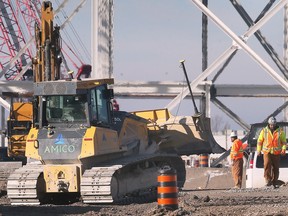
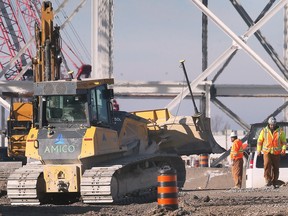
The $5-billion investment has created 2,300 jobs locally to build the facility with an additional 2,500 full-time jobs created once the plant is up and running.
Instead of celebrating a facility that will put Canada at the forefront of the automotive transformation to electrification, politicians are attacking the battery plant on the premise that foreign workers are required to help set it up on a temporary basis.
These short-sighted criticisms ignore the reality of Canada’s role in the global economy and worse, threaten to put a chill on our investment climate.
Let’s set the record straight on why foreign direct investment (FDI) is critical to the economy and Canadians. As a relatively small open economy, Canada depends on foreign investment and international trade to generate economic growth.
Foreign capital and trade has been the foundation of Canada’s economy for over 150 years. British investment in the mid-19th century built our rail and canal systems while U.S. investment played a pivotal role in the development of our resource and manufacturing sectors.
The results of this work are paying off. Just three years after global investment flows fell off a cliff during the pandemic, Canada has emerged as one of the top destinations in the world for foreign investment.
Nowhere has this been more pronounced than in the automotive industry, which is undergoing a once-in-a-century transformation to electrification.
Thanks to a welcoming investment climate, foreign multinationals account for 12 per cent of all employment, 15 per cent of Canadian GDP, as well as the majority of the country’s trade in goods and commercial services.
In addition to creating jobs and driving growth, foreign investment makes Canada more productive.
Investors bring new technology and know-how, contribute to skills upgrading of local workers, boost supply chain integration and international trade, and foster competition among domestic firms.
FDI fuels investment in machinery and equipment, a key driver of labour productivity growth. In fact, foreign multinationals account for almost one-third of machinery and equipment investment in the corporate sector.
By winning major EV battery plant investments, Canada will benefit from world-class battery manufacturing technology that will make us all more prosperous.
And while these investments on their own will make huge contributions to the economy, there is potential for Canada to play an increasingly important role in the auto sector as it transitions to electrification.
Automakers are actively building a more integrated, North American EV supply chain that requires just what Canada offers — mineral reserves, sustainable approaches to mining, and smart people to process, recycle and develop them.
This presents a generational opportunity for Canada with its abundance of minerals and good fortune, since the 1960s, to be integrated into the North American auto market.
It is easy to criticize public incentives for profitable companies in order to attract these investments, but in doing so we risk losing out on tax revenues generated by the companies and their partners, and the tens of thousands of jobs they support throughout the auto supply chain.
Tax revenues and benefits to communities that will far exceed the public investment. Canadians benefit when we win foreign investment.
It is time to stop politicizing our success and get to work building the cars of the future.
Brian Kingston is president and CEO of the Canadian Vehicle Manufacturers’ Association.