


NASA’s Lucy Spacecraft Achieves First Flyby in Ambitious Asteroid Mission

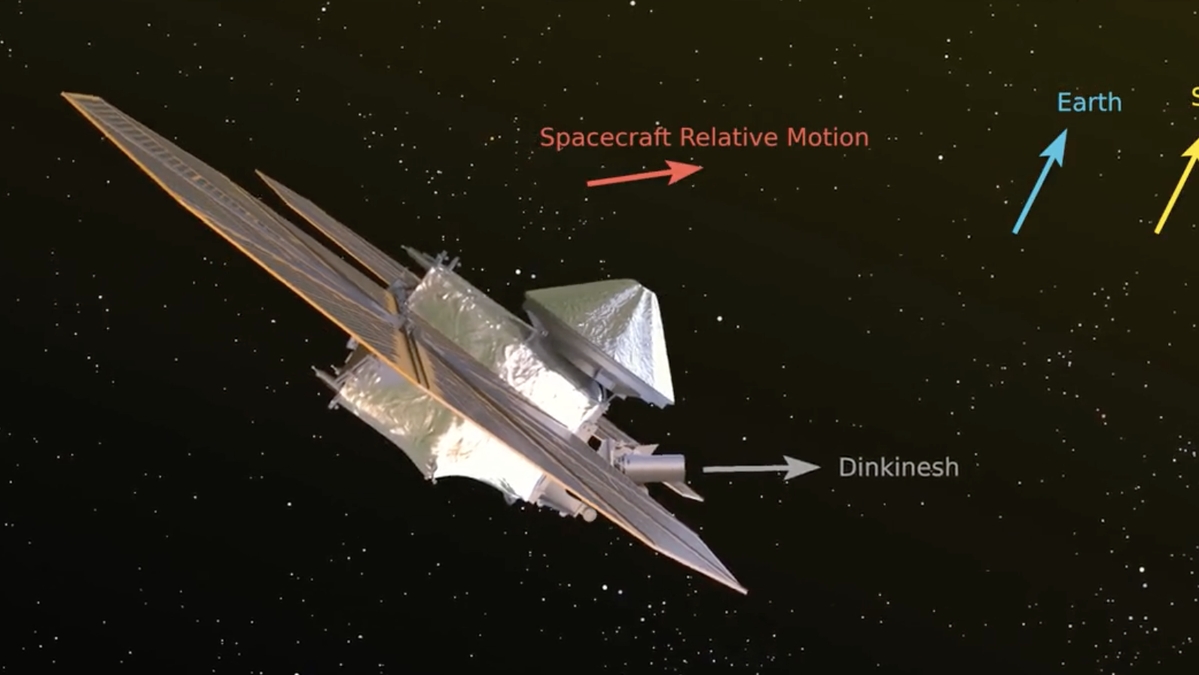
NASA’s Lucy spacecraft has reached the first of ten asteroids on its mission to Jupiter, flying by the small asteroid Dinkinesh located in the main asteroid belt beyond Mars. The craft approached Dinkinesh at a distance of 435 kilometers at a speed of 16,000 kilometers per hour, serving as a rehearsal for future encounters with larger and more significant asteroids.
Trojan Asteroids: Unearthing Solar System’s Origins
The Trojan asteroids, which will be Lucy’s main targets, are swarms of asteroids near Jupiter believed to contain crucial clues about the origins of the solar system. Lucy will fly by eight Trojans estimated to be 10 to 100 times larger than Dinkinesh, with the last two asteroids scheduled for 2033.
Lucy’s Mission: A Journey Back in Time
Lucy’s mission, which began almost two years ago and costs approximately 1,000 million dollars, is named after the skeletal remains of a 3.2-million-year-old human ancestor. The spacecraft will conduct its next flyby near an asteroid named in honor of Donald Johanson, one of the discoverers of the Lucy fossil.
Lucy: A Stable Yet Challenged Spacecraft
Despite having one of its solar wings loose, the spacecraft is believed to be stable enough to complete its mission. Unlike other NASA missions, Lucy will not collect samples from the asteroids it visits.