


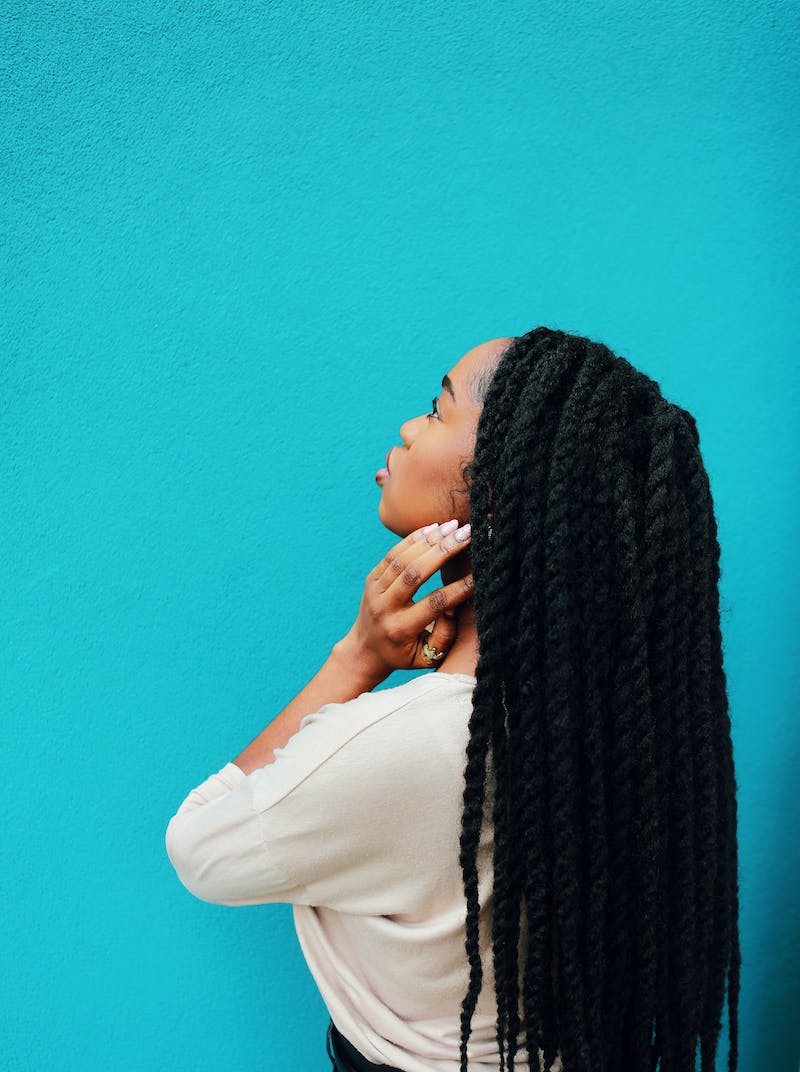
A significant stride towards cultural acceptance and equality was achieved with the signing of the CROWN Act in California. Standing for “Create a Respectful and Open World for Natural Hair,” this law marked a victory for Black people and their natural hair, specifically targeting racial hair discrimination. The act, led by the CROWN Coalition in partnership with Dove, the National Urban League, Color of Change, and Western Center on Law & Poverty, explicitly prohibits the denial of employment and educational opportunities based on hair texture or protective styles like braids, twists, or Bantu knots.
The Significance of Braids
Why has the issue of hair become a legal battleground? For many, it’s just hair — a natural expression of one’s identity. However, the fight against hair discrimination is rooted in a broader struggle against the normalization of Black hair and identity in Western culture. At the forefront of this cultural battle are braids, a hairstyle with a rich history that spans centuries and continents.
History of Braids
Braids have been a trademark of various cultures throughout history, particularly within African kingdoms and civilizations. Evidence of hair braiding dates back to 3500 BC in Africa, with the Himba people of Namibia using braided hairstyles to signify tribe, age, marital status, wealth, power, and religion as early as the 15th century. In the 1900s, braiding became an integral part of the Black experience globally, evolving through fashion trends in the 1970s and 1990s.
Evolution of Braids
The versatility of braids has allowed them to transcend time and cultural boundaries. Larry Sims, a celebrity hairstylist, highlights how braiding patterns have remained dynamic, offering Black women a sense of pride in their diverse braiding styles. Box braids, in particular, have played a transformative role in modern Black communities, with braiding studios becoming spaces for both hair treatment and cultural celebration.
Types of Braids
Braids come in various forms, each deeply rooted in African and Black culture:
- Cornrows: Worn by ancient African warriors and kings in 3000 B.C., cornrows signify wealth and status. Today, they hold cultural significance in West Africa, Sudan, Ethiopia, and other parts of East Africa.
- Ghana Braids: Traced back to hieroglyphics and sculptures in Western Africa circa 500 B.C., Ghana braids feature small-to-large patterns close to the scalp, reflecting cultural, societal, and religious traditions.
- Fulani Braids: Originating from the Fula people of West Africa, Fulani braids, also known as “feed-in” braids, boast unique patterns and lengths, often adorned with beads, shells, and family heirlooms.
- Goddess Braids: A hairstyle with historical and artistic significance, resembling cornrows, goddess braids symbolize creativity, precision, and respect among African tribes throughout history.
The Cultural Impact
In 2020, the cultural impact of braids was celebrated at Charlotte’s Braiding Expo, organized by celebrity natural hairstylist Kristy Beke. This event served as a platform for networking, artistic expression, and acknowledging braids as both an art form and a tool representing centuries of hard work, artistic ability, and cultural experiences.
Alysa Pace, an LA hair stylist, emphasizes that braiding has evolved beyond its original cultural context. Today, it’s not just a style; it’s an art form that tells a story — a story of struggle, wealth, culture, and resilience for billions of Africans and Black people, ancient and modern alike. Braids are not merely an accessory; they are tools that shape and define Black culture, proving that this iconic hairstyle is more than just a trend; it’s a symbol of identity and empowerment.