




The ‘Last Chance Lake’ in Canada’s British Columbia province contains the highest levels of concentrated phosphate ever recorded in any natural body of water on Earth. The shallow body of water reportedly contains precise blend of chemicals that could point to origin of life on Earth.
The salty body of water situated on volcanic rock is much like the carbonate-rich lakes in ancient Earth that could have been a “cradle of life”, according to a study.
The finding, published in the Nature journal, could expand humanity’s understanding of how life began.
“We were able to look for the specific conditions that people use to synthesise the building blocks of life in nature,” the study coauthor David Catling, a University of Washington professor of geosciences, was quoted as saying by CNN.
“We think that we have a very promising place for the origin of life.”
How the study was conducted?
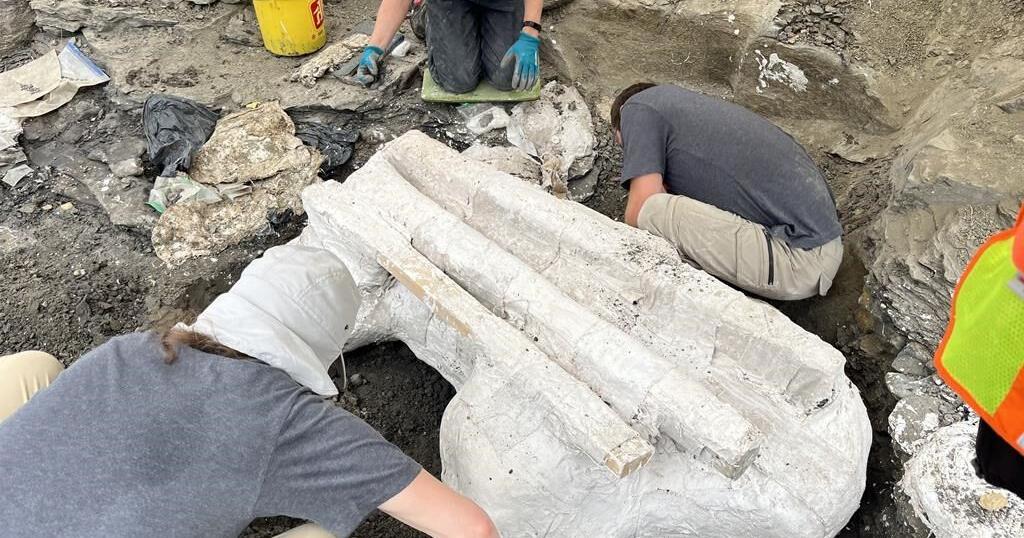
Between the years 2021 and 2022, a team of researchers visited Last Chance Lake to collect and analyse water and sediment samples. They reportedly discovered that the lake is also a hotbed to the mineral dolomite. They allow phosporous to build up in this environment that formed in response to a reaction between calcium, magnesium and carbonate.
These reactions effectively produced the unique concentrations of phosphate. Scientists believe that these are the type of conditions that could have led to the emergence of life on Earth.
“We are adding credibility to the idea that this type of environment would be favorable to the origin of life, and is plausible,” Sebastian Haas, a postdoctoral researcher studying the microbiology and chemistry of aquatic environments at the University of Washington who led the research paper, was quoted as saying by the CNN.
Also watch | Remains of an ancient planet lie deep within earth
“There’s every reason to believe that similar lakes would have occurred on the first land about 4 billion years ago because the volcanic rocks that Last Chance Lake sits on are basically a prerequisite for forming soda lakes,” Haas said.
Study supports existing theory on how life appeared on Earth
A pre-existing theory on how life appeared on Earth billions of years ago is that it began in hydrothermal vents in the deep sea.
The new study adds to the body of evidence that supports the warm little pond hypothesis, according to Matthew Pasek, a professor at the University of South Florida who studies phosphorus chemistry and origin of life sciences but was not involved in the study.
(With inputs from agencies)