


Netflix won the streaming wars and destroyed the cable and satellite bundle in the process.
It’s not just because Netflix built the superior streaming service and is the only company in the streaming business to actually make a profit — everyone else has lost billions while Netflix has made billions — but because the success of Netflix led Disney, Comcast, and Paramount to all abandon the greatest media business in world history — the cable and satellite bundle — and rush to compete with Netflix in streaming.
Instead of building their own strong and successful streaming businesses, all of them destroyed their existing cable and satellite profits even faster than they otherwise would have all while losing billions in streaming.
Getty Images
I think the answer is the big tech companies invested in streaming, sports, and original content — Apple, Amazon, Google and Netflix — should buy all these media companies and roll them into their existing streaming ecosystems. Before I explain why this makes sense, an interesting couple of thoughts as background.
Photo Illustration by Rafael Henrique/SOPA Images/LightRocket via Getty Images
Photo by Sean Gallup/Getty Images
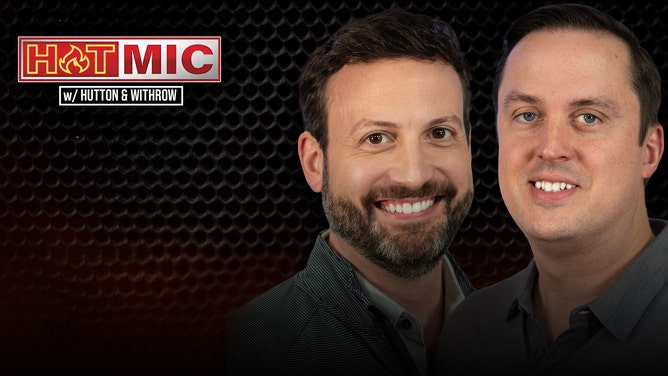
I was about to start my first ever nightly radio show on 104.5 the Zone with Chad Withrow, who now hosts “Hot Mic” daily on the OutKick network. We were paid, and I kid you not, $50 a show each. $100 total, for a two-hour Tuesday night show called “ClayNation.” (He gets paid better than that now. So do I.)
Suddenly the big tech companies want in on sports.
It Happened: Big Tech Got Into Sports…Big Time
Consider this, Apple has MLS — and tried to get a deal done to take over the Pac 12 –, Amazon has the NFL on Thursday nights, is now going to reportedly pay more than $100 million for one NFL playoff game, and is trying to get involved in a big way in the regional sports marketplace with MLB and the NBA, Google’s YouTube service bought the NFL Sunday Ticket and Netflix just paid $5 billion to the WWE for WWE Raw over the next ten years.
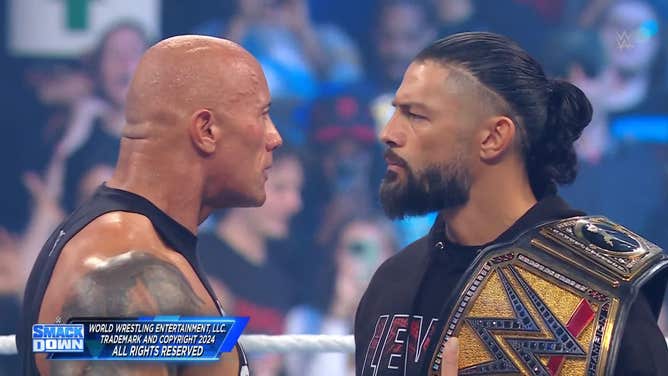
The Rock and Roman Reigns, via WWE.
Yes, even the Super Bowl.

INGLEWOOD, Calif. – A view of the SoFi Stadium field during Super Bowl LVI media availability day on Feb. 8, 2022, before the game between the Los Angeles Rams and the Cincinnati Bengals. (Photo by Brian Rothmuller/Icon Sportswire via Getty Images)
Hey…Let’s Put Streaming Shows On Broadcast TV And See What Happens
During the recent writers and actor’s strike, all the TV networks struggled to come up with new programming because they couldn’t make new scripted shows with the writers and actors on strike. So they often created reality television shows, things that didn’t require writers or actors, and repurposed old content. But Paramount did something really interesting, they took “old” streaming content, the series “Yellowstone” and they put it on their CBS TV network.
And guess what happened?
“Yellowstone” season one dominated the ratings on CBS. According to a Deadline article from October of 2023, “Nearly 21.6 million viewers have tuned in to at least one episode on CBS, and over half (52%) are new to the series, having not seen a single episode in the past year on either linear or streaming, according to the network.”
CBS then followed the success of this experiment by airing seasons two and season three of “Yellowstone” and the audience expanded to more than 33 million viewers and dominated the ratings on CBS for Sunday nights.

Credit: Paramount Network
This isn’t a new phenomenon, “Breaking Bad” actually became a breakout star because old seasons of the show got popular on Netflix and then many people tuned in to watch new seasons on AMC. But “Breaking Bad,” was an original TV series that got popular on streaming. That still happens. “Suits” dominated on Netflix this past fall. Tons of people who would have loved “Suits” had no idea it ever existed until Netflix started to air it.
But “Yellowstone,” to my knowledge, is the first streaming show that became a hit on TV. CBS proved that the benefit didn’t just run from TV to streaming, it also ran from streaming to TV.
And the story of “Yellowstone’s,” TV success got me thinking: how many other popular streaming shows, that is shows that never aired on TV before, would dominate on network television? That is, how many people would absolutely love shows they have no idea exist because they aren’t a part of the streaming ecosystem yet?
I think the answer is tens of millions, an absolute ton of people.
Which leads to this big idea that also dovetails with my sports discussion above: big tech streaming services are missing tens of millions of people on their streaming services who would otherwise love their content. Every streamer should use old show seasons to air on the existing broadcast networks.
Photo Illustration by Rafael Henrique/SOPA Images/LightRocket via Getty Images
(GETTY IMAGES)
Photo by Ronen Tivony/SOPA Images/LightRocket via Getty Images
I(Photo Illustration by Mateusz Slodkowski/SOPA Images/LightRocket via Getty Images)
Do you think some of those new viewers might be willing to pay to get the most updated version of the new shows they’d come to love? I’d bet they would. And how many great streaming shows out there would absolutely dominate, with editing, on network television?
Tons of them!
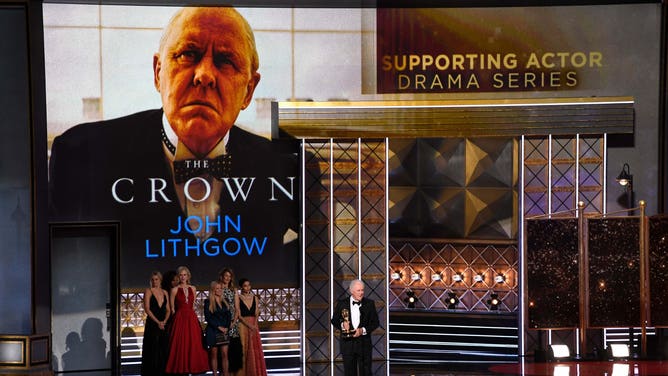
Los Angeles – John Lithgow accepts the award for Supporting Actor In A Drama for his role in the Netflix series ‘The Crown’ during the 69th Emmy Awards at Microsoft Theater in 2017. Robert Hanashiro-USA TODAY Sports
Honestly, it’s an absolute no-brainer.
Especially when you look at the collapsing market caps of these TV network’s parent companies. Paramount, as I write this on Saturday afternoon, has a market cap of $7.7 billion dollars. Warner Brothers has a market cap of $21 billion. Fox is $13.75 billion. Disney, which is the biggest of the bunch, is $198 billion. Granted you’d have to pay more than these existing market caps, but not a ton more. And all of these media company values are a pinprick of what the tech companies are worth right now.

Photo Illustration by Rafael Henrique/SOPA Images/LightRocket via Getty Images
And once one big tech company moves, everyone else is likely to make their own move too.
So the first mover gets the advantage. And its pick of the media litter.




Harry Miller is a writer and editor based in Toronto who has Ten years of experience in the journalism industry. Before coming to Canada News Media as a National Online Journalist, Miller worked as a senior writer and a reporter-editor with the Canadian Press and a breaking news reporter with the Toronto Star. Miller currently holds two bachelor’s degrees, one in journalism from Ryerson University and another in communications and film studies from Carleton University.
Related Posts