



As people prepare for their March break travel plans, health units in the Northwest are urging people to make sure they’re up-to-date with their measles vaccinations as the prevalence of the disease has been increasing globally.
For about 20 years before the COVID-19 pandemic, measles was well-controlled, said Dr. Kit Young Hoon, medical officer of health for the Northwestern Health Unit.
“In Canada and many countries, measles was considered to be eliminated,” Young Hoon said on Friday. “Any and all cases in the country had been infected outside of Canada.”
However, Ontario and Quebec both have had one reported case with no link to travel — a clear sign of community transmission.
While there are no known cases of measles in the Northwestern Health Unit’s catchment area, the health unit is urging people to check their vaccination status before travelling internationally.
• Continued on page A3
• Continued from page A1
Young Hoon said the increase of measles infections in Canada in 2024 is largely due to an increase in international travel and the disruptions in immunization delivery during the pandemic, when public health efforts were focused on dealing with COVID-19.
“Measles is extremely contagious,” Young Hoon said. “Ninety per cent of non-immune people, that is people who are not immunized or have never had measles — so 90 per cent of non-immune people who are exposed to the virus will get sick. Being in an airplane or other enclosed or indoor space sharing the air with other people exposes everyone in that space to measles, if there’s an infected person present.”
The disease is still one of the leading causes of vaccine-preventable deaths in children worldwide. Complications include diarrhea, pneumonia, blindness and infection of the brain. About 10 per cent of cases report complications like middle ear infections and bronchopneumonia.
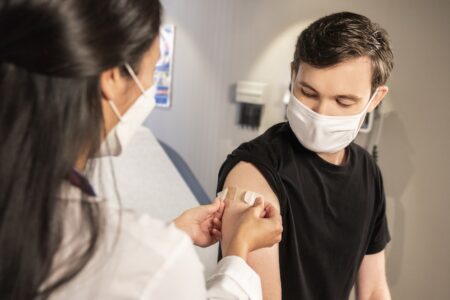
“Our goal at this time is to prevent measles through immunizations,” Young Hoon said. “We are particularly concerned about children and youth who have not completed their routine immunizations appropriate to their age group.”
Anyone born before 1970 is considered to have immunity due to the circulation of the virus before widespread vaccination, said the medical officer of health.
Anyone travelling outside of Canada should make sure their immunizations are up-to-date. They can check with their health-care provider or district health unit.
Children ages 12 months to three years with no measles vaccines, children ages four to 18 years who have none or only one dose of the measles vaccine and adults up to age 54 who have never had the vaccine or measles infection are being urgently asked to become vaccinated against the virus.
The Northwestern Health Unit will also be offering walk-in clinics for the measles vaccine over the March break. Clinic schedules can be found online at NWHU.on.ca.
In the Thunder Bay District Health Unit’s catchment area, anyone looking for a measles vaccination can contact their health-care provider, or the health unit by calling 807-625-5900.