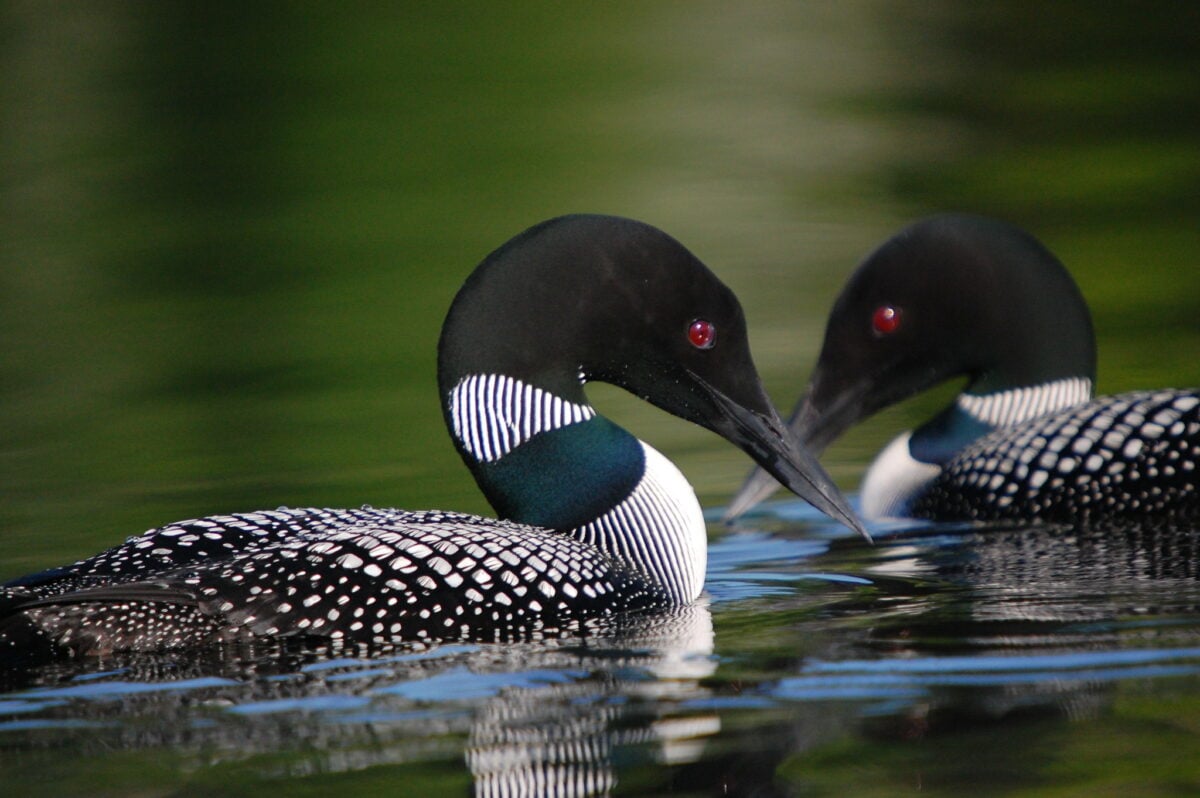
The common loon, that icon of northern wilderness, is under threat from climate change due to declining water clarity. Published earlier this month in the journal Ecology, a study conducted by biologists from Chapman University and Rensselaer Polytechnic Institute in the U.S. has demonstrated the first clear evidence of an effect of climate change on this species whose distinct call is so tied to the soundscape of Canada’s lakes and wetlands.
Through the course of their research, the scientists found that July rainfall results in reduced July water clarify in loon territories in Northern Wisconsin. In turn, this makes it difficult for adult loons to find and capture their prey — mainly small fish — underwater, meaning they are unable to meet their chicks’ metabolic needs. Undernourished, the chicks face higher mortality rates. The consistent foraging techniques used by loons across their range means this impact is likely echoed wherever they are found — from Alaska to Canada to Iceland.
The researchers used Landsat imagery to find that there has been a 25-year consistent decline in water clarity, and during this period, body weights of adult loon and chicks alike have also declined. With July being the month of most rapid growth in young loons, the study also pinpointed water clarity in July as being the greatest predictor of loon body weight.
One explanation for why heavier rainfall leads to reduced water clarity is the rain might carry dissolved organic matter into lakes from adjacent streams and shoreline areas. Lawn fertilizers, pet waste and septic system leaks may also be to blame.
The researchers, led by Chapman University professor Walter Piper, hope to use these insights to further conservation efforts for this bird Piper describes as both “so beloved and so poorly understood.”