


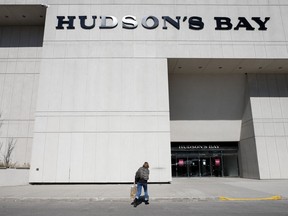
Hudson’s Bay Co. made headlines last week after announcing it hoped to create a powerhouse in the world of luxury goods with the acquisition of Neiman Marcus Group LLC, but for some Canadian shoppers at its iconic Bay chain, it’s the basics that remain a bigger concern.
A number of Bay stores across Canada were temporarily closed this week for repairs in their heating, ventilation and air-conditioning systems, according to various media reports. For example, stores were closed in Vancouver, West Vancouver, Nanaimo, B.C., Coquitlam, B.C., and Victoria on Tuesday, according to the Vancouver Sun. Stores were also reported to have closed in Winnipeg and Windsor, Ont.
But some retail analysts view this week’s temporary closures as signs of stress, suggesting a lack of general upkeep due to the financial headwinds facing the sector.
“It is definitely not normal,” Liza Amlani, principal and founder of the Retail Strategy Group, said. “They thought (temporarily) closing the stores would be more cost-effective than bringing someone in to fix the problems and making some sales. That tells me that certain stores at the Bay are struggling.”
HBC last week said the completion of its US$2.65-billion deal to buy Neiman will create a separate entity for its Canadian business, which includes the Bay stores and a real estate portfolio estimated to be worth $2 billion.
The Canadian business will be “recapitalized as a standalone entity with significantly reduced leverage and enhanced liquidity,” the company said in a statement last week. “HBC’s Canadian business will be well positioned to support future growth while continuing to serve its loyal Canadian customer base.”
Amlani said it could ultimately mean closing stores that aren’t profitable and focusing on the ones doing well.
“Separating Canada … is going to allow the leadership team to truly see what they can do with the Canadian entities and real estate,” she said.
Retail analyst Bruce Winder said that creating a separate Canadian entity could mean that the Bay will need to be self-sufficient because it is now “sort of on its own.”
According to David Ian Gray, principal and retail strategist at DIG360 Consulting Ltd., the Bay may not be the primary focus for HBC senior leadership. They will be more focused on Saks Global, the new company formed after the merger of HBC’s Saks and Neiman. Getting that merged entity up and running will take “time and effort,” he said.
Gray said he thinks keeping the Canadian operations separate could potentially “help increase a dedicated focus” on them and free up some funding, but it does not guarantee additional funding and resources will be used for core issues.
In November, HBC completed a series of real estate transactions to raise US$340 million in cash that the company said it would use to help fund its retail operations after falling behind on payments to its suppliers, according to the Globe and Mail.
Other department stores have faced headwinds in recent years, too. In addition to the pandemic and competition from online retailers, many brands have started to open their own stores in the past decade, which has affected the relevance of department stores that curate products from luxury brands.
For example, Nordstrom Inc. exited the Canadian market in 2023. HBC, meanwhile, has already reduced its footprint and is planning to close its store in downtown Regina in 2025.