


Phil Donahue, the iconic talk show host whose groundbreaking format revolutionized daytime television and paved the way for future stars like Oprah Winfrey and Ellen DeGeneres, has passed away at the age of 88. NBC’s Today show announced that Donahue died on Sunday after a long illness.
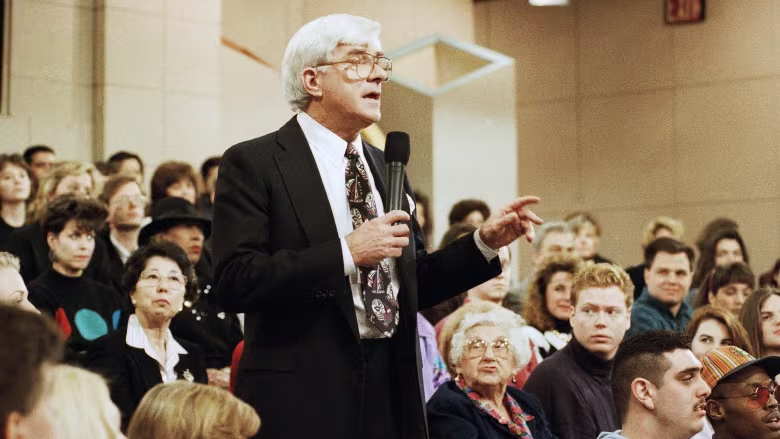
Dubbed “the king of daytime talk,” Donahue was a trailblazer in the world of television. He was the first to incorporate audience participation into his talk show, typically featuring a single guest for an entire hour—a concept that was virtually unheard of at the time. His format, which debuted in 1967 as The Phil Donahue Show, became a trendsetter for daytime television and resonated strongly with female audiences across America.
His show stood out for its willingness to tackle controversial and often taboo topics, such as feminism, homosexuality, civil rights, and consumer protection. One of his first guests was atheist Madalyn Murray O’Hair, which set the tone for his show’s bold exploration of societal issues. Over its 29-year run, Donahue won 20 Emmy Awards and a Peabody Award, cementing its place in television history.
A Career That Redefined Talk Shows
Donahue was born on December 21, 1935, in Cleveland, Ohio, to a middle-class Irish Catholic family. He graduated from the University of Notre Dame with a degree in business administration in 1957 but soon shifted his focus to broadcasting. He began his career in radio before transitioning to television in Dayton, Ohio, where his talk show first aired in 1967.
The program was syndicated nationally in 1970, running for 26 years and tackling topics that other shows of the era typically avoided. From discussing civil rights with prominent activists to exploring personal issues like natural childbirth and abortion, Donahue’s show was unafraid to push boundaries.
One of his most famous formats was incorporating live audience participation. Callers from across the country could weigh in on the discussion, and Donahue’s famous catchphrase, “Is the caller there?” became a staple of the show.
His warm, engaging interview style and ability to connect with both guests and audiences alike made him a beloved figure in American homes. He interviewed a diverse array of guests, including political leaders like Ronald Reagan, feminist icons like Gloria Steinem, and Hollywood stars like John Wayne.
A Legacy of Social Impact
Outside of his television career, Donahue also pursued other notable projects. He teamed up with Soviet journalist Vladimir Posner during the Cold War for a groundbreaking series of televised discussions between Americans and Soviets. This initiative, titled The U.S.-Soviet Bridge, allowed citizens from both countries to communicate with one another during a time of heightened geopolitical tension. He and Posner also co-hosted a weekly roundtable on CNBC in the 1990s, Posner/Donahue, where they explored current events and global issues.
In 2007, Donahue co-directed the documentary Body of War, which focused on the struggles of a paralyzed Iraq War veteran. The film was well-received and earned a nomination for an Academy Award.
Earlier this year, Donahue received the U.S. Presidential Medal of Freedom from President Joe Biden, the highest civilian honor in the United States, recognizing his lifetime of work that helped shape modern talk television and bring critical social issues to the forefront.
A Personal Life Away from the Spotlight
Donahue was married to actress Marlo Thomas since 1980, and they had built a life together in New York City. He had five children from a previous marriage—four sons and a daughter.
While his career included its share of highs and lows, including a brief return to television with a talk show on MSNBC in 2002 that was canceled after six months, Donahue remained a respected figure in the television industry for his role in transforming talk shows into platforms for meaningful, impactful conversations.
Phil Donahue will be remembered as a pioneer who not only shaped the landscape of daytime television but also used his platform to address important social issues. His legacy endures as one of daytime TV’s most influential hosts, an advocate for open dialogue, and a key figure in the history of American television.
Follow Canada News Media
Get the day's top Canadian stories and our two daily 60-second news videos wherever you scroll.
X Threads Facebook Instagram LinkedIn TikTok YouTube Pinterest Reddit Substack Flipboard Newsletter RSS