

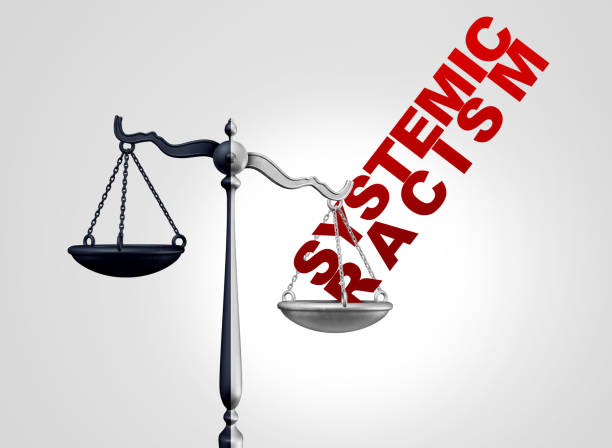
Introduction: Social Condition as a Human Rights Issue
As Canada continues to grapple with systemic racism and economic inequality, the concept of social condition is emerging as a critical yet overlooked frontier in human rights law. Social condition—often defined by a person’s socioeconomic status, access to resources, and economic opportunity—shapes one’s experience of justice, discrimination, and racism in Canada.
Despite the Canadian Charter of Rights and Freedoms and provincial human rights codes designed to protect against racial discrimination, economic disparity and social class continue to limit Black, Indigenous, and racialized communities from accessing justice and equity. The fight against racism in Canada is increasingly intertwined with the fight against poverty, economic exclusion, and systemic barriers—an issue advocates say must be addressed through the formal recognition of social condition as a protected ground in human rights law.
“Racism in Canada is not just about race—it’s about economic power,” says Dr. Akwasi Owusu-Bempah, a criminologist at the University of Toronto. “If we want to dismantle systemic racism, we must confront how economic disparity disproportionately affects racialized people.”
The Link Between Social Condition and Racism
For many racialized Canadians, poverty, housing discrimination, employment barriers, and policing inequalities intersect with racism to create compounded disadvantages.
“Race and poverty are deeply linked,” explains Desmond Cole, journalist and author of The Skin We’re In. “In Canada, we see how Black and Indigenous people experience higher unemployment, lower wages, worse housing conditions, and over-policing. This is not accidental—this is structural.”
A 2022 report by the Ontario Human Rights Commission (OHRC) found that Black and Indigenous communities face disproportionate challenges in accessing housing, employment, healthcare, and education. The report argued that without addressing socioeconomic disparities, anti-racism efforts would remain incomplete.
“Many human rights protections exist to shield people from race-based discrimination,” says Renu Mandhane, former Chief Commissioner of the OHRC. “But what happens when those same people are denied access to jobs, education, and stable housing because of their social condition? We must expand our human rights framework to reflect this reality.”
Housing Discrimination: Systemic Racism in Shelter Access
One of the starkest examples of the link between racism and social condition is housing discrimination. Racialized Canadians—particularly Black and Indigenous people—face higher eviction rates, rental discrimination, and homelessness.
A 2021 study by the Canadian Centre for Policy Alternatives (CCPA) found that landlords were significantly less likely to rent to Black tenants compared to white tenants with similar incomes and references.
“Many Black tenants are forced to jump through additional hoops—higher security deposits, extra references, or outright rejection,” says Liban Abokor, co-founder of the Foundation for Black Communities. “This keeps us in a cycle of housing precarity, which in turn affects our ability to work, study, and build wealth.”
Advocates argue that making social condition a protected category in human rights legislation would allow marginalized people to challenge landlords and businesses that discriminate based on economic status.
“We need laws that recognize economic discrimination as a form of systemic racism,” says Dr. Grace-Edward Galabuzi, a professor of political science at Ryerson University. “Otherwise, we will continue to see cycles of poverty that disproportionately affect racialized groups.”
The Criminal Justice System: Policing and Social Condition
Canada’s criminal justice system disproportionately targets those at the intersection of racial and economic marginalization. The over-policing of Black and Indigenous communities is a direct reflection of how social condition interacts with racial discrimination.
“The poorest neighborhoods have the highest police presence,” says Anthony Morgan, a human rights lawyer and advocate for racial justice. “And in those neighborhoods, racialized people are disproportionately targeted. The criminalization of poverty is a racial issue.”
Data from Statistics Canada (2023) shows that Black and Indigenous people are more likely to be stopped, questioned, and arrested compared to white individuals. The issue of racial profiling and carding remains a pressing concern, despite past government commitments to address it.
“If we had legal protections against discrimination based on social condition,” says Morgan, “people could challenge discriminatory policing practices not just on racial grounds, but also based on their economic status.”
Employment Barriers: The Economic Costs of Racial Discrimination
Racialized Canadians continue to experience higher unemployment rates, lower wages, and job insecurity. According to a 2022 study by the Canadian Race Relations Foundation (CRRF), Black Canadians earn 25% less than white Canadians, even with equivalent qualifications.
“People assume that racism is just about hurtful words or personal prejudice,” says Dr. Frances Henry, co-author of The Equity Myth: Racialization and Indigeneity at Canadian Universities. “But racism is economic. When Black and Indigenous people cannot access the same job opportunities, they remain trapped in cycles of poverty.”
By incorporating social condition as a protected ground under human rights law, workplace discrimination cases could be expanded to include economic barriers—offering racialized workers more legal avenues for justice.
Legal and Policy Changes: The Push to Recognize Social Condition
Advocates across Canada are pushing for federal and provincial human rights codes to include social condition as a protected ground, much like race, gender, and disability.
In 2021, Quebec became the first province in Canada to formally recognize social condition as a category of discrimination, allowing people to file complaints if they are denied services or housing based on their socioeconomic status.
“This was a major step forward,” says Fo Niemi, Executive Director of the Centre for Research-Action on Race Relations (CRARR). “Quebec now acknowledges that poverty and racism are intertwined. The rest of Canada must follow suit.”
In British Columbia and Ontario, legal scholars and community organizations are pressuring governments to expand human rights protections to include social condition.
“This isn’t just about poverty—it’s about equity,” says Shalini Konanur, Executive Director of the South Asian Legal Clinic of Ontario (SALCO). “If we want true racial justice, we need laws that recognize how economic barriers reinforce racial discrimination.”
Conclusion: The Future of Social Condition in Human Rights Law
As Canada reckons with systemic racism and economic inequality, recognizing social condition as a protected human rights category is crucial for achieving true racial justice.
“This is the next frontier in human rights,” says Renu Mandhane. “We cannot talk about racial justice in Canada without addressing economic justice.”
If Canada is serious about dismantling systemic racism, policymakers must take action to protect individuals from discrimination based on social condition—ensuring that economic barriers no longer serve as a mechanism for racial exclusion and marginalization.
“Our rights mean nothing if we can’t access them,” says Desmond Cole. “It’s time for Canada to step up.”
References:
- Ontario Human Rights Commission, Race and Poverty in Canada: A Human Rights Perspective
- Canadian Centre for Policy Alternatives, Housing Discrimination and Economic Exclusion
- Statistics Canada, Criminal Justice and Racial Profiling
- Canadian Race Relations Foundation, Employment Disparities and Racialization
- Fo Niemi, Centre for Research-Action on Race Relations (CRARR)
- Shalini Konanur, South Asian Legal Clinic of Ontario (SALCO)
Follow Canada News Media
Get the day's top Canadian stories and our two daily 60-second news videos wherever you scroll.