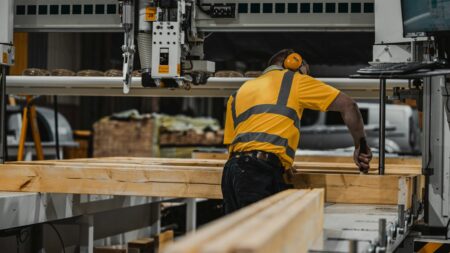


Job Creation Surge: The Latest Trends in Canada’s Manufacturing Workforce
By [Author Name]
Published on [Date]
In the shadow of the COVID-19 pandemic, Canada’s manufacturing sector has demonstrated surprising resilience and a remarkable ability to rebound. Over the past year, job creation within this sector has surged, marking a significant turning point for an industry once beleaguered by economic uncertainty and labor shortages. As of early 2023, over 85,000 manufacturing jobs have been created, a figure that represents a 5.2% increase compared to the previous year, leading many analysts to speculate on what this means for the future of Canada’s economy.
Policy Framework and Economic Conditions
The resurgence in manufacturing jobs can be attributed to a combination of government policies and favorable economic conditions. The federal government has rolled out various initiatives aimed at revitalizing the manufacturing sector, including tax incentives for companies that innovate and hire locally. The “Made in Canada” initiative has garnered significant attention, encouraging businesses to source materials and labor domestically, thereby bolstering local economies.
According to a report from Canada’s Ministry of Innovation, Science, and Industry, the rebound has been further fueled by investments in green technology and automation. These areas not only promise job creation but also remind Canadians of the importance of sustainable practices in manufacturing. Transitioning to greener technologies has opened new avenues for employment, with an estimated 30,000 jobs projected in the renewable energy sector alone over the next five years.
Industry Trends: Automation and Skills Gap
While the job numbers are encouraging, they come with their own set of challenges. The surge in manufacturing jobs has also highlighted an ongoing skills gap that has long plagued the industry. As factories increasingly turn to automation and advanced technologies, there is a growing need for highly skilled workers who can manage and maintain these sophisticated systems.
“We’re witnessing a paradigm shift in the type of workforce needed in manufacturing,” says Lorraine Palmer, a labor market analyst at the Canadian Manufacturing Coalition. “Jobs are evolving; organizations are looking for individuals who are not only machinists but are also tech-savvy.”
To address this skills gap, educational institutions across Canada are adapting their curriculums to better align with industry needs. Community colleges and vocational schools have integrated courses in robotics, programming, and data analysis, ensuring that students enter the workforce equipped with the necessary skills.
Diversity in the Workforce
Another significant trend is the continued push towards diversifying the manufacturing workforce. The industry, historically dominated by men, is now witnessing a rise in female participation, accounting for nearly 30% of the workforce. Initiatives aimed at encouraging women to enter the manufacturing sector have gained traction, with organizations like Women in Manufacturing Canada providing resources and support networks.
“Diversity is not just a social issue; it’s also an economic one,” states Dr. Emma Liu, a sociologist specializing in labor studies at the University of Toronto. “A more diverse workforce can lead to increased innovation and productivity.” The successful integration of diverse perspectives helps companies adapt to changing markets, making them more competitive on the global stage.
Challenges Ahead
Despite the positive momentum, challenges loom on the horizon. Supply chain disruptions, initial costs associated with adopting new technologies, and foreign competition remain constant hurdles. Experts advise that policymakers should focus on a robust framework that supports not only job creation but also long-term sustainability.
“Investment in research and development should be prioritized, particularly in the context of emerging technologies,” suggests Keith Reynolds, an economist at the Canadian Labour Congress. “Failure to do so could result in falling behind international competitors.”
The Future Outlook
Looking ahead, the Canadian manufacturing sector appears poised for growth. With a solid recovery trajectory, diversified initiatives, and modernization efforts, there is potential for stability in job creation. Job seekers are encouraged to pursue training in high-demand fields, and businesses are urged to continue investing in workforce development.
The road to recovery may still be fraught with challenges, but the optimism echoed throughout the industry offers a glimpse into a reshaped future. As Canada looks to strengthen its economy, a thriving manufacturing sector will undoubtedly play a pivotal role in the nation’s success.
Related Products
-
Ninja NC301C, CREAMi Ice Cream, Gelato, Milkshake,…
Products $279.99 -
Sale!
TuTu 22-inch LED TV, 1080P FHD Flat-Screen TV with…
Products Original price was: $205.42.$165.38Current price is: $165.38. -
ACEMAGIC 2026 LX16 Laptop, 16-inch FHD (1920 x 120…
Products $699.99