

Article content continued
“Our space looked completely different, and like nothing any of us ever wanted. It was stark. It was sterile. But it was the only way we were going to see it through.”
Staying open, he says, “It wasn’t about business, it really wasn’t. This is my place to go and always has been, and there were people in the neighbourhood looking for space as well — just to, in whatever way was possible, create their normal.
“It was the hardest, most difficult three, four weeks we’ve ever been though. The conversations were not easy, and they were long.
“But I think that’s what I appreciated the most about it. People needed to talk.
“The toughest part was being in a situation where people were coming in looking for answers, and I had none, obviously. It was all about concern, and that was a heaviness on all of us. Being in service and on the floor and physical, but also the mental drain that comes with that, I would go home and, oof, it would be over — lights out instantly.”
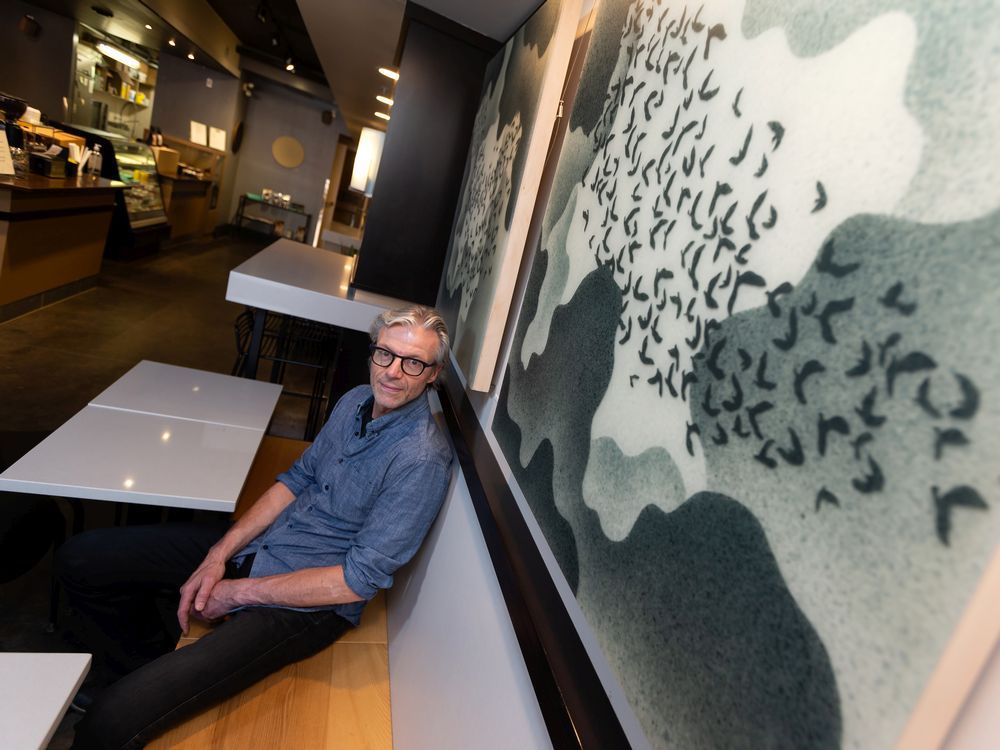
For months, gone were available seats, magazines and Journals to flip through, people working on their laptops … though Chris Armstrong’s black and white photos of Edmonton on the wall helped, and rather fit that communist Berlin vibe, including a heightened paranoia of being watched for slipups.
But the reduced patronage — still not quite back amid the empty towers — allowed Linden to do renovations he’d been planning for the recent 10th anniversary. “We had no idea at the time what the world would look like when we came out of it, or if we could even come out of it.