


First the moon, then Mars
For the first time ever, a Canadian astronaut will be heading to the moon.
On Dec. 16, Canada signed an agreement with the United States called the Gateway Treaty, confirming that a Canadian astronaut will orbit the moon in NASA’s 2023 Artemis II mission.
That means they will be getting close to the moon and going around it but not landing on it.
Here are five reasons why the Artemis II mission and future missions in the Artemis program will be historic.
1. First Canadian astronaut to orbit the moon
Although no one in the upcoming 2023 mission will land on the moon, it will mark the first time a Canadian astronaut orbits the moon on a spaceflight.

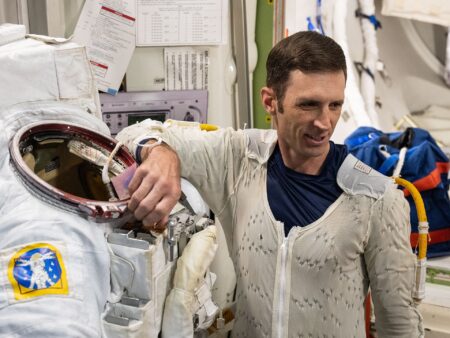
The moon-bound astronaut will be one of these astronauts. (Image credit: CBC News/Canadian Space Agency)
Only one of four Canadian astronauts will be chosen for the mission, but no one has been selected yet.
2. It’s the first step in creating the ‘lunar gateway’
The upcoming 2023 mission is part of a larger program called the Lunar Gateway project.

An artist’s rendering of what the Lunar Gateway will look like. (Image credit: NASA).
The goal of the project is to eventually build a new space station above the moon’s surface to allow astronauts to explore the moon and learn more about extraterrestrial lands.
The newly signed agreement also calls for a second flight for a Canadian astronaut to that future space station.
3. It’s the first crewed moon mission in 50 years
The Apollo missions of the late 1960s and early ’70s marked the first time a human stepped foot on another planetary body and the last time a crew was sent to the moon.
Due to funding cuts over the years, no human crew has been back.
This will be the first time since then that a crew of humans heads back to our lunar neighbour.
4. Next step: a woman on the moon
Although the 2023 mission will just be an orbit of the moon, NASA said that they hope to have humans land on the moon again by 2024 as part of a future Artemis mission.

The Artemis II mission map shows the planned flight path and test objectives for the flight. (NASA)
One of those humans will be the first woman to land on the moon.
NASA has not announced who it will be, but they’ve said it will be someone highly experienced who has experience on the ISS.
5. Paving the way to Mars
The whole point of NASA’s Artemis program is to get ready for the big leagues — getting humans to Mars.
Until now, we’ve only been able to send robots and probes to the Red Planet, controlled by humans from a long distance.
NASA hopes the Artemis program will help them learn about how to keep astronauts alive in space.
Establishing a port on the moon will provide future spacecraft a touchdown point other than Earth, making deep-space travel easier.
WATCH — How to become an astronaut – Kids ask questions with Jenni Sidey-Gibbons
With files from The Canadian Press