


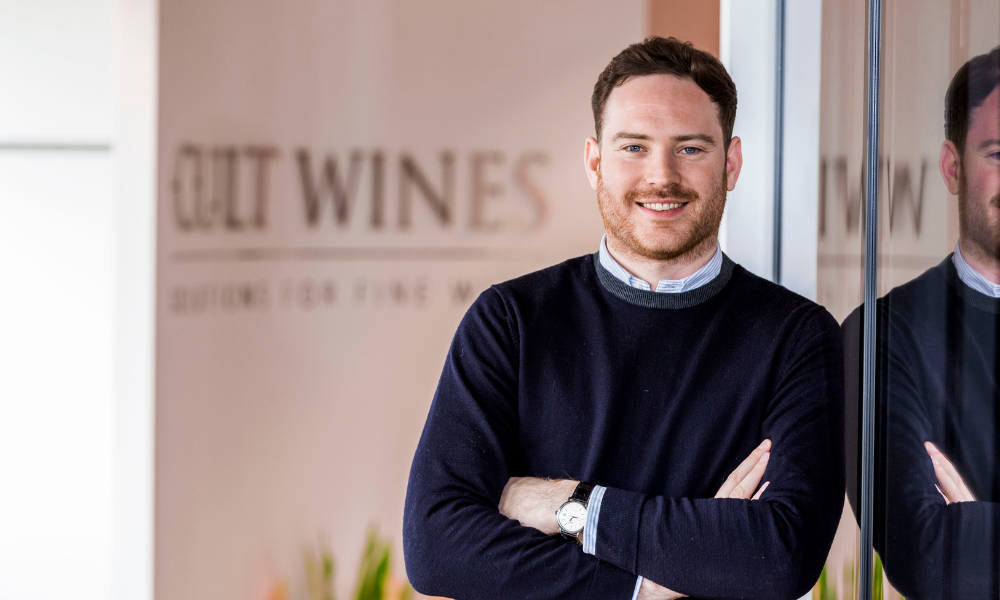
“We created a company that completely turned [wine investing] on its head, which wasn’t to lose the sexiness or the passionate side of wine, we embrace that. But it was also to go to serious investors and say, ‘we’ve got the access, we’ve got the capacity, we have a top-down asset management approach, we have the right checks and balances internally, and we build portfolios based upon someone’s risk profile.”
Gearing said its portfolios are built to deliver the best risk-adjusted returns. Integral to this is its in-house data science team, which has developed its own bespoke proprietary software. The past two years has seen the company invest heavily in machine learning and AI algorithms, which are a big part of modelling and making sure they get the best portfolio balance.
Gearing said: “We use the human touch where the human touch is needed. Wine is a qualitative product in that it’s subjective. You need a human to have some input on the taste or feeling or emotion you get from it. You’re never going to get computers to be able to tell you that because a computer can’t tell you if the wine is over its maturity rate, for example.
“It’s going to take an expert sommelier to taste the wine and say that. We can then build data patterns around that based upon historical knowledge and subjective tasting notes but it’s about combining the two – and that’s what we try to do. We’re not trying to be a quant.”
Cult Wines, therefore, marries the expertise of its in-house sommelier with its tech talent and investment committee. These touch points have helped grow a global company that, as well as a 24,000 square foot warehouse in Wiltshire, U.K., has storage facilities in northern central France, Singapore, Shanghai, Hong Kong, Brazil, and New York state.