

As Canada continues its journey toward equity and justice, the glaring absence of a Black judge on the Supreme Court of Canada raises serious questions about representation, fairness, and systemic barriers in the country’s legal system. Despite significant progress in advancing diversity within various levels of government and the judiciary, the highest court remains untouched by Black representation—a reality that must change in the name of justice and inclusion.
“This is long overdue,” said Senator Wanda Thomas Bernard, a long-time advocate for racial justice and human rights. “Black Canadians have been integral to the fabric of this nation since its inception, and yet, we have never seen a Black Supreme Court justice. This sends a message that our perspectives, our experiences, and our legal challenges are not considered at the highest levels of jurisprudence.”
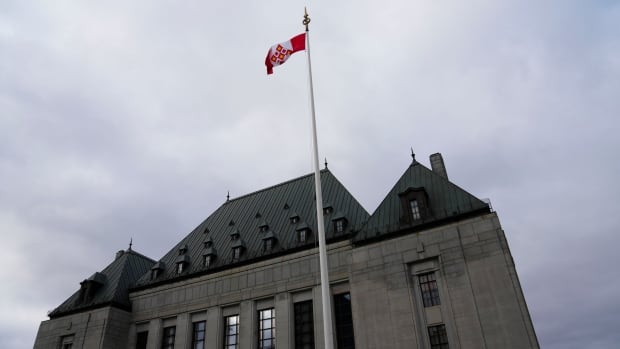
Since its establishment in 1875, the Supreme Court of Canada has played a fundamental role in shaping the country’s legal framework. However, in its nearly 150-year history, it has never had a Black judge.
Currently, the nine-member bench includes judges from diverse backgrounds, including Indigenous representation with Justice Mahmud Jamal, the first Muslim justice appointed in 2021. However, the absence of Black Canadian perspectives in the interpretation of laws, particularly those affecting race, immigration, policing, and systemic discrimination, remains a major shortcoming.
“This isn’t just about symbolism—it’s about justice,” said Dr. Barrington Walker, a legal historian and professor at Wilfrid Laurier University. “The legal system has a profound impact on Black communities, and yet, there is no Black presence at the table when the most critical legal decisions are made.”
The lack of Black representation in Canada’s highest court has significant implications, especially when considering the racial disparities in the justice system. According to a 2021 Statistics Canada report, Black Canadians are disproportionately represented in the criminal justice system, face higher rates of police surveillance, and experience longer prison sentences than their white counterparts.
“Black people in Canada have been fighting for fair treatment in the justice system for decades,” said Anthony Morgan, a lawyer and human rights advocate. “Yet, when it comes to decisions that could shape policies on policing, discrimination, and equity, we don’t have a Black voice in the room. That has real consequences for Black Canadians.”
Systemic Barriers to Judicial Appointments
The road to the Supreme Court is not an easy one, particularly for racialized judges. Canada’s judicial appointment process has historically favored individuals who have served in appellate courts, law faculties, or government legal departments—spaces where Black legal professionals remain underrepresented due to systemic barriers.
“The Supreme Court appointment process is highly political,” said Dr. Akwasi Owusu-Bempah, a sociologist at the University of Toronto. “Even if a Black judge has the qualifications, they often don’t have the network, mentorship, or institutional backing to reach the top level.”
One of the key challenges is the underrepresentation of Black judges in lower courts. While Canada has seen more Black judges appointed at provincial and federal levels in recent years, their numbers remain disproportionately low compared to the general population.
“We need to start by increasing the pipeline of Black lawyers, law professors, and lower court judges,” said Judge Harry LaForme, a former judge of the Ontario Court of Appeal and the first Indigenous judge appointed to an appellate court in Canada. “Without structural changes in appointments at all levels, the Supreme Court will continue to lack Black representation.”
Lessons from Other Countries
While Canada has yet to appoint a Black Supreme Court justice, other nations have taken steps toward greater representation. In the United States, Thurgood Marshall became the first Black justice of the U.S. Supreme Court in 1967, paving the way for others, including the historic appointment of Justice Ketanji Brown Jackson in 2022.
“The U.S. Supreme Court has had multiple Black justices, and so have courts in the U.K., South Africa, and even Brazil,” said Rinaldo Walcott, a professor of Black Studies at the University of Toronto. “Canada prides itself on being a progressive and inclusive country, but when it comes to the highest court, we are lagging behind.”
The Path Forward: Advocating for Change
There is increasing pressure on the federal government to prioritize diversity in judicial appointments. Advocacy groups, legal scholars, and Black community leaders are calling for Prime Minister Justin Trudeau and Justice Minister Arif Virani to ensure that the next Supreme Court appointment includes a Black candidate.
“We need more than just rhetoric; we need action,” said Amal Clooney, an international human rights lawyer. “The time is now for Canada to show its commitment to racial justice by appointing a Black Supreme Court justice.”
The Black Legal Action Centre (BLAC) and Canadian Association of Black Lawyers (CABL) have also pushed for reforms, including greater transparency in judicial selection and a commitment to diversity in Canada’s highest courts.
“The legal system affects every aspect of society, from housing to immigration to policing,” said Charlene Theodore, former president of the Ontario Bar Association. “If we want true justice, our Supreme Court must reflect the diversity of the people it serves.”
Conclusion: A Supreme Court for All Canadians
The appointment of a Black Supreme Court judge is not just a matter of representation; it is a necessary step toward ensuring that the legal system serves all Canadians equitably. Without Black voices at the highest level of judicial decision-making, Canada risks continuing a legacy of systemic exclusion and inequality.
“The appointment of a Black justice would be a transformative moment for Canada,” said Dr. Afua Cooper, historian and professor at Dalhousie University. “It would signal that the highest court in the land recognizes the lived realities of Black Canadians and is willing to take steps to ensure true justice.”
As Canada moves forward, the federal government has an opportunity to demonstrate real commitment to racial justice—not just in words, but in action. The time for change is now.
References
- Statistics Canada. “Racial Disparities in the Criminal Justice System.” 2021.
- Interviews with Senator Wanda Thomas Bernard, Dr. Barrington Walker, Anthony Morgan, and Judge Harry LaForme.
- Reports from the Canadian Association of Black Lawyers (CABL) and the Black Legal Action Centre (BLAC).
Follow Canada News Media
Get the day's top Canadian stories and our two daily 60-second news videos wherever you scroll.