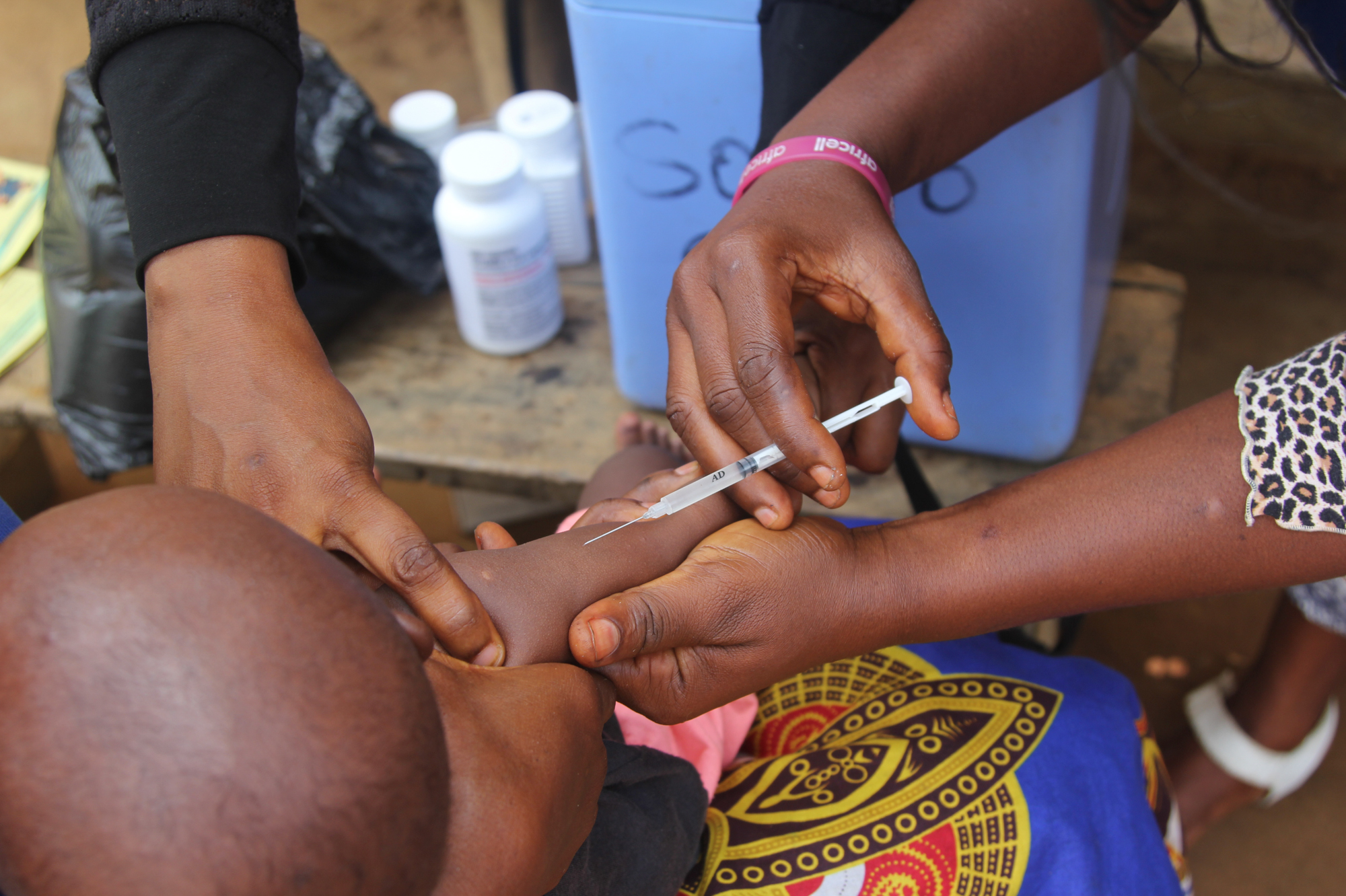
FREETOWN, Sierra Leone — President Biden this month announced plans to ship a half a billion doses of the Pfizer vaccine to the 100 lowest income countries in the world. That would include Sierra Leone and many other sub-Saharan African nations.
But there’s a looming problem. The Pfizer vaccine needs to be stored at minus 100 degrees Fahrenheit. In all of Sierra Leone, population 7.8 million, only one functioning freezer can offer storage at that temperature. It’s housed in a complex at the Ministry of Health’s medical warehouse compound in the capital Freetown. It’s only slightly larger than a residential fridge, and it’s already being used to store an Ebola vaccine which requires similar temperatures.
“It’s definitely a nice gesture by President Biden,” says Dinsie Williams, a Sierra Leonean biomedical engineer. “But we do have to think about everything else along the supply chain of how they keep those vaccines at the right temperature for a long period of time and then having people access them regardless of where they live.”
Health officials in Sierra Leone say they’re likely to request other vaccines such as AstraZeneca and Johnson & Johnson, which only need to be stored in standard refrigerators.
But in Sierra Leone and other sub-Saharan African countries, even ordinary refrigeration is a challenge. Only about 1 in 4 Sierra Leonean households have power. The rate is down to about 6% in rural parts, according to Sustainable Energy for All, a collaboration between the United Nations and the World Bank.
“Access to refrigeration is very limited,” says Williams. “Because there’s very limited access to electricity, at least stable electricity, in most parts of the country.”
Other countries in the region are only slightly better off: only 28% of health facilities in Sub-Saharan Africa have reliable power supplies.
A revolutionary new generation of solar fridges may prove crucial in the upcoming efforts to immunize Sierra Leoneans against COVID. UNICEF and GAVI, the vaccine alliance, have been pushing to deploy these fridges to health clinics in Africa for childhood immunization programs.

Rather than store electricity in batteries to power them through the night, these so called “direct-drive” systems store coldness. They are so efficient and so well-insulated that they can stay cold for 3 days even if the solar panels aren’t supplying power. And the lack of batteries makes them far simpler to operate and maintain.
Saffa Kamara, an immunization officer with UNICEF in Sierra Leone, raves about these solar fridges.
He says they are “far, far better” than earlier solar models, gas-powered ones or even conventional fridges run off a generator.
“All we need at the moment is [the new] solar refrigerators so we can reach the hardest areas, the most difficult communities and immunize the children,” he says. And they could also be the solution to the COVID vaccine storage problem as well, particularly for the vaccines that don’t require ultra-cold temperatures.
The Songo Health Clinic in Northern Province is one of the many government health facilities across Sierra Leone that doesn’t have electricity.
Mariama Koroma, who runs the clinic, says at times they have to deliver babies by flashlight. But they do have a solar fridge for their vaccines — one of 371 in the country.
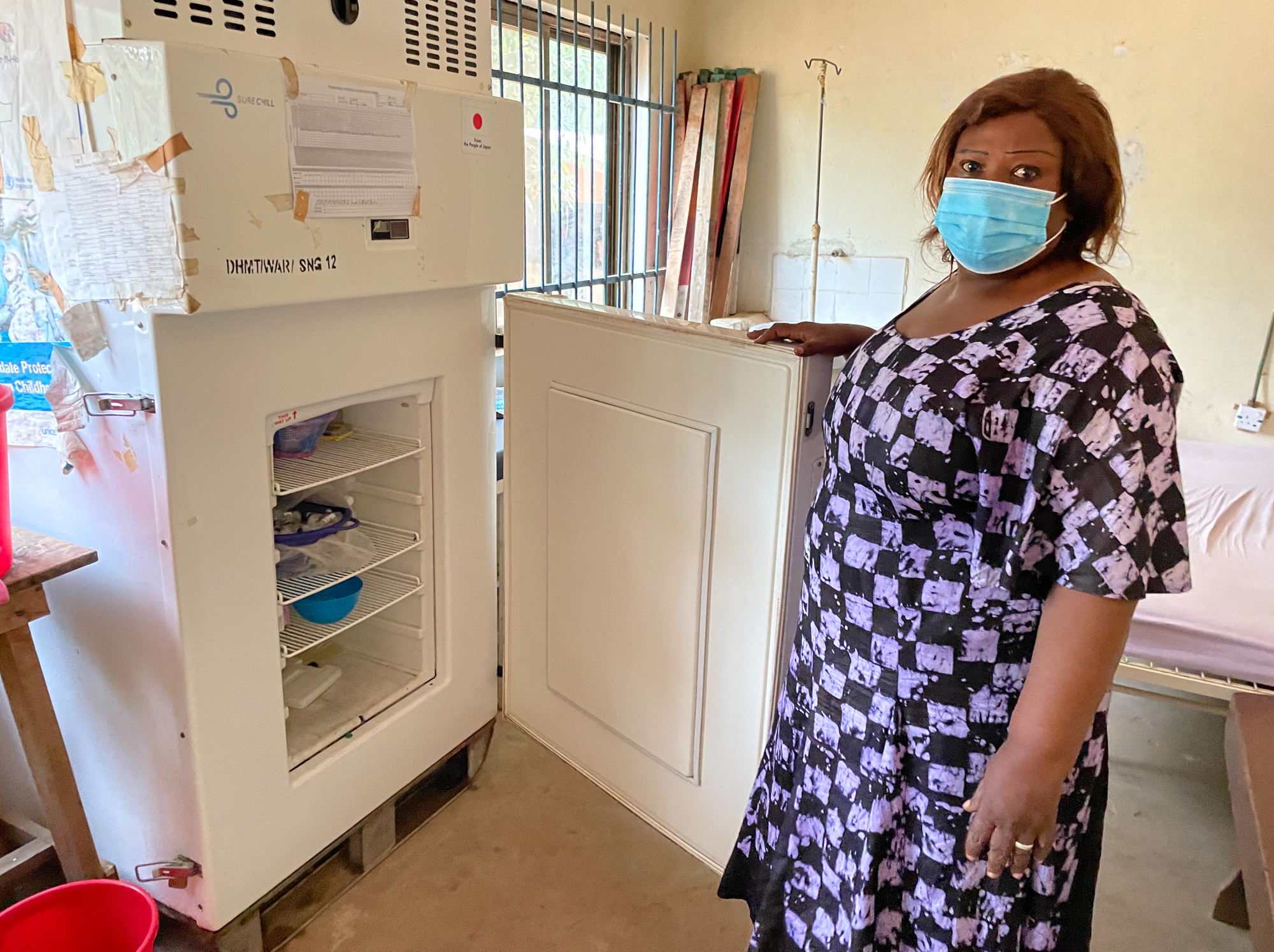
“All the vaccine that we are supposed to use in Sierra Leone, we have here,” Koroma says peering into the thick-walled refrigerator.
Sierra Leone is in the early stages of doing COVID vaccinations. So far only a tiny portion of the population has been immunized. And the limited COVID doses haven’t yet been distributed to small clinics like Koroma’s in Songo.
But as more vaccines do arrive, the new solar freezers will be crucial to allow doses to be distributed, stored and eventually administered to people in many parts of Africa with limited or no electricity — an urgent task as COVID-19 cases rise in Africa.
9(MDA3NzMxMTkxMDEzMDkyOTU3ODRmYjc2Mg001))
AILSA CHANG, HOST:
A new court ruling has set up another legal battle over the 2020 Census that is likely heading to the Supreme Court. This time, the fight is over the data used for redrawing voting districts, and it could cause major delays to upcoming elections around the U.S. NPR census correspondent Hansi Lo Wang joins us now from New York.
Hey, Hansi.
HANSI LO WANG, BYLINE: Hey, Ailsa.
CHANG: OK, so what does this new court ruling say exactly?
WANG: Well, the state of Alabama asked for an emergency court order that would have forced the Census Bureau to release the detailed 2020 census data about people’s race and other demographic information that’s used when redrawing voting districts – to release that data earlier than the bureau has been planning. The bureau’s been on track to release this data by August 16, and Alabama wanted the court to stop the bureau from also using new privacy protections for keeping people anonymous in this detailed demographic data. And this new ruling by a three-judge court means the bureau can continue its plans to use these new privacy protections and stick with its schedule for releasing new redistricting data by mid-August.
CHANG: Wait. Tell us more about these protections. Like, how exactly has the bureau been planning to protect people’s privacy in this redistricting data?
WANG: Well, the bureau has been developing a new way of keeping people’s information confidential. It’s based on a mathematical concept known as differential privacy. And it’s important to note federal law prohibits the bureau from releasing personally identifiable information until 72 years after it’s collected for the census. And bureau says it’s trying to keep up with advances in computing and access to commercial data sets that can be cross-referenced and makes it easier to trace supposedly anonymized census to get back to a person. And the bureau concluded that a privacy protection system based on differential privacy is the best way to balance protecting confidentiality and keeping census data useful.
CHANG: So what’s Alabama’s argument? Like, why does the state oppose the Census Bureau’s plan to protect privacy?
WANG: Alabama has been arguing that it will make the new redistricting data unusable for the redrawing of voting maps because of the way the bureau is planning to add noise or data for fuzzing the census results and the way the bureau is trying to smooth out the effects of adding that noise. Now, Alabama’s argument, though, is citing early analysis of some preliminary test data, and bureau has since changed its privacy plans. And it says that its latest version – in a statement – quote, “ensures the accuracy of data necessary for redistricting and Voting Rights Act enforcement.” So at this point, we’ll have to keep watching this debate play out in court.
CHANG: Right. This is most likely not the end of the road legally, right?
WANG: Right, because federal law allows this three-judge court’s rulings to be appealed directly to the Supreme Court. And this legal fight is keeping just a cloud of uncertainty over this data and the Census Bureau’s privacy protection plans.
CHANG: Well, talk about that uncertainty. Like, how could it affect upcoming elections, you think?
WANG: Well, to prepare for upcoming elections, many local and state redistricting officials are waiting for new 2020 census data. They determine the areas future elected officials will represent – those maps. And some state and local governments have already been pushing back primary and general election dates. And these delays in getting the data out could also shrink the amount of time for public feedback on new voting maps. And, you know, the bureau says if the courts ultimately block its current privacy protection plans, the bureau will need six to seven months to work out alternative plans. And that would mean it’s possible that 2020 census redistricting data may not be out until early 2022.
CHANG: Yeesh (ph). That is NPR’s Hansi Lo Wang who covers the census for us.
Thank you, Hansi.
WANG: You’re welcome, Ailsa. Transcript provided by NPR, Copyright NPR.