

At this point in the pandemic, we all know the two-metre rule of socially distancing.
What I didn’t know was the origins of what has become the gold standard governing efforts to control the spread of COVID-19. And thanks to a new article from The BMJ (originally the British Medical Journal) published this week, I’ve learned that so-called golden rule has a bit of tin ring to it.
But that’s what happens when a rule is based on outdated science. As in science that predates the Spanish Flu.
In fact, you have to go all the way back to 1897 when studies of droplets from speech, coughing and sneezing led to a proposed safe distance of one to two metres.
The BMJ article outlines how problematic that rule is given more recent research that shows how the aerosols we can’t see — those tiny droplets of body fluids believed key to spreading the virus — can travel far further than two metres. For instance, there’s the example of a U.S. choir practice in which one asymptomatic person infected at least 32 others despite social distancing.
So what are we to make of this research?
The BMJ recommends social distancing be seen as only one part of the public health approach to containing the pandemic. In other words, the two-metre figure is not a magical number that guarantees safety.
At the same time, the research recommends a more nuanced approach to social distancing. For instance, we need to look at factors such as risk, ventilation and exposure time. We need to recognize the importance of masks and other protective equipment in various settings.
And if we don’t want to end up six feet under, we need to keep washing our hands.
— Paul Samyn, Winnipeg Free Press editor
THE LATEST NUMBERS


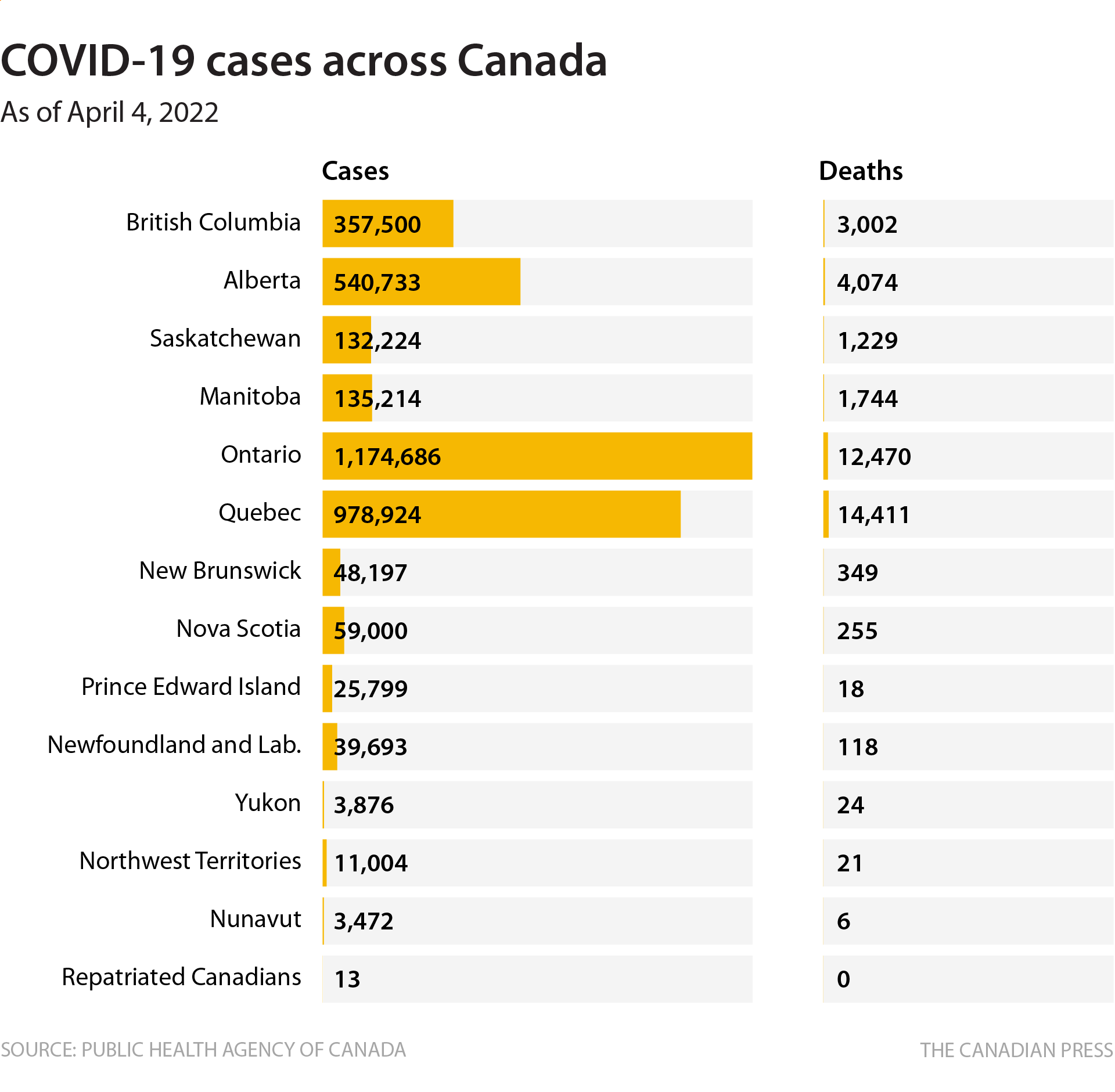
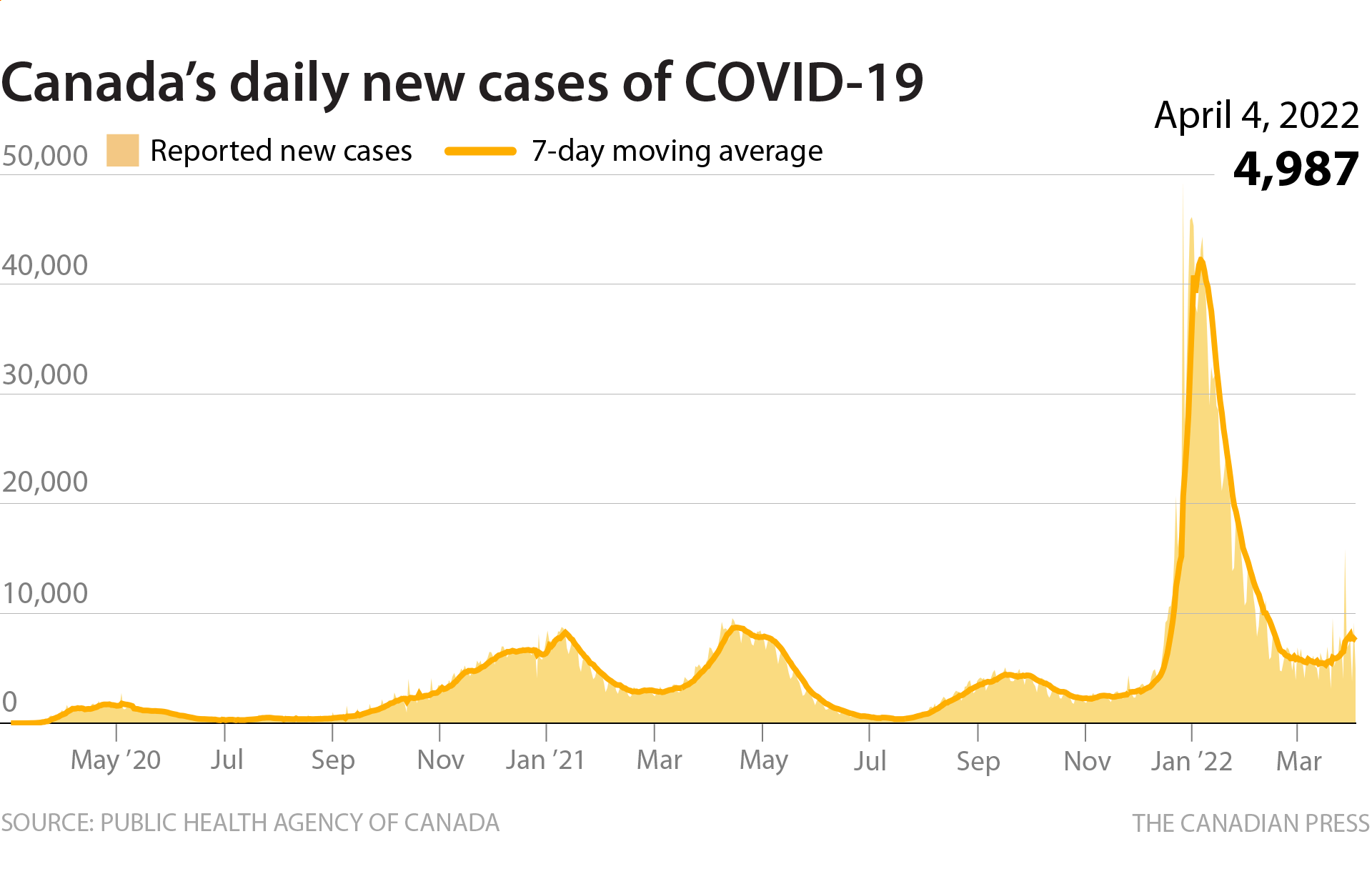
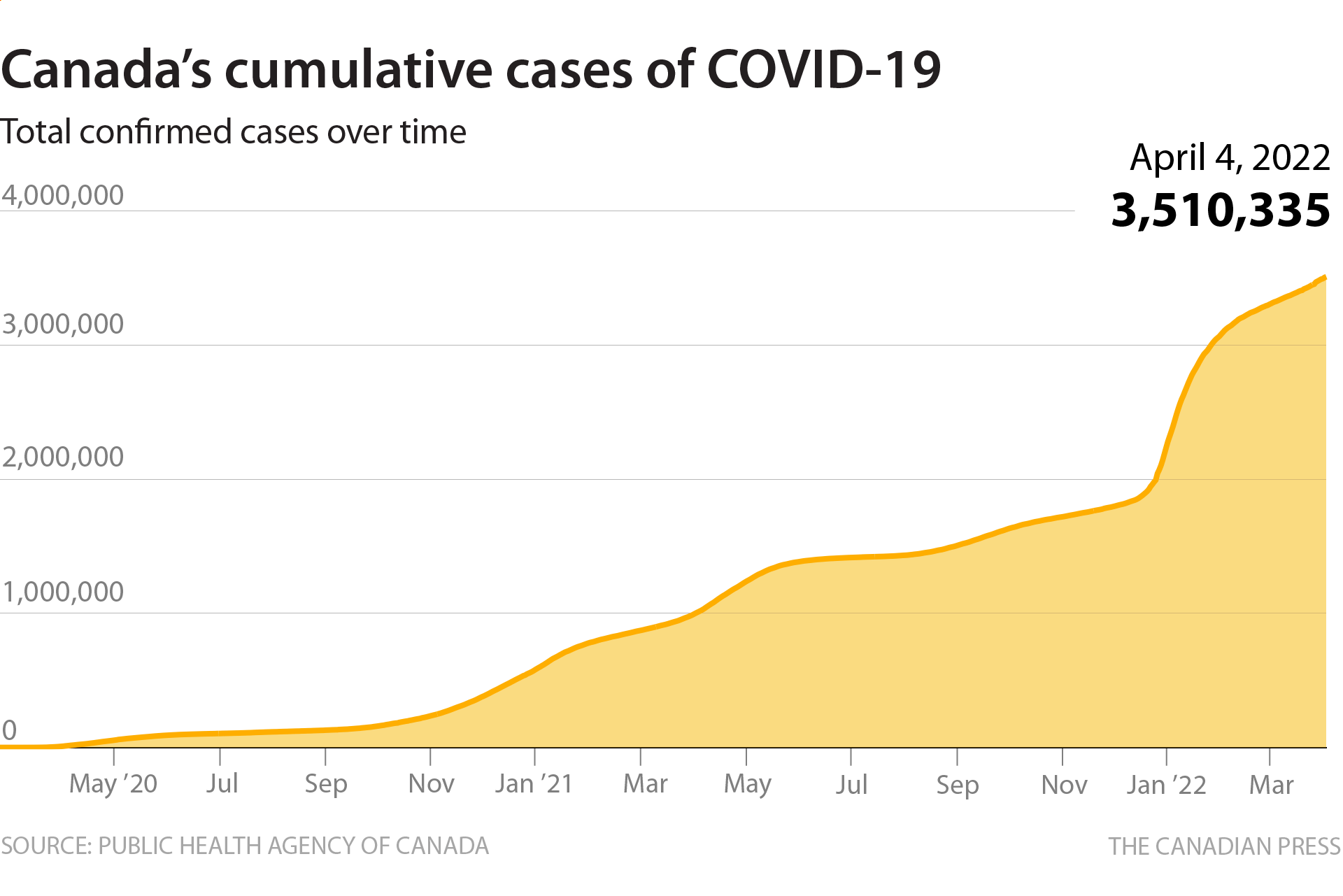
Note: Manitoba and Canada figures may not match due to differences in data sources.
THE LATEST IN MANITOBA
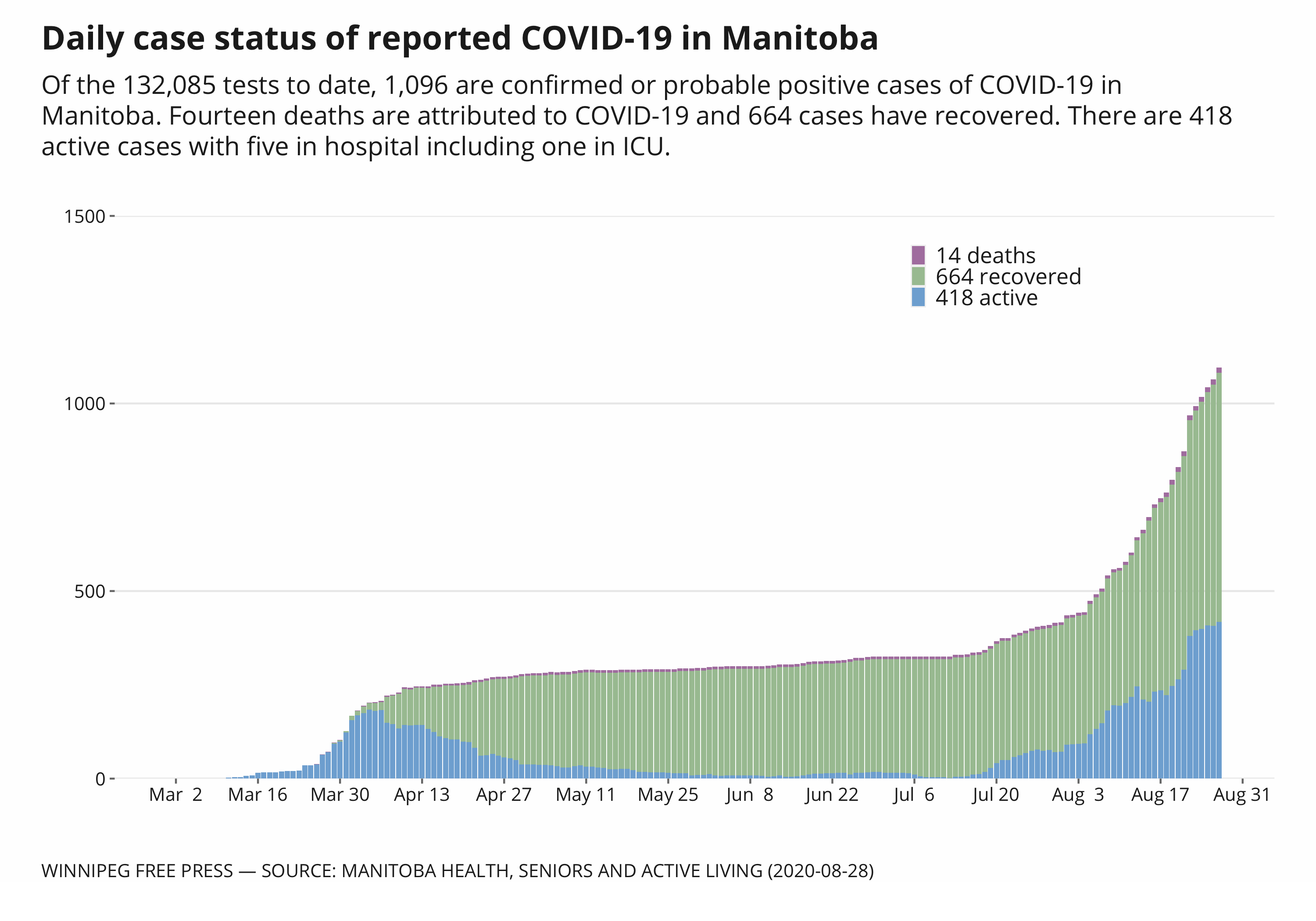
• Health officials reported 32 new cases of COVID-19 in the province on Friday, including seven in the Winnipeg health region. Eighteen of the new cases are located in the hard-hit Prairie Mountain Health region, which includes the city of Brandon. While the number of lab-confirmed cases continues to climb — the total to date is 1,096 with 418 active cases — the number of hospitalizations fell. There are now five people hospitalized with COVID-19 in Manitoba (with one one in ICU), compared with six on Thursday. The current five-day test positivity rate in Manitoba is now at 2.3 per cent compared with three per cent on Thursday. An additional 1,252 laboratory tests were completed on Thursday, bringing the total number of tests completed to 132,085.
• Starting Saturday, anyone visiting a City of Winnipeg facility or boarding a Winnipeg Transit vehicle must wear a non-medical face mask. The requirement will apply to Winnipeg Transit and accessible Winnipeg Transit Plus vehicles, as well as city hall, city-operated recreation facilities, libraries and administrative buildings, according to a press release. Transit riders who fail to comply with the new rule could face a $100 fine.
THE LATEST ELSEWHERE
• Canada’s chief public health officer says families should expect to see cases of COVID-19 in schools as children head back to class. It is important that each school have a plan and that everyone knows what to do when there’s an outbreak of the novel coronavirus, Dr. Theresa Tam told a news briefing Friday.
• The Canadian economy suffered its worst three-month stretch on record in the second quarter as the economy came to a near halt in April before starting to recover in May and June. Statistics Canada said Friday real gross domestic product contracted at an annualized rate of 38.7 per cent for the quarter, the worst posting for the economy dating back to when comparable data was first recorded in 1961. Almost every single component of the economy used to calculate GDP was at its lowest point during the three-month stretch — driven largely by widespread lockdowns in April meant to slow the spread of COVID-19. However, economic output rebounded in May by 4.8 per cent, and the agency said June saw an increase of 6.5 per cent, a monthly record.
• The federal government is extending travel restrictions by one month to limit the spread of COVID-19. Public Safety Minister Bill Blair said Friday on Twitter that existing restrictions on international travel to Canada would be extended to Sept. 30. Blair says Canadian citizens and permanent residents who are returning home to Canada will continue to be subjected to strict quarantine measures.
• WestJet passengers in Vancouver may soon be taking COVID-19 tests before takeoff. WestJet Airlines Ltd. and Vancouver International Airport announced on Friday plans for a pilot project to test passengers for the coronavirus on some departing flights. The announcement comes alongside a strict new policy at the airline to ensure passengers wear masks on board with potential consequences for non-compliers that include a yearlong travel ban. The airline is also requiring that flyers provide their contact information during check-in to help provincial and federal health agencies with contact tracing if an infected passenger is on the same flight.
• Four people at the Republican National Convention in Charlotte, N.C., have tested positive for the coronavirus, health officials in North Carolina’s Mecklenburg County say. The two attendees and two people supporting the convention tested positive among the nearly 800 people tested, according to health officials. County leaders say those four individuals were isolated and any known close contacts were notified and issued quarantine instructions. The Charlotte Observer reports the disclosures come after county health officials raised concerns about a lack of social distancing and mask wearing.
• Nevada officials are reporting what may be the first documented case of coronavirus reinfection in the United States, following similar reports earlier this week from Hong Kong and Europe. A 25-year-old Reno man with mild COVID-19 symptoms initially was found to have the virus in April, recovered and tested negative twice, and then tested positive again in June. He was much sicker the second time, with pneumonia that required hospitalization and oxygen treatment. Genetic tests from each episode showed that viruses were similar in major ways but differed in at least 12 spots that would be highly unlikely from natural evolution of the bug if the man had it continuously rather than being infected a second time, said Mark Pandori, director of the Nevada State Public Health Laboratory. The findings have not yet been published or reviewed by other scientists, but were posted on a research site.
QUOTE, UNQUOTE
“I think that people should not have a massive knee-jerk reaction and just close everything but have local public health examine that situation and provide the advice of what to do in that instance.”
— Dr. Theresa Tam, Canada’s chief public health officer, urging careful consideration when reacting to a school COVID-19 case