



North American stock markets sold off sharply again on Thursday as investors reacted to a slew of negative stories related to the coronavirus outbreak.
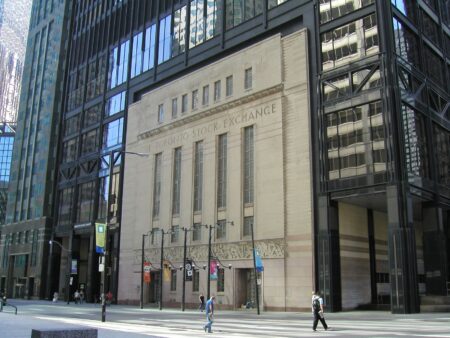
The TSX and Dow Jones were hit by so much selling that rules known as “circuit breakers” were automatically implemented, halting trading for 15 minutes to give the stock market a breather.
The TSX and Dow were both off more than seven per cent within moments of opening, triggering what’s known as a level one trading halt.
LEVEL 1 MARKET-WIDE CIRCUIT BREAKERS TRIGGERED: At the instruction of IIROC, TSX, TSXV and TSX Alpha have been halted due to the triggering of a level 1 market-wide circuit breaker. Markets are now in Pre-Open state and are set to resume trading at 09:51:00.
—@TMXGroup
When the halt was lifted 15 minutes later, the selling intensified. At its lowest point, the TSX was down as much as 11 per cent. The Dow was down by more than 2,100 points, or more than nine per cent, at one point.
If a sell-off tops 13 per cent in either New York or Toronto, markets will be halted again for 15 minutes. If a plunge hits as much as 20 per cent for the day, the market will be shut down for the day.
The VIX index — which is known as Wall Street’s “fear index” because it tracks volatility — rose 13 points to 67, its highest level since the financial crisis of 2008 and 2009.
The sell-off comes on the heels of the two stock groupings officially plunging into bear market territory on Wednesday, which is defined as a loss of more than 20 per cent since their peak.
Anything related to airlines was especially hard hit, as travel around the world dries up. In a Thursday evening address, U.S. President Donald Trump announced that travel between more than two dozen European countries and the U.S. would be restricted for a month, starting tomorrow.
“If President Trump’s speech from the Oval Office last night was intended to reassure markets that the U.S. administration was on the ball when it comes to dealing with COVID-19 in the U.S., it missed the mark by a mile,” said Michael Hewson, chief market analyst at CMC Markets.
Air Canada shares were down by seven per cent, to just over $25 a share. Shares in the airline have lost more than half of their value in barely a month. Air Transat shares lost $2.75 to trade barely above $10 a share. That’s a decline of more than one-third since this sell-off began. Last fall, Air Canada agreed to buy Air Transat for almost twice its current price — a deal that has yet to be finalized.
Shares in U.S. plane maker Boeing also plummeted, down another 14 per cent to $161 US a share. Less than a month ago, those same shares were worth almost $350.
“It’s not just the fear of the economy going weak, but basically being on the brink of shutting down,” said Dennis Dick, proprietary trader at Bright Trading LLC in Las Vegas.
“It’s mass selling across the board [and] we are pricing in a potential to go into another financial crisis.”
The sell-off on the TSX has wiped out several years worth of gains from a multi-year bull run, as it pushed Canada’s benchmark stock index back to where it was at the start of 2016.
“The slide has erased all the gains in the past year,” BMO economist Sal Guatieri said. “There have been several other periods of [annual] declines in stock values in the past decade, all of which proved temporary.
“Let’s hope the current slump follows that pattern,” he said.

Follow Canada News Media
Get the day's top Canadian stories and our two daily 60-second news videos wherever you scroll.
X Threads Facebook Instagram LinkedIn TikTok YouTube Pinterest Reddit Substack Flipboard Newsletter RSS