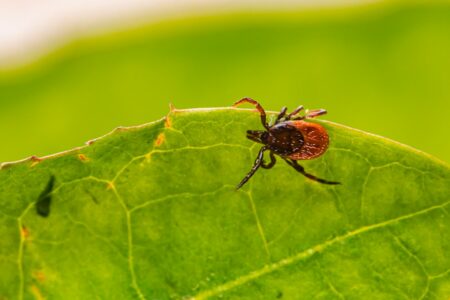


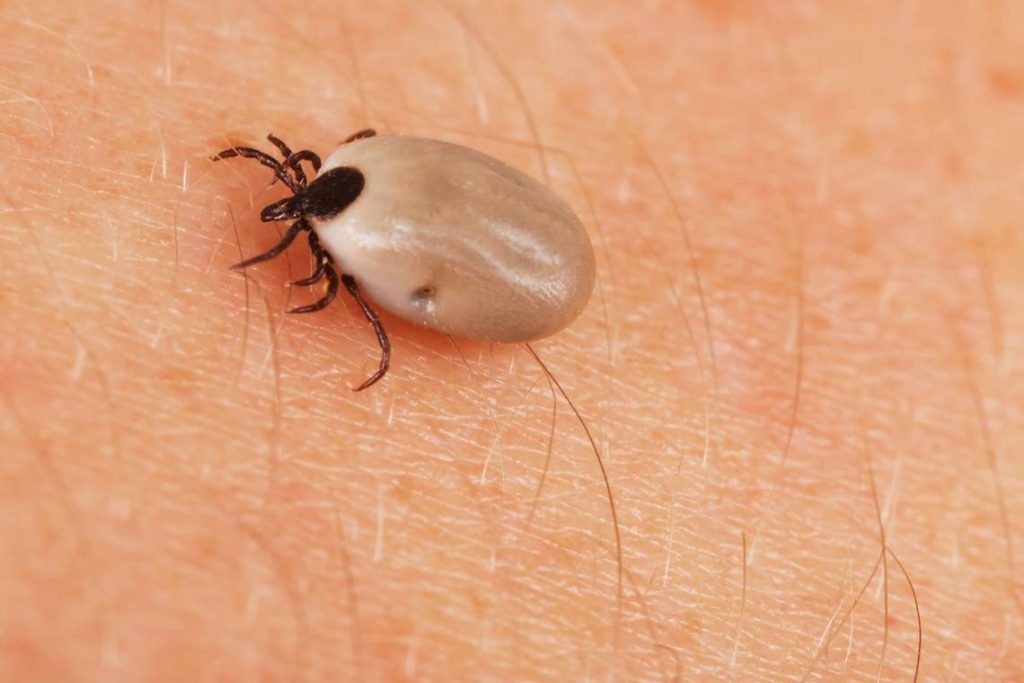

The danger posed by ticks increases during this time of year, though the rates of tick-borne diseases here in Texas are much lower than many other states.
People are exposed by entering an area where ticks exist or come into contact with other warm-blooded animals carrying the parasites, according to the Texas Farm Bureau. Diseases that can be transmitted from ticks to humans are Lyme disease, Rocky Mountain spotted fever and tularemia.
“All ticks feed on warm-blooded animals by attaching themselves to the skin using their mouthparts. Tick ‘bites’ can be painful and cause localized inflammation, swelling, loss of blood (anemia), open hosts to secondary infections and possibly transmit disease agents such as those causing Rocky Mountain spotted fever, Lyme disease and tularemia,” says Texas A&M’s insect field guide. “The bite of a tick is not initially felt. If the tick attaches near the back of the neck and feeds there a while, injecting salivary secretions, the vertebrate victim may suffer from ‘tick paralysis’, which may result in total paralysis and death unless the tick is removed.”
There are 11 species of ticks common in Texas, but you’re most likely to come into contact with the black-legged tick, brown dog tick, Lone Star tick, Gulf Coast tick and American dog tick.
Tick-borne diseases
Ticks are most active in the warmer months of spring and summer and can transmit a variety of diseases, according to the Texas Department of State Health Services:
- Anaplasmosis: Symptoms are fever, headache, muscle aches and fatigue
- Ehrlichiosis: Fever, headache, muscle aches and fatigue
- Lyme disease: Not commonly acquired in Texas. May cause skin lesions or rash, fever, fatigue, headache, muscle and joint aches. If left untreated, it causes severe damage to the joints, heart and nervous system.
- Spotted fever rickettsiosis: Fever and a measles-like rash. Can cause serious illness if not treated quickly.
- Tick-borne relapsing fever: Can cause fever, headache, muscle and joint aches and nausea.
- Tularemia: Transmitted through handling infected animals. May include fever, malaise, skin lesions and swollen lymph nodes.
How to prevent tick bites
- Wearing hats, long-sleeved shirts and pants in light colors as well as tucking pants into boots or socks and closed-toe shoes will protect your skin.
- Keep grass mowed and bushes trimmed.
- Check yourself after being outdoors. If you find a tick, remove it with tweezers.
- Contact a doctor if you have fever, headache, joint pain, muscle pain or swollen lymph nodes within 30 days of a tick bite.