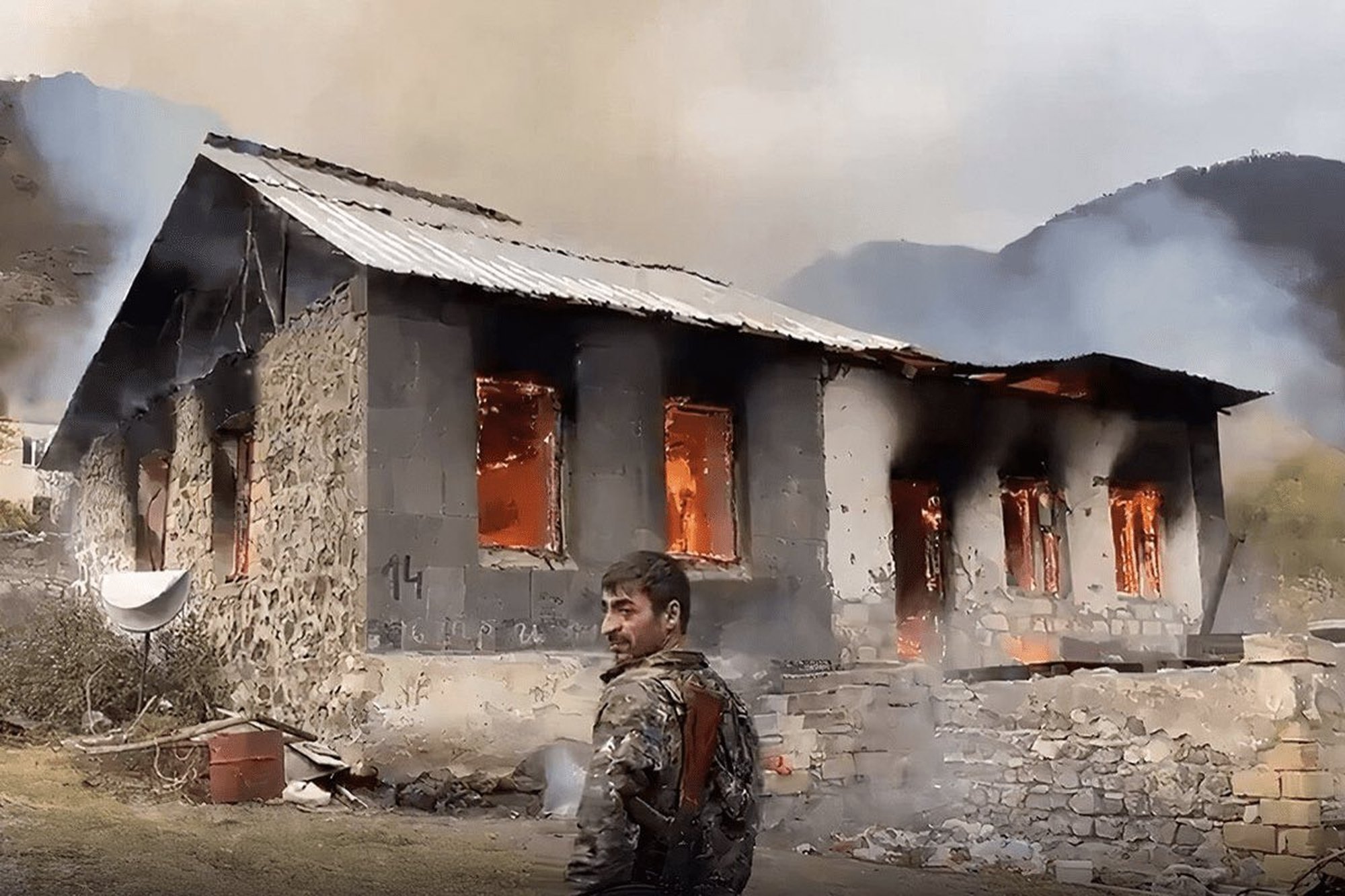
Yerevan, Armenia- Armenian Prime Minister Nikol Pashinyan, revealed on Tuesday, that at least 49 soldiers have lost their lives ever since clashes broke out with Azerbaijani forces on Monday.
The escalation of hostilities between the south Caucasus countries has fuelled fears a fully-fledged war could break out between the former Soviet nations.
“Our losses are 49 people killed. At the moment, the intensity of the fighting has decreased,” said the Prime Minister whilst addressing the Parliament.
Prior to the announcement to Parliament, the government said Pashinyan spoke with Russian President Vladimir Putin and French President Emmanuel Macron in the early hours of Tuesday, after Azerbaijan forces opened fire with artillery and drones on several areas along the border.
According to the government, on separate phone calls, Pashinyan told Putin and Macron about the “provocative, aggressive actions of the Azerbaijani armed forces against the sovereign territory of Armenia, which began at midnight, stressing the importance of an adequate response from the international community.”
However, Azerbaijan’s Defense Ministry accused Armenian “saboteurs” of mining roads and infrastructure on the Azeri side of the border over the weekend, causing an unspecified number of military casualties and denounced as false the reports of a “full-scale invasion” by Azerbaijan into Armenian territory.
Russia’s Foreign Ministry has since called on the sides “to refrain from further escalation, exercise restraint and strictly observe the ceasefire,” which had been agreed between Yerevan and Baku (Azerbaijan’s capital) through Moscow’s mediation in 2020.
Wars, ethnic cleansing, mutual accusations of war crimes, and historical injustice have always accompanied the Karabakh conflict which has smouldered in the heart of the Caucasus for more than 100 years.
Karabakh is one of the oldest parts of Azerbaijan. The word Karabakh itself comes from Azerbaijani and means “black garden”. The Armenian name for this region came about much later and the contest for this territory has always been known as the Karabakh conflict.
The Karabakh conflict (or, more accurately, the struggle to preserve Armenianhood in its historic motherland) reached new heights in the 20th century after the breakdown of the Russian Empire when Armenia, Azerbaijan, and Georgia gained independence. The fight for Karabakh was accompanied by the Armenian genocide in the Ottoman Empire and Turkey’s active involvement in the conflict. The Turkish army was helping Azerbaijan, which it had close ethnic ties, in its war against the Armenians, using massacres, pogroms, and ethnic cleansing carried out in Eastern Armenia to resolve the “Armenian issue” once and for all.
Soviet rule in the South Caucasus took the edge off the conflict for several decades, but it failed to resolve it and even created more reasons for its re-emergence.
Follow Canada News Media
Get the day's top Canadian stories and our two daily 60-second news videos wherever you scroll.