


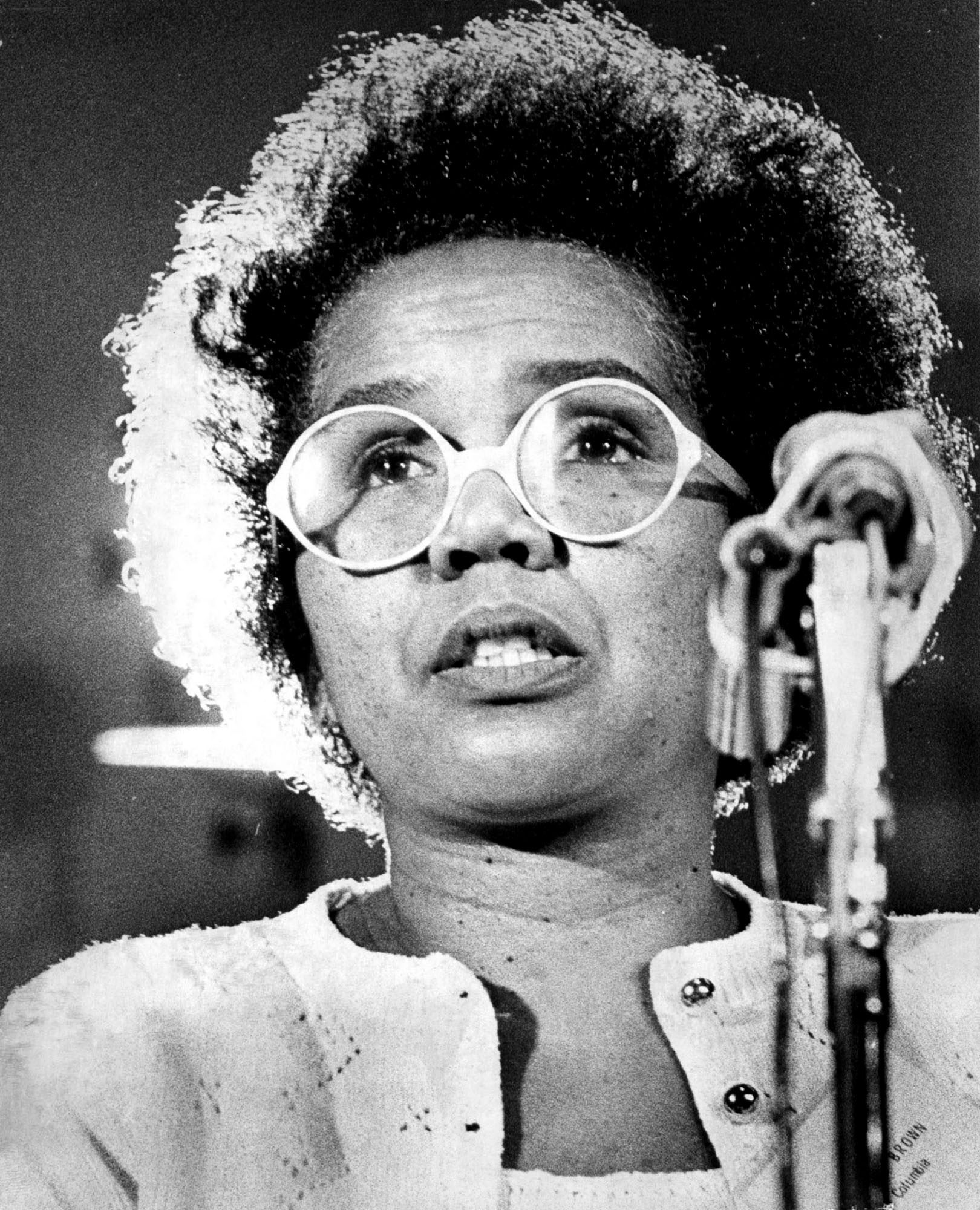
As Black History Month 2025 unfolds in Canada, we are reminded of the many trailblazers whose contributions have shaped the country’s social, political, and cultural landscape. Among these figures is the remarkable Rosemary Brown, whose legacy continues to inspire generations of Canadians. A pioneering politician, feminist, and advocate for social justice, Brown’s journey from her native Jamaica to Canada marked the beginning of a lifelong commitment to equity, human rights, and gender equality. As we honor her in 2025, her story serves as a powerful reminder of the vital role Black women have played in Canada’s history and their ongoing contributions to our collective future.
Rosemary Brown was born in Jamaica in 1930 and immigrated to Canada in 1950 to pursue her education at McGill University in Montreal. Her arrival in Canada at the age of 20 marked the beginning of a lifelong fight for equality. Although she faced racial and gender discrimination throughout her time in Canada, she remained undeterred, driven by a passion for social justice that would guide her future endeavors.
In an interview with the Canadian Broadcasting Corporation (CBC) in the early 1990s, Brown reflected on her early experiences in Canada. “Coming to Canada in the 1950s, I quickly realized that there were barriers, not just because I was Black, but also because I was a woman,” she said. “But I was determined not to let those barriers define me or my future.”
Rosemary Brown’s impact on Canadian politics was groundbreaking. In 1972, she became the first Black woman to be elected to a provincial legislature in Canada, representing Vancouver-Burrard in British Columbia. Her election was a significant milestone for the Black community, and it set the stage for more Black Canadians to enter public office in the years that followed. Brown served as a Member of the Legislative Assembly (MLA) for 14 years until her retirement in 1986.
During her time in office, Brown was a vocal advocate for gender equality, racial justice, and social welfare. She was instrumental in pushing for reforms to end discriminatory hiring practices and promote gender equity in the workplace. Her efforts also led to the establishment of programs that provided support for single mothers and marginalized communities.
In 1974, Brown made history again by running for the leadership of the federal New Democratic Party (NDP), becoming the first woman to run for the leadership of a major political party in Canada. Though she did not win the leadership, her candidacy was a turning point, bringing attention to the issues faced by Black Canadians and women in politics.
“I didn’t run because I thought I was going to win,” she later said in an interview. “I ran to show that Black women can lead, that we belong in every space where decisions are made.”
Beyond her political achievements, Rosemary Brown was a fierce advocate for women’s rights. She was a founding member of the Vancouver Status of Women Council and the Canadian Women’s Foundation, organizations that remain at the forefront of the fight for gender equality in Canada. Brown’s advocacy extended beyond her own community—she worked tirelessly to ensure that all marginalized groups, including Indigenous peoples, immigrants, and refugees, had access to justice and opportunities.
In 1993, she was appointed Chief Commissioner of the Ontario Human Rights Commission, a position she held until 1996. In this role, she continued to champion human rights, addressing issues of systemic racism, sexism, and discrimination in Canadian society. Her leadership at the commission helped to elevate discussions around intersectionality, recognizing that individuals experience discrimination in multiple and interconnected ways.
“Rosemary Brown’s leadership on human rights was transformative,” said Ena Chadha, a former Chair of the Ontario Human Rights Commission. “She understood that you couldn’t address one form of discrimination without addressing others. She pushed for policies that recognized the unique challenges faced by women of color, immigrants, and Indigenous peoples.”
Rosemary Brown’s legacy continues to resonate today, particularly as Canada grapples with ongoing issues of racial injustice and inequality. In the years since her passing in 2003, her contributions to politics, feminism, and human rights have served as a beacon of hope and a call to action for future generations of activists and leaders.
Angela Robertson, a prominent Black feminist and social justice advocate, credits Rosemary Brown as a key influence in her own activism. “Rosemary showed us what was possible,” Robertson said. “She carved out space for Black women in places where we were often excluded, and she did it with grace, strength, and a deep commitment to justice. Her work laid the foundation for so many of us to continue pushing for change.”
Brown’s influence extends beyond the political realm. Her work in the community and with grassroots organizations has inspired countless Black Canadians to engage in activism and pursue careers in social justice. Her impact on the Black feminist movement in Canada cannot be overstated, as she remains a central figure in the fight for intersectional feminism.
As we celebrate Black History Month in 2025, it’s essential to remember that Rosemary Brown’s work is far from over. While Canada has made significant strides in addressing racial and gender inequalities, much work remains to be done. Black Canadians continue to face systemic barriers in education, employment, healthcare, and the justice system. The fight for true equality is ongoing, and Brown’s legacy serves as both a reminder of how far we’ve come and a call to action for the future.
“Rosemary would have been the first to tell us that the work isn’t finished,” said Cheryl Thompson, a professor of Black Canadian Studies at Ryerson University. “She was a tireless advocate for change, and we owe it to her and to ourselves to continue that fight. Her legacy is a reminder that progress is possible, but it requires constant vigilance and effort.”
In honoring Rosemary Brown’s contributions, Black History Month 2025 provides an opportunity to reflect on the ongoing struggles for equality and justice in Canada. Her life and work remind us that change is possible when individuals are willing to stand up against injustice, challenge the status quo, and advocate for a better future.
As we celebrate her legacy, it’s also a call to action for current and future generations to continue the work of dismantling systemic racism and inequality. Brown’s example demonstrates that, with courage, determination, and a commitment to justice, we can create a more equitable society for all Canadians.
Rosemary Brown’s journey from Jamaica to Canada was marked by her relentless pursuit of justice, equality, and social change. As the first Black woman elected to a provincial legislature in Canada and a lifelong advocate for human rights, she left an indelible mark on the country’s political and social landscape. Her legacy continues to inspire those who fight for justice today, and as we celebrate Black History Month 2025, we honor her contributions and commit ourselves to continuing her work.
In the words of Rosemary Brown herself, “We must open the doors, and we must see to it they remain open, so that others can pass through.” This Black History Month, let us reflect on those words and carry her legacy forward into the future.
Follow Canada News Media
Get the day's top Canadian stories and our two daily 60-second news videos wherever you scroll.