

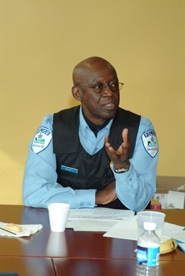
As Black History Month 2025 unfolds across Canada, many notable individuals and pioneers are being celebrated for their contributions to the Black community and Canadian society as a whole. One such figure is Lyonel Anglade, a Community Relations Officer with the Service de police de la Ville de Montréal (SPVM), whose work has helped bridge gaps between law enforcement and Montréal’s diverse cultural communities, particularly those of Haitian origin.
Lyonel Anglade has emerged as a key player in fostering understanding, dialogue, and trust between Montréal’s youth and the police. Through his dedicated outreach efforts, Anglade has not only worked to break down harmful stereotypes but also built strong, lasting partnerships that aim to improve community relations and reduce tensions.
Born to Haitian parents, Anglade grew up in Montréal’s vibrant and diverse neighborhoods. His personal experiences as a Black man in Canada, coupled with his professional journey in law enforcement, give him a unique perspective on the challenges faced by both the police and minority communities.
Anglade has spent much of his career focusing on improving relations between law enforcement and the city’s youth, particularly those from immigrant and marginalized communities. As part of his role as Community Relations Officer, Anglade regularly meets with young people to engage in candid conversations about their perceptions of the police, racial profiling, and systemic issues within the criminal justice system.
In a recent interview, Anglade spoke about the importance of building relationships with youth, especially those of Haitian and other Black cultural backgrounds. “One of the biggest challenges is breaking down the walls of distrust,” Anglade explained. “Many young people, especially those from Black and immigrant communities, feel that the police are not on their side. They feel targeted, misunderstood, and excluded. My goal is to listen to their concerns, acknowledge their lived experiences, and show them that change is possible through dialogue and cooperation.”
Fostering Partnerships with Youth
For Lyonel Anglade, working with youth is not just about improving their relationship with the police, but also about empowering them to become active participants in their communities. Anglade runs several programs designed to help young people develop leadership skills, understand their rights, and engage in meaningful conversations about justice and equity. These initiatives range from mentorship programs to sports events that bring police officers and youth together in an informal setting.
“At the end of the day, it’s about creating opportunities for young people to be heard,” Anglade said. “When we give them the tools to express themselves, we help them build confidence, which in turn strengthens the community as a whole.”
In 2025, Anglade’s work is more critical than ever. With rising concerns about systemic racism and police violence, the role of community relations officers like Anglade is essential in promoting understanding and de-escalating tensions.
Montréal, like many cities across Canada, has been grappling with issues of racial profiling, particularly among Black and Indigenous communities. Anglade acknowledges that the relationship between the police and these communities has historically been fraught with tension, and progress has often been slow.
“Racial profiling is a reality that we cannot deny,” Anglade noted during a community event. “But what we can do is address it head-on. We need to train officers to recognize their biases, and we need to have honest conversations about how these biases affect our policing. This is something that our department is committed to changing.”
In his role, Anglade has helped launch workshops and forums aimed at educating police officers about cultural awareness and implicit bias. These initiatives are part of a broader effort by the SPVM to improve its relationship with marginalized communities and ensure fair treatment for all citizens, regardless of race or background.
As Black History Month 2025 continues, Lyonel Anglade’s work serves as a powerful reminder of the importance of community engagement and the need for institutions to take an active role in addressing systemic inequities. For many in Montréal’s Black community, Anglade is not only a role model but also a symbol of hope for a more just and inclusive society.
During a Black History Month panel discussion, Anglade shared his thoughts on the significance of the month and the role of Black Canadians in shaping the country’s future. “Black History Month is a time for reflection, but it’s also a time for action,” Anglade said. “We need to celebrate our achievements, but we also need to acknowledge the work that still needs to be done. It’s about paving the way for the next generation of Black leaders and ensuring that their voices are heard.”
Anglade’s commitment to his community and his unwavering dedication to improving relations between the police and marginalized youth have earned him widespread respect, not just in Montréal but across Canada. As the country continues to reflect on its history and future during Black History Month, figures like Lyonel Anglade remind us of the power of resilience, dialogue, and community action.
Many community members have praised Anglade’s efforts, noting the positive impact he has had on fostering trust between the police and Montréal’s cultural communities.
“Officer Anglade has been a constant presence in our neighborhood,” said Marie-Josée, a community leader in Montréal’s Little Haiti. “He listens to the concerns of our youth, and he takes the time to explain how the system works. I think he’s made a real difference in how our young people view the police.”
Another community member, Jean-Pierre, a father of two, expressed his gratitude for Anglade’s work. “My son was having trouble with the police because he felt targeted. But after attending one of Officer Anglade’s workshops, he came home with a different perspective. He learned that there are officers out there who care and who want to make things better.”
As Canada continues to address issues of systemic racism and the role of law enforcement, the work of individuals like Lyonel Anglade provides a roadmap for change. By focusing on dialogue, education, and community engagement, Anglade is helping to reshape the relationship between the police and the communities they serve.
Black History Month 2025 offers an opportunity to reflect on these efforts and to celebrate the contributions of Black Canadians who, like Anglade, are working tirelessly to make the country a more just and equitable place for all.
In the words of Anglade: “Change doesn’t happen overnight, but it starts with conversations—honest, difficult conversations. And from those conversations, we can build a future where every young person, regardless of where they come from, feels valued and respected.”
As Canadians honor the legacy of Black history and look toward the future, the work of Lyonel Anglade serves as a powerful reminder that community, trust, and dialogue are key components in the fight for justice and equality.
Follow Canada News Media
Get the day's top Canadian stories and our two daily 60-second news videos wherever you scroll.
X Threads Facebook Instagram LinkedIn TikTok YouTube Pinterest Reddit Substack Flipboard Newsletter RSS