


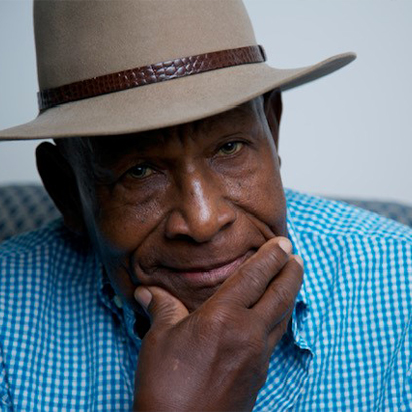
As Black History Month unfolds in 2025, it is a time to reflect on the contributions of Black Canadians whose tireless efforts have shaped the nation’s social, cultural, and economic landscape. Among these trailblazers, one name shines brightly: Dr. B. Denham Jolly. His achievements span a wide range of fields, from media to education and advocacy for social justice, making him a central figure in the history of Black Canadians.
Dr. Jolly’s story is one of resilience, determination, and a profound commitment to uplifting Black communities across Canada. He is best known as the founder of Flow 93.5, Canada’s first Black-owned radio station, and for his tireless advocacy in education, civil rights, and social justice. His life’s work exemplifies the theme of Black History Month 2025: celebrating the past while inspiring future generations.
Born in Jamaica in 1935, Denham Jolly immigrated to Canada in 1955 to pursue an education. He attended McGill University, where he studied science and later completed a master’s degree in education. However, despite his academic accomplishments, Jolly faced systemic racism and discrimination that prevented him from securing employment in his field. Instead of giving up, he shifted his focus toward entrepreneurship, which would ultimately enable him to create lasting change for Black Canadians.
“I remember thinking, ‘If they’re not going to give me a chance, I’ll have to make my own opportunities,'” Jolly said in an interview reflecting on his early career. “It wasn’t easy, but I knew that if I succeeded, I could pave the way for others.”
Throughout the 1960s and 1970s, Jolly became a successful businessman, investing in real estate and establishing a variety of ventures that created economic opportunities for Black Canadians. However, his most significant contribution to the community came in 2001 when Flow 93.5 hit the airwaves. The station was a dream realized after a decade-long fight to obtain a broadcasting license—a battle that highlighted the systemic barriers Black Canadians face in accessing media ownership.
“It was about more than just a radio station,” Jolly explained. “It was about giving our community a voice, a platform to tell our stories and share our culture. Black Canadians deserve to be heard.”
Flow 93.5 was a groundbreaking achievement, becoming the first radio station in Canada to focus on urban music genres such as hip hop, R&B, reggae, and soca. For Black Canadians, the station was a breath of fresh air, offering a reflection of their experiences and culture in a media landscape that had long excluded them.
“Flow gave us a sense of belonging,” says Marie Williams, a long-time listener. “For the first time, I could turn on the radio and hear music that spoke to me and my community. It was more than entertainment—it was empowerment.”
The station also provided a platform for emerging Black artists, giving them a space to showcase their talent and reach wider audiences. Artists such as Kardinal Offishall, Jully Black, and Maestro Fresh Wes all credit Flow 93.5 with helping to launch their careers.
“Without Flow, I don’t think I would have made it as far as I did,” said Jully Black in a 2018 interview. “They gave us a platform when no one else would, and that made all the difference.”
Beyond his work in media, Dr. Jolly has been a fierce advocate for education and social justice. He has long recognized the importance of education as a tool for empowering Black communities and has worked to improve access to quality education for Black students in Canada.
In the 1980s, Jolly co-founded the Black Business and Professional Association (BBPA) to address the lack of opportunities for Black Canadians in business and professional sectors. The organization continues to provide mentorship, scholarships, and networking opportunities for Black youth, helping to break down the barriers that prevent many from reaching their full potential.
Jolly has also been an outspoken critic of systemic racism in education, frequently highlighting the disproportionate suspension rates of Black students in Canadian schools. In his memoir, In the Black: My Life, he recounts the challenges he faced as a Black student in Canada and his determination to create a more equitable educational system for future generations.
“Our children deserve the same opportunities as anyone else,” Jolly said. “We need to dismantle the systems that hold them back and replace them with ones that uplift and empower.”
As Black History Month 2025 unfolds, Dr. Jolly’s legacy as a leader, entrepreneur, and activist is more relevant than ever. His life’s work serves as a reminder that progress is possible, even in the face of adversity. He has not only succeeded in his own right but has also opened doors for countless others, leaving an indelible mark on Canadian society.
“Dr. Jolly has always been a visionary,” says Karen Carter, a cultural activist and founder of the Black Artists’ Network in Dialogue (BAND). “His contributions to media, education, and civil rights have had a profound impact on the Black community in Canada. We owe him a debt of gratitude.”
In 2019, Jolly was awarded the Order of Canada in recognition of his contributions to Black culture, education, and social justice. However, even in his 80s, Jolly remains active in his advocacy, continuing to push for change.
“There’s still a lot of work to be done,” Jolly said in a recent interview. “Racism is still very much alive in Canada, and we need to keep fighting until all Canadians are treated with dignity and respect.”
As we celebrate Black History Month in 2025, it is essential to not only reflect on the achievements of pioneers like Dr. B. Denham Jolly but also to inspire the next generation of Black Canadians to continue the fight for equality and justice. His story is a testament to the power of perseverance and the importance of creating opportunities for marginalized communities.
For many young Black Canadians, Jolly’s success serves as a beacon of hope.
“Dr. Jolly’s story shows that we can overcome the challenges we face as Black Canadians,” says Marcus Anderson, a university student studying business. “He’s proof that with hard work and determination, we can break down the barriers that stand in our way.”
As we look to the future, Jolly’s legacy reminds us that the fight for equality is far from over, but with leaders like him paving the way, the future looks brighter for Black Canadians.
In the words of Dr. Jolly himself, “The road is long, but every step we take brings us closer to justice.”
Follow Canada News Media
Get the day's top Canadian stories and our two daily 60-second news videos wherever you scroll.
X Threads Facebook Instagram LinkedIn TikTok YouTube Pinterest Reddit Substack Flipboard Newsletter RSS