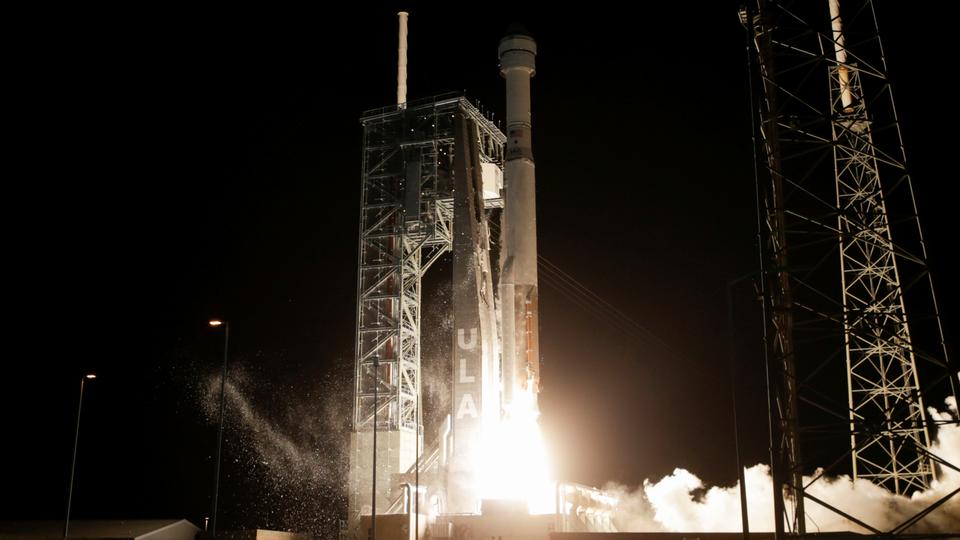
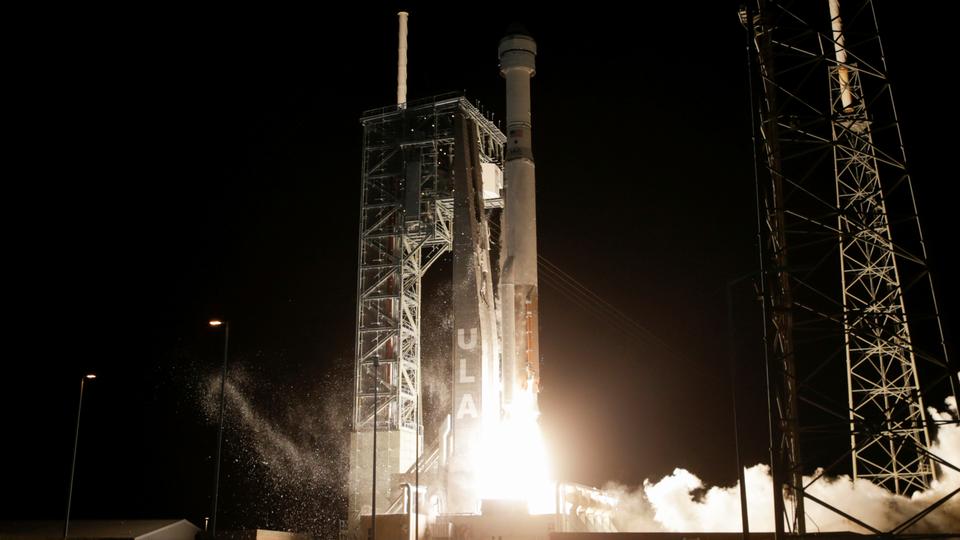
The CST-100 Starliner astronaut capsule was successfully launched from Cape Canaveral in Florida, but an automated timer error prevented the spacecraft from attaining the orbit.
(Reuters)
Boeing Co’s
new astronaut capsule, The CST-100 Starliner, failed after liftoff from Cape Canaveral in Florida on Friday to climb high enough in orbit to reach the International Space Station, cutting short a critical unmanned test mission in the embattled aerospace giant’s race to send humans to the orbital outpost.
The Starliner’s debut launch to orbit was a milestone test
for Boeing, which is vying with SpaceX, the privately held
rocket company of billionaire high-tech entrepreneur Elon Musk,
to revive NASA’s human spaceflight capabilities. SpaceX carried
out a successful unmanned flight of its Crew Dragon capsule to
the space station in March.
The Starliner setback came as Boeing, whose shares dropped
1.6% on the day, sought an engineering and public relations
victory in a year punctuated by a corporate crisis over the
grounding of its 737 MAX jetliner following two fatal crashes of
that aircraft.
The implications for any further design and testing
requirements before Starliner is approved for its first crewed
mission also remained unclear. The prospect that Boeing might
need to repeat an unmanned orbital test flight could
substantially delay NASA’s timeline and drive up costs.
The plan now is for the capsule to return to Earth on
Sunday, about a week ahead of schedule, parachuting to the
ground at its designated landing site in White Sands, New
Mexico, Boeing’s space chief executive, Jim Chilton, said.
The craft, while stable, has already burned too much fuel to
risk further maneuvers trying to dock with the space station at
this point, NASA Administrator Jim Bridenstine said at a news
conference.
‘We Don’t Know’
Boeing officials said they were still seeking to pinpoint
the cause of Friday’s glitch.
“The spacecraft was not on the timer we expected her to be
on,” Chilton told reporters. “We don’t know if something
happened to cause it to be that way.”
The spacecraft, a cone-shaped pod with seats for seven
astronauts, lifted off from Cape Canaveral at 1136
GMT atop an Atlas V rocket supplied by Boeing-Lockheed Martin
Corp’s United Launch Alliance.
Minutes after launch, Starliner separated from the two main
rocket boosters, aiming for a link-up with the space station on
Saturday some 409 km above Earth. But difficulties
ensued with thrusters designed to boost the capsule’s orbit to
the proper altitude.
“When the spacecraft separated from the launch vehicle we
did not get the orbital insertion burn that we were hoping for,”
Bridenstine said.
Bridenstine said the timer error caused the capsule to burn
much of its fuel too soon, preventing it from reaching the
desired orbit. NASA and Boeing tried to manually correct the
automated errors, but mission control commands sent across
NASA’s satellite communications network were inexplicably
delayed.
“The challenge here has to do with automation,” Bridenstine
said, adding that astronauts on board would have been able to
override the system that caused the malfunction.
Bridenstine said he would not rule out the possibility of
allowing Boeing to proceed directly to its first crewed
Starliner flight, depending on findings from the investigation
of Friday’s mishap.
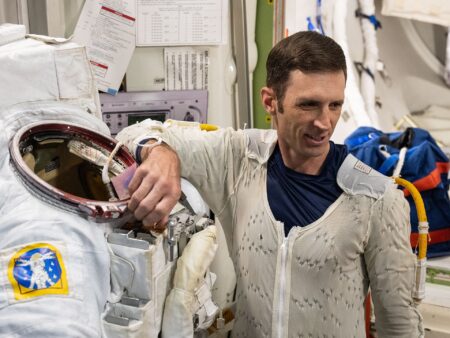
Nicole Mann, one of three astronauts slated to fly on Boeing’s first crewed flight test, told reporters, “We are looking forward to flying on Starliner. We don’t have any safety concerns.” NASA astronaut Mike Fincke added, “Had we been on board, we could have given the flight control team more options on what to do in this situation.”
Space Race Setback
Friday’s test represented one of the most daunting
milestones required by NASA’s Commercial Crew Program to certify
a capsule for eventual human spaceflight – a long-delayed goal
set back years by development hurdles at both Boeing and SpaceX.
The US space agency awarded $4.2 billion to Boeing and
$2.5 billion to SpaceX in 2014 to develop separate capsule
systems capable of ferrying astronauts to the space station from
US soil for the first time since NASA’s space shuttle program
ended in 2011. NASA has since relied on Russian spacecraft for
hitching rides to the space station.
NASA initially had expected to begin crewed flights aboard
the Starliner and the Crew Dragon capsules in late 2017. Both
companies are currently aiming for next year, a time frame
reinforced in a statement on Friday from the office of US Vice
President Mike Pence, who chairs the National Space Council.
“Vice President Pence was assured that NASA will continue to
test and improve, in order to return American astronauts to
space on American rockets in 2020,” it said.
In a message of sympathy for his Boeing rival, Musk said on
Twitter, “Orbit is hard,” adding, “Best wishes for landing &
swift recovery to next mission.”
Occupying one of Starliner’s astronaut seats on Friday was a
mannequin named Rosie, outfitted with sensors to measure the
pressure a real astronaut would endure on ascent to the space
station and during hypersonic re-entry back through Earth’s
atmosphere.
Source: Reuters