



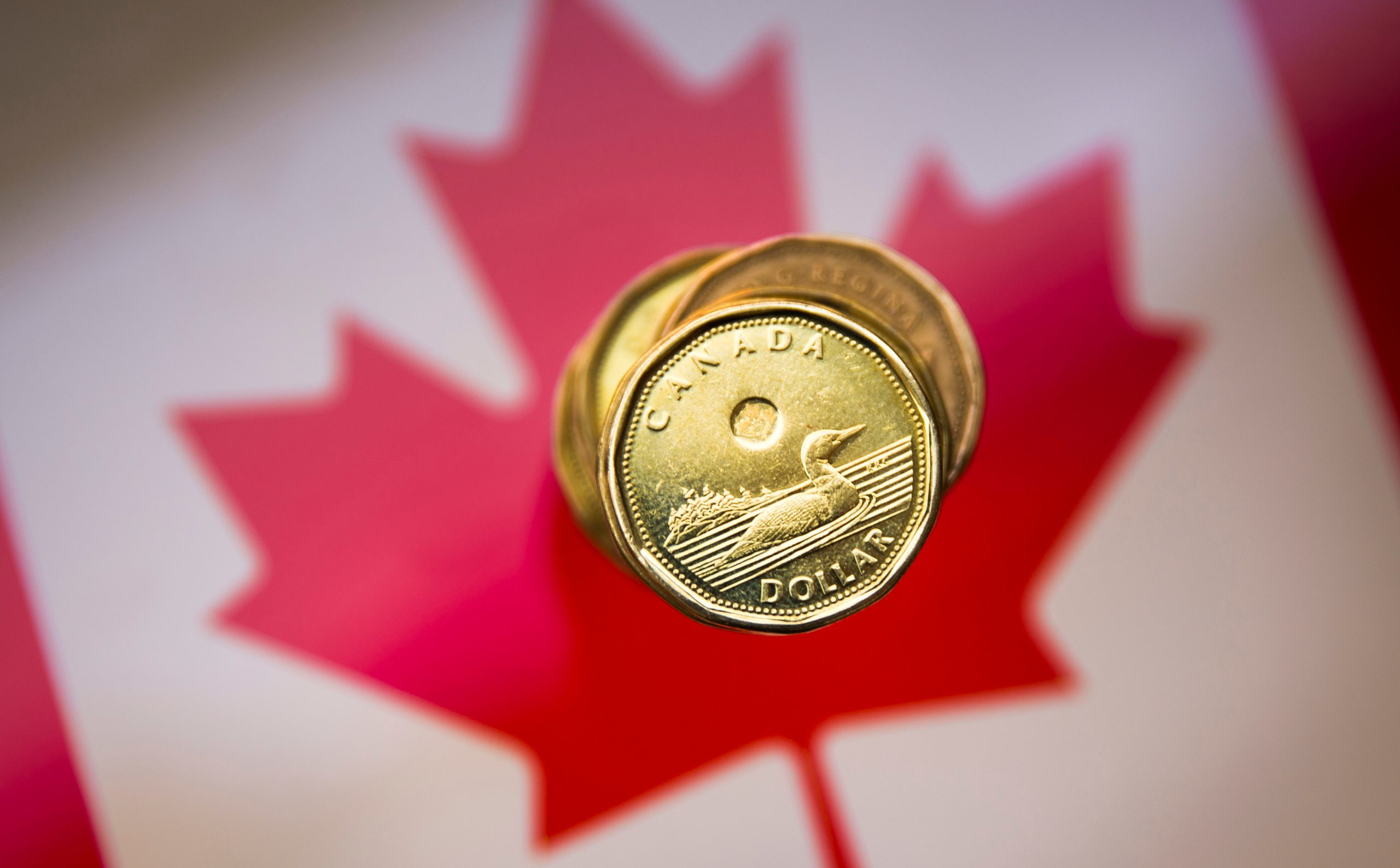
The Canadian dollar strengthened against its U.S. counterpart on Wednesday as the sell-off in global equity markets after Russia’s invasion of Ukraine paused and the price of oil pulled back from a 14-year high.
The loonie was up 0.4% at 1.2825 to the greenback, or 77.97 U.S. cents, after trading in a range of 1.2807 to 1.2894. On Tuesday, it touched its weakest intraday level since Dec. 22 at 1.2901.
“The flow of capital into defensive havens and commodities appears to be backing off a bit,” said Colin Cieszynski, chief market strategist at SIA Wealth Management.
Equity markets globally rallied after four days of selling, while the safe-haven U.S. dollar fell against a basket of major currencies.
U.S. crude prices were down 4.7% at $117.88 a barrel as some investors took the view that the U.S. ban on Russian oil may not worsen a supply shock and the head of the International Energy Agency said the agency could further tap oil stocks to ease prices.
Oil is one of Canada’s major exports, but the historic link between the Canadian dollar and energy prices has weakened during the Russia-Ukraine crisis, leaving the Bank of Canada with one less tool to fight inflation.
Canadian Prime Minister Justin Trudeau said he told Ukrainian President Volodymyr Zelenskiy in a call that Canada will send Ukraine another shipment of highly specialized military equipment.
Canada’s jobs report for February is due on Friday, which can provide clues on the strength of the domestic economy.
Canadian government bond yields were higher across the curve, tracking the move in U.S. Treasuries.
The 10-year touched its highest level since March 1 at 1.883% before dipping to 1.867%, up 4.4 basis points on the day.
(Reporting by Fergal Smith; editing by Jonathan Oatis)
Follow Canada News Media
Get the day's top Canadian stories and our two daily 60-second news videos wherever you scroll.
X Threads Facebook Instagram LinkedIn TikTok YouTube Pinterest Reddit Substack Flipboard Newsletter RSS