



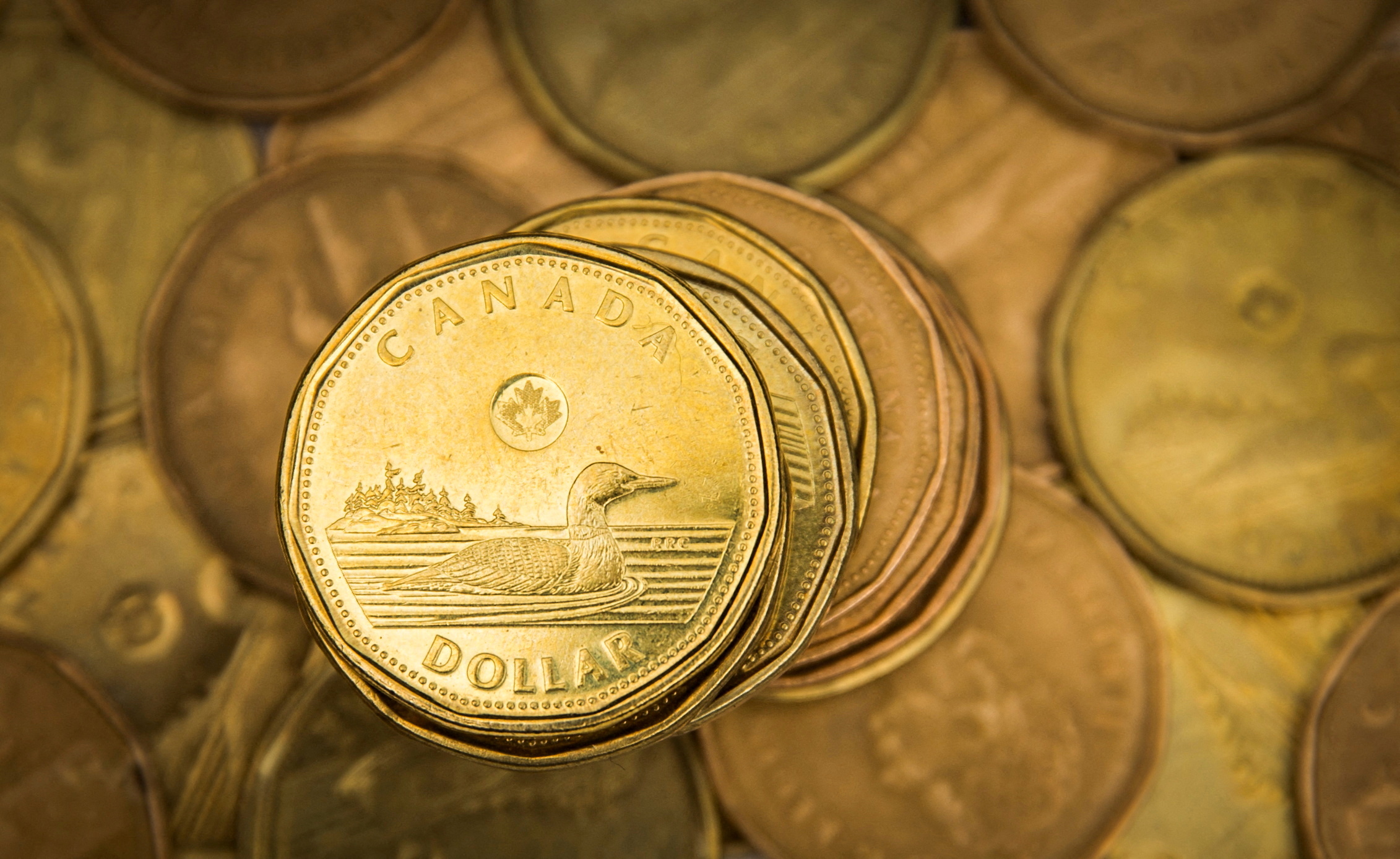
The Canadian dollar weakened against its U.S. counterpart on Tuesday as a flight to quality driven by Russia’s invasion of Ukraine offset domestic data showing the economy expanded at a robust pace in the fourth quarter.
Global equity markets slumped and the safe-haven U.S. dollar climbed as the invasion and disruption caused by sanctions raised questions about the toll of the crisis on the global economy.
“The Ukraine-Russia conflict is weighing on global growth expectations and risk appetite, which has driven down central bank rate hike expectations across the board,” said Jay Zhao-Murray, market analyst at Monex Canada Inc.
Money markets see about an 80% chance that the Bank of Canada would hike interest rates on Wednesday and expect five hikes in total this year. [BOCWATCH]
That is less aggressive than before the invasion, when markets were pricing in at least six hikes in 2022. Markets have also scaled back estimates for rate increases by the Federal Reserve and the European Central Bank.
The price of oil, one of Canada’s major exports, settled 8% higher at $103.41 a barrel on the potential for severe disruption to supplies from Russia.
“While WTI (West Texas Intermediate) breaking the $100 per barrel threshold didn’t drive an appreciation in the Canadian dollar, it did manage to limit CAD losses relative to other G10 currencies,” Zhao-Murray said.
The loonie was down 0.5% at 1.2743 to the greenback, or 78.47 U.S. cents, after trading in a range of 1.2654 to 1.2749.
The Canadian economy grew 6.7% in the fourth quarter, while a preliminary estimate pointed to growth continuing in January.
Canadian government bond yields were lower across the curve, tracking the move in U.S. Treasuries. The 10-year touched its lowest level since Jan. 6 at 1.679% before rebounding slightly to 1.725%, down 12.4 basis points on the day.
(Reporting by Fergal Smith; Editing by Mark Heinrich and Richard Chang)
Follow Canada News Media
Get the day's top Canadian stories and our two daily 60-second news videos wherever you scroll.
X Threads Facebook Instagram LinkedIn TikTok YouTube Pinterest Reddit Substack Flipboard Newsletter RSS