




A Covid-19 vaccine is not the same thing as a condom. If you can’t tell the difference between the two, stop having sex immediately and call you doctor. It’s better to put on a new condom sooner than later. Definitely don’t wait eight months. However, is it a good idea to get a Covid-19 vaccine booster sooner than eight months after you were fully vaccinated the first time around?
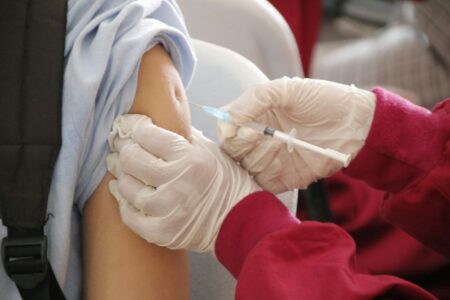
As Courtney Subramanian reported for the USA Today, the Biden Administration has unveiled plans to begin offering adults in the U.S. Covid-19 booster shots on September 20. Here’s a tweet from Vivek Murthy, MD, MBA, the U.S. Surgeon General about the announcement:
As you can see, the recommendation is that people wait at least eight months getting fully vaccinated the first time around before getting a Covid-19 vaccine booster dose. This wasn’t a huge surprise. The U.S. Food and Drug Administration (FDA) has already added a third dose to the Emergency Use Authorization (EUA) for the Pfizer/BioNTech and Moderna vaccines for specific groups of people with much weaker immune systems. Both France and Germany will be rolling out third doses for particular groups of older or more vulnerable people in September. And Israel has already been giving people third doses after they have already gotten two doses of the Pfizer/BioNTech vaccine. They began this at the end of July with those 60 years and older and last extended this to those 60 years and older. Close to a million people have received third doses so far.
Therefore, the third booster dose recommendation should apply to either the two-dose Pfizer/BioNTech or the two-dose Moderna Covid-19 vaccines. It may eventually apply to the one-dose Johnson & Johnson vaccine as well, although Johnson & Johnson is still conducting a two-dose clinical trial. Nursing home residents and health care professionals will most likely be first in line for the booster doses. Older folks will probably come next before the rest of the adult population. Again, based on studies, the magical duration for a booster shot seems to be eight months after being fully vaccinated.
But apparently people aren’t waiting for the eight month mark or for official word about getting boosters for that matter. As Daniel Arkin and Daniella Silva reported for NBC News, people are getting Covid-19 vaccine boosters early, even if they don’t fall under the FDA’s moderately to severely immunocompromised. They want to make sure that they are protected with the more contagious Delta variant spreading in the U.S. and Fall approaching. (By the way, what the heck happened to the Summer?) And according to an ABC News report from Anne Flaherty and Eric Strauss, an internal Centers for Disease Control and Prevention (CDC) briefing revealed that around 1.1 million Americans have already gotten unauthorized booster doses of the Covid-19 vaccine.
But is this wise? Or is this premature vaccination? At the moment, it’s not clear whether getting a booster much earlier than eight months after being fully vaccinated will offer the same protection as a getting a booster at the eight month mark or later. As with many things in life such as passing by a bathroom, timing may matter. Ideally, you want to get a booster before your protection starts waning but only after you’ve enjoyed the full duration of full protection. Getting a booster too soon could be like buying a car and then saying after one month, “I need to get a new car now before the other one runs out.” Also, you want your immune system to be most ready for a booster. Typically, it’s a bad idea to say “I love you” too early in a relationship as in “I love you. By the way, what’s your name again?” That sort of reduces the value or effect of saying, “I love you.” Similarly, your immune system may not react quite the same should a booster come too early. Remember the booster is essentially a reminder to the immune system to beware of anything carrying the spike protein.
Even with booster shots, being fully vaccinated does not mean that you should forego social … [+]
AFP via Getty Images
Therefore, unless you have a much weaker immune system, it may be better to wait until you’re close to the specified duration of time before seeking a booster shot. And right now studies seem to be pointing to eight months as that specified duration of time. Of course, that doesn’t mean that your protection will run out immediately at the eight month-mark. Duration of vaccine protection is not the same as a laptop or smartphone warranty. You don’t start having problems immediately after the time period has elapsed. Instead it’s more like the “Sell By” date that you may see on food such as avocados, hummus, and cheese. As I described for Forbes previously, the actual duration of protection probably varies from person-to-person. Plus, immunity likely fades slowly over time rather than stopping abruptly like memories of that high school crush. When making a recommendation about boosters, officials typically choose the duration immediately before which some people’s protection may start waning.
Keep in mind too that the booster alone is not going to protect you against Covid-19 coronavirus like a full-body concrete condom would against sex. Even with the booster, being fully vaccinated is not going to provide 100% protection. Until enough of the population has been vaccinated to reach her immunity thresholds and the virus is contained, you’ll still have to maintain other precautions such as social distancing and face mask wearing.
Again remember, timing is everything in life. There is such a thing as premature vaccination.

Follow Canada News Media
Get the day's top Canadian stories and our two daily 60-second news videos wherever you scroll.
X Threads Facebook Instagram LinkedIn TikTok YouTube Pinterest Reddit Substack Flipboard Newsletter RSS