




High prices combined with higher interest rates could slow gains, says CREA

Article content
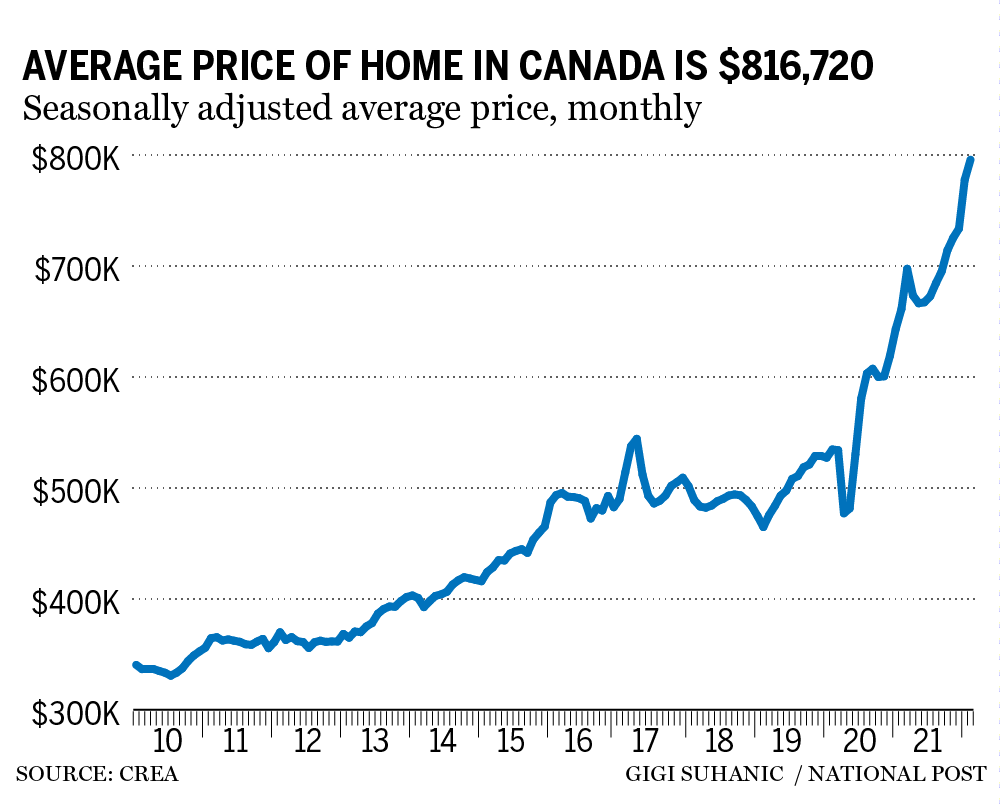
Canada’s average home price rose more than 20 per cent from the year before in February to $816,720, according to data from the Canadian Real Estate Association.
Advertisement 2
Article content
Sales jumped 4.6 per cent from the lull in January, thanks to a 23.7 per cent increase in new listings. Though strong, the sales fell 8.2 per cent short of the record set in February 2021.
The Greater Toronto Area, Fraser Valley in British Columbia and Calgary led the gains.
CREA had been expecting a rush of new listings, but chair Cliff Stevenson said it was unclear whether that would continue into the spring.
Article content
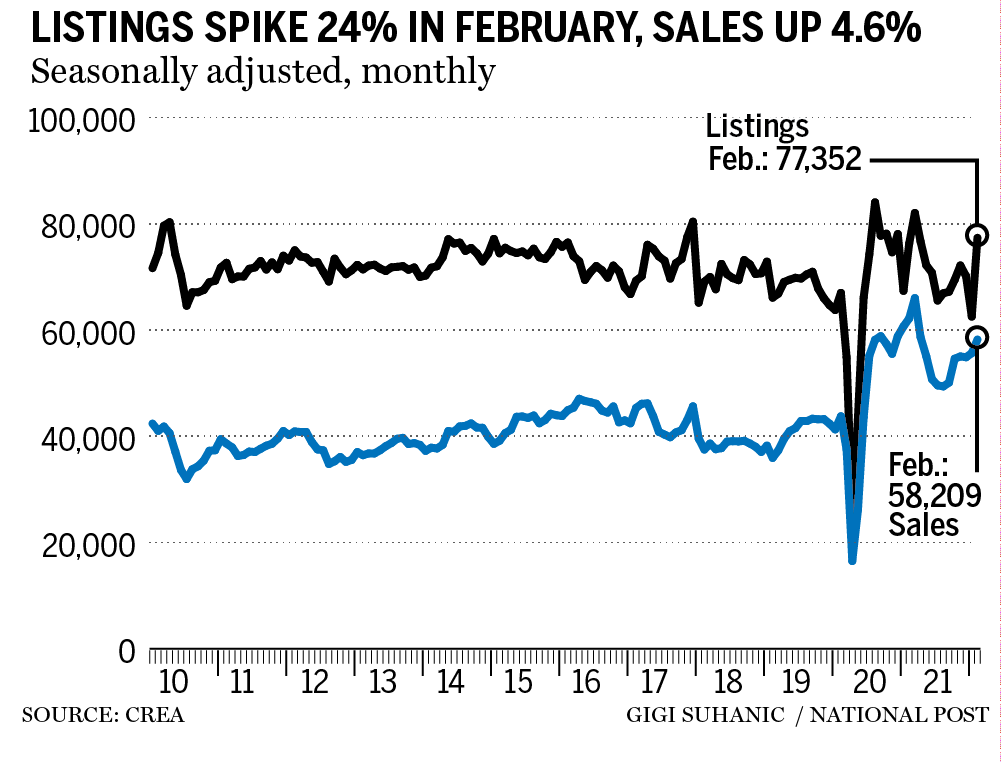
“New supply bounced way up in February, which is similar to what we saw play out in 2020 and again in 2021,” said CREA senior economist Shaun Cathcart in the release. “The real question is what comes next? In the short term, expect at least one more month of stronger sales as the majority of those new listings came onto the market near the end of the month so many of the associated sales likely won’t happen until early March.”
Advertisement 3
Article content
CREA’s non-seasonally adjusted benchmark House Price Index rose by a record 29.2 per cent year-over-year in February. However, the market could be at a turning point for prices.
“Combined with higher interest rates and higher prices, we could be at a turning point where price growth begins to slow down and inventories finally begin to recover after seven years of declines,” Cathcart said. “Still, in order to turn this market back towards balance long-term, building more new homes across the spectrum remains the key.”
-

Canadian housing starts rise 8%, beating expectations
-

Rental market proves robust housing supply dynamics help people find homes
-

What rising interest rates mean for housing and the economy



The need for more supply is a view shared by Elton Ash, executive vice president for RE/MAX, who also argued that he expects to see the market calm down this year.
“It’s definitely lack of supply and inventory,” Ash told the Financial Post. “We’ve seen various levels of government try to approach this from a taxation point of view – in other words, to curb demand – which doesn’t work. It’s really a supply issue. Housing starts need to increase whether that’s single-family or condominium-style multifamily (properties).”
• Email: [email protected] | Twitter:
Advertisement

Follow Canada News Media
Get the day's top Canadian stories and our two daily 60-second news videos wherever you scroll.
X Threads Facebook Instagram LinkedIn TikTok YouTube Pinterest Reddit Substack Flipboard Newsletter RSS