





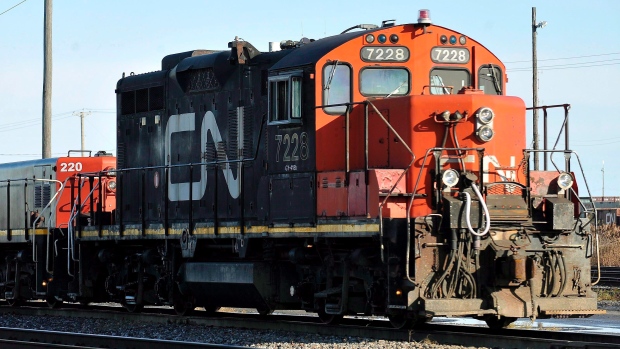
The STB said last month that even though the overlap of Canadian National’s and Kansas City Southern‘s networks was confined to 70 miles (113 km) between Baton Rouge and New Orleans, the two railways operated parallel lines in the central portion of the United States and could be under less pressure to compete if the voting trust for that deal was approved.
“There have been significant changes to the U.S. regulatory landscape since Canadian National launched its initial proposal which have made completing any Class I merger much less certain, including an executive order focused on competition issued by President Biden in July,” the company said in a statement on Wednesday.
There is a silver lining for Canadian National. It is now entitled to a $700 million break-up fee from Kansas City Southern, in addition to the $700 million it paid the latter to pass on to Canadian Pacific as a break-up fee for terminating their March deal. Canadian Pacific had said it will cover both payments.
CANADIAN PACIFIC NOT IN THE CLEAR YET
There are still potential pitfalls for Canadian Pacific. While no major Canadian Pacific shareholder has come out against the Kansas City Southern deal, as happened with Canadian National, Canadian Pacific still needs a majority of its investors to vote for the new agreement.
It is also possible that the STB shoots down Canadian Pacific’s deal for Kansas City Southern, even though it approved the voting trust for it. More likely, however, would be for the STB to require some concessions from Canadian Pacific, such as limited divestments or commitments on how much its charges customers, to clear the deal, people familiar with the matter said. It is possible that some of the concessions could erode Canadian Pacific’s profitability.
The STB did not immediately respond to a request for comment.
If the STB rejects the deal, Canadian Pacific’s voting trust would have to divest Kansas City Southern. Canadian National could then attempt to buy it, though the U.S. railroad has also attracted acquisition interest in the past from private equity firms.
(Reporting by Greg Roumeliotis in New YorkAdditional reporting by Aishwarya Nair, Aakriti Bhalla and Abhijith Ganapavaram in Bengaluru; Editing by Rashmi Aich, Arun Koyyur and Bernadette Baum)
Follow Canada News Media
Get the day's top Canadian stories and our two daily 60-second news videos wherever you scroll.
X Threads Facebook Instagram LinkedIn TikTok YouTube Pinterest Reddit Substack Flipboard Newsletter RSS