




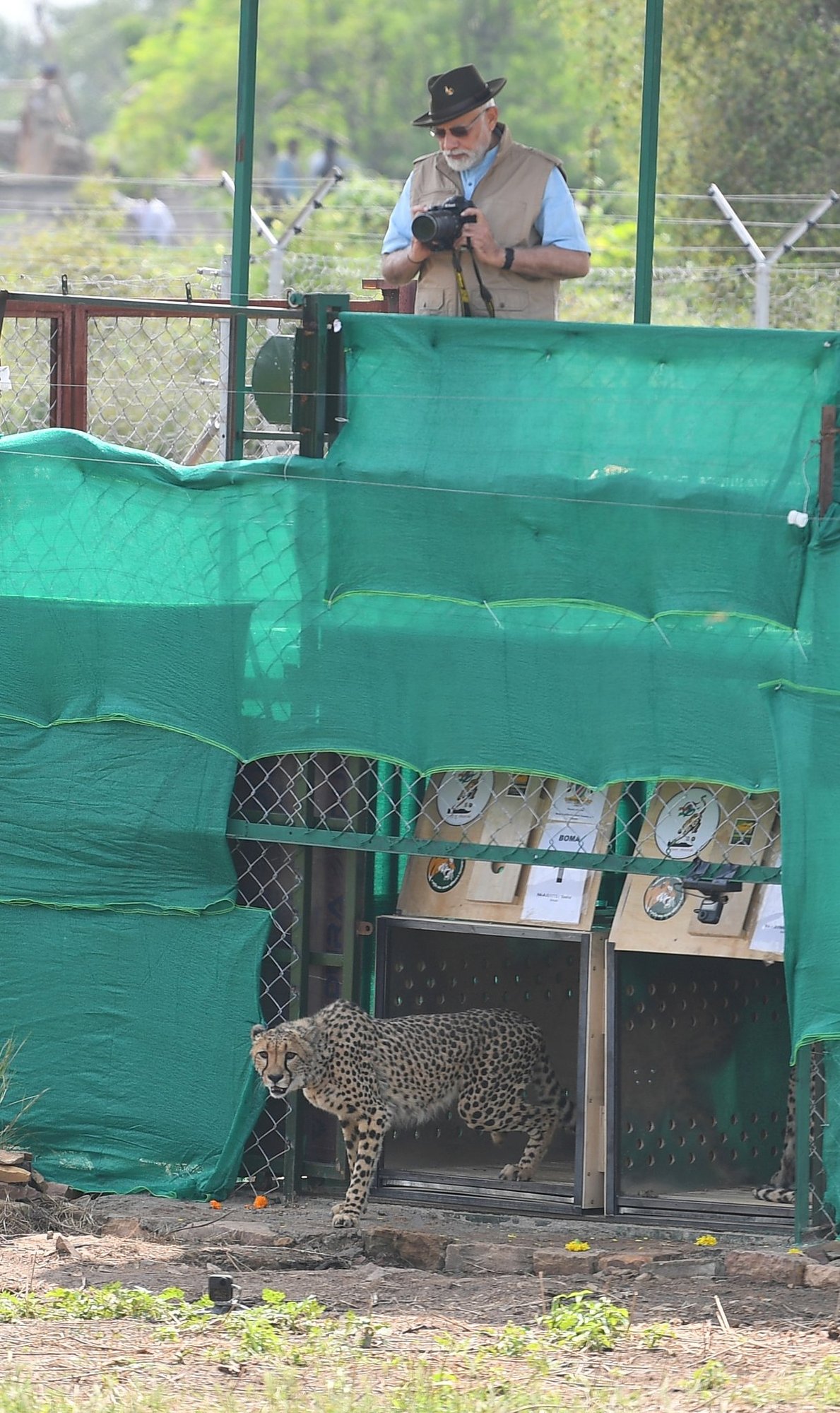
Bhopal, India- Cheetahs are finally back in India following a 70-year hiatus due to habitat loss, poaching, and conflict with humans.
An Indian prince, the Maharaja Ramanuj Pratap Singh Deo, is widely believed to have killed the last three recorded cheetahs in India in the late 1940s, but thanks to Namibia, eight Cheetahs arrived in the country on Saturday, where they were released into the Kuno National Park.
According to the Cheetah Conservation Fund (CCF), the cheetahs were vaccinated, fitted with a satellite collar and kept in isolation at the fund’s location in Otjiwarongo, Namibia before being airlifted to India.
Another 12 cheetahs are expected to join the group next month from South Africa amid hopes the population will eventually reach 40.
Experts said the extinction of the cheetah in India in 1952 was the only time the country had lost a large mammal species since independence and that there was a moral and ethical responsibility to bring it back.
“As a conservationist, I am thrilled, and as CCF’s leader, I am exceptionally proud of the work of our CCF reintroduction team. Without research and dedication to cheetah conservation, this project could not take place. Cheetahs play an important role in grassland ecosystems, herding prey through grasslands and preventing overgrazing. Cheetahs are very adaptable and (I am) assuming that they will adapt well to this environment. So I don’t have a lot of worries,” said conservation biologist Laurie Marker, founder of CCF.
According to the Indian High Commissioner to Namibia, Prashant Agrawal, the project is the world’s first inter-continental translocation of cheetahs, the world’s fastest land animal
“This is historic, global first game-changing. We are all the more excited because it is happening in the 75th year of Indian independence,” said Agrawal.
However, critics have warned that the Namibian cheetahs may struggle to adapt to the Indian habitat and may clash with the significant number of leopards already present.
Moreso, Ullas Karanth, a biologist and director of the Centre for Wildlife Studies in Bengaluru, said modern India presents challenges not faced by the cheetah, in the past.
“(Once the cheetahs move beyond Kuno’s unfenced boundaries), they will be knocked out within six months by domestic dogs or by leopards,” said Karanth.
A previous attempt to bring African cheetahs to Kuno National Park in 2012 was halted by India’s Supreme Court, which suggested that introducing a non-native species was problematic and warned the there might not be enough prey in the park to keep them fed.
Follow Canada News Media
Get the day's top Canadian stories and our two daily 60-second news videos wherever you scroll.
X Threads Facebook Instagram LinkedIn TikTok YouTube Pinterest Reddit Substack Flipboard Newsletter RSS