


The latest:
Provinces are taking different approaches to rising COVID-19 numbers. Alberta is not considering new restrictions, while Manitoba has announced tighter measures for its northern region and British Columbia warns new rules could be coming for social gatherings.
Canada saw a record high number of COVID-19 cases diagnosed on Thursday, with 2,788 new infections recorded.
Among the recently hard-hit province is Alberta, which broke two records on Thursday when the province reported 427 new cases and a total of 3,519 active cases.
While acknowledging the government is “obviously concerned” about the growing number of active cases, Premier Jason Kenney said there are no plans to impose “indiscriminate” restrictions that would shut down the hospitality industry.
WATCH | Reduce gatherings even more, health experts urge:
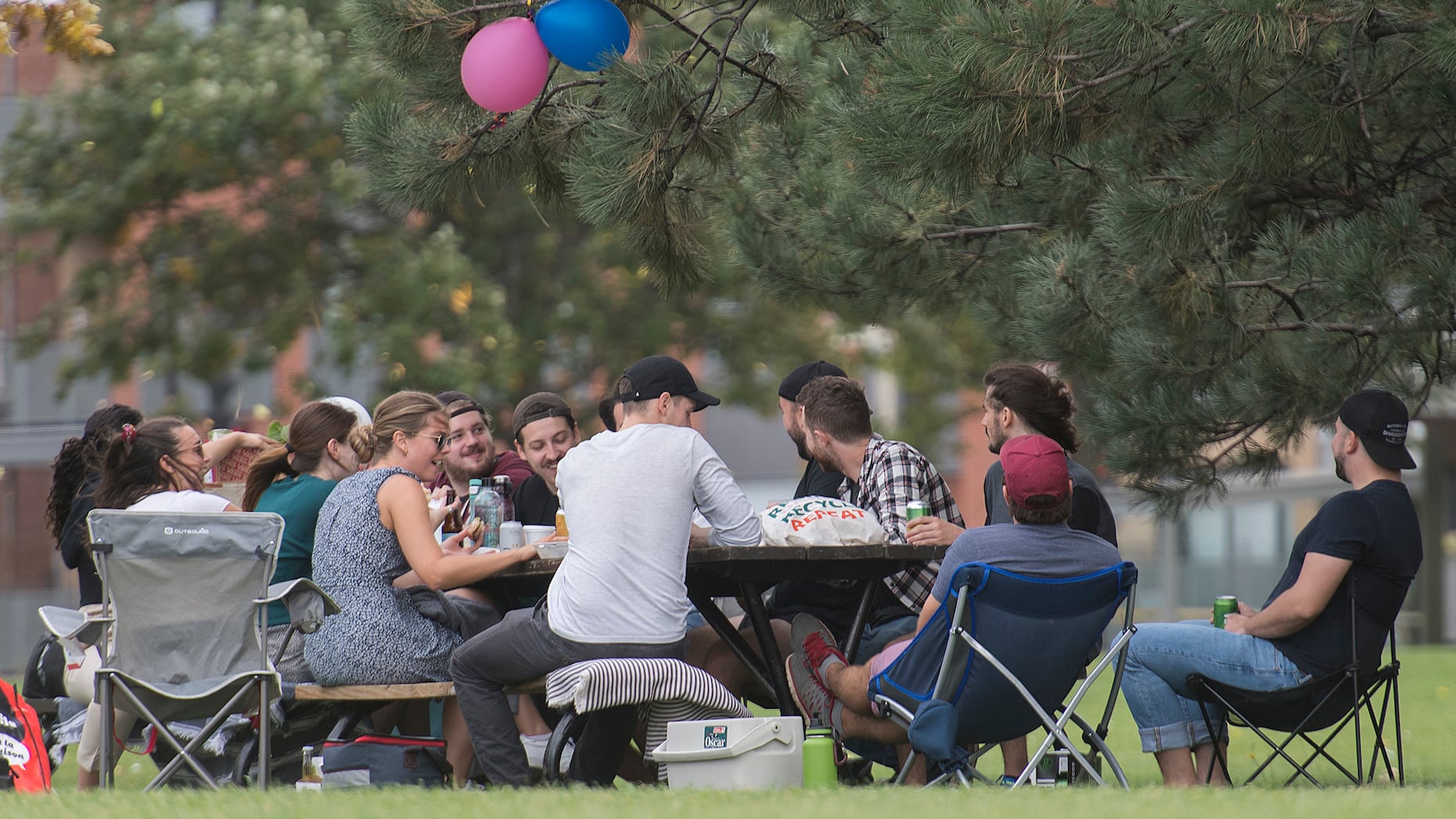
British Columbia’s Provincial Health Officer Dr. Bonnie Henry expressed concerns around the spread of COVID-19 at social gatherings, something that infectious diseases specialist Dr. Sumon Chakrabarti says is being seen across the country. 1:54
“I think it’s important to acknowledge that the virus is here to stay,” Kenney said Thursday while self-isolating at home after a minister in his government tested positive the day before. “And unless or until there is widespread immunity either through natural infection or through the widespread use of a vaccine, we have to cope with it and we have to carry on with life.”
The premier said Alberta has so far accomplished its primary goal of protecting lives while ensuring the health-care system is not overwhelmed.
Meanwhile, the Manitoba government has introduced sweeping new rules for the fourth time in as many weeks in an effort to get a handle on its own recent record-breaking COVID-19 numbers.
Effective Monday, the Northern Health region — where there are increasing signs of community spread and cases among vulnerable populations, such as those experiencing homelessness — will move to the orange, or “restricted,” level on Manitoba’s pandemic response system.
WATCH | Manitoba’s top doctor on the increasing community spread of COVID-19:
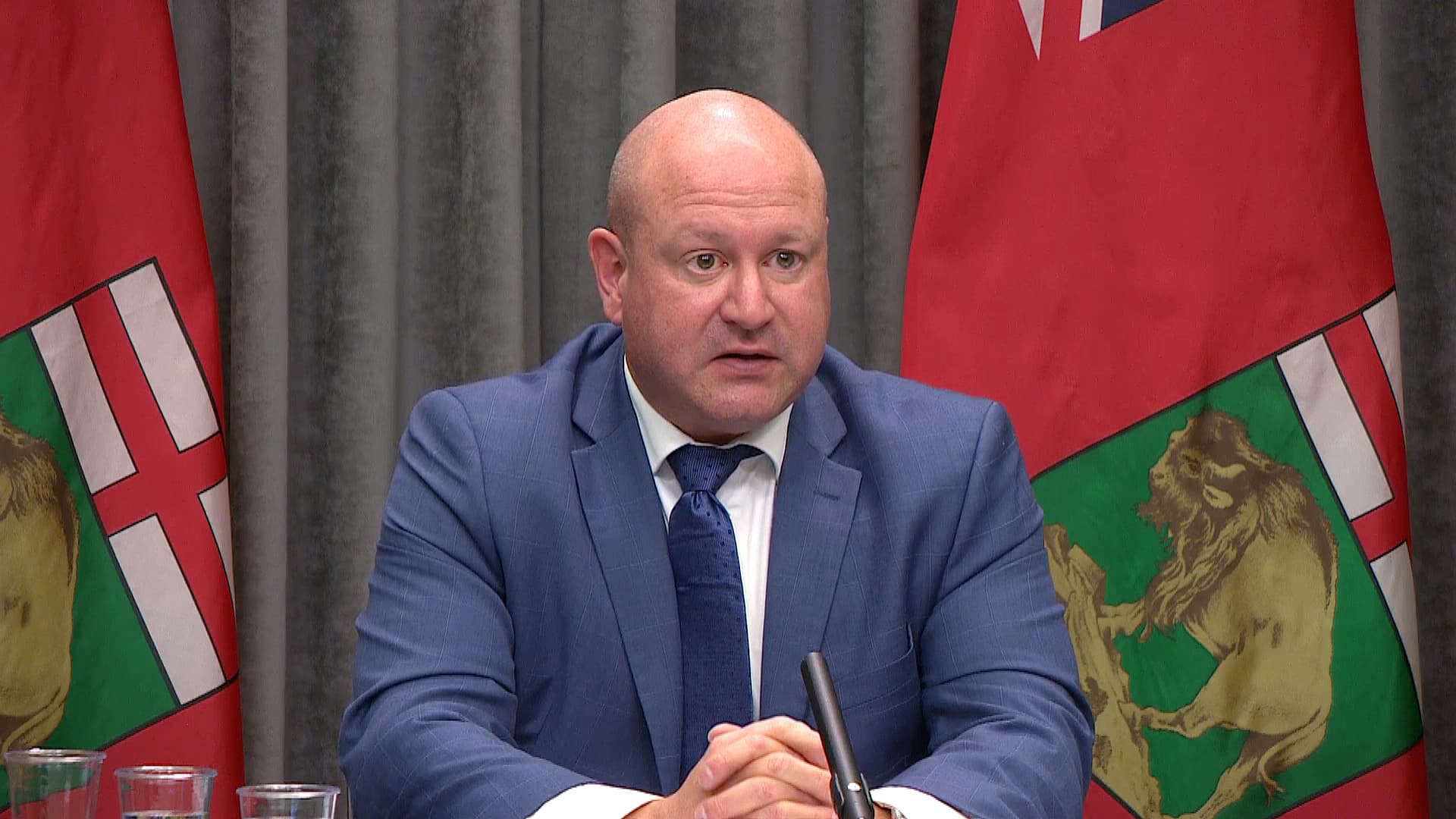
Dr. Brent Roussin, Manitoba’s chief public health officer, explains why increasing community spread of COVID-19 makes targeted approaches to control the illness less effective. 0:48
The decision was made after consultation with municipal and First Nations leaders in the region, Chief Provincial Public Health Officer Dr. Brent Roussin said at a news conference Thursday. “We know that the north is already at risk for transmission of this virus, especially in remote, isolated communities, [with limited] access to health care,” he said.
The new measures, which are already in place in the Winnipeg area, include a five-person cap on gatherings, the closure of casinos and other sites with live entertainment licences and a requirement for many businesses to cut occupancy to 50 per cent.
In British Columbia, the provincial health officer warned Thursday she may introduce new rules on gatherings like weddings and funerals as B.C. announced a record-high 274 new cases.
Dr. Bonnie Henry said the measures could include conditions on wedding licences and reducing the province’s current 50-person limit on gatherings.
WATCH | B.C.’s current rules for weddings, funerals not enough, says Dr. Henry:

Dr. Bonnie Henry’s warning comes as Fraser Health reports a number of social gatherings lasting days has led to a surge in COVID-19 cases in the province. 1:39
“The reality is that, right now, everywhere in B.C., weddings, funerals and other life occasions need to be small — as small as possible,” she said. “Every gathering needs to be our own household only, and at maximum, our safe six.”
What’s happening elsewhere in Canada
As of 1 p.m. ET on Friday, Canada had 210,881 confirmed or presumptive coronavirus cases. Provinces and territories listed 177,307 of those as recovered or resolved. A CBC News tally of deaths based on provincial reports, regional health information and CBC’s reporting rose to 9,883.
The federal government has signed a contract to procure 76 million doses of a promising COVID-19 vaccine from the Quebec City-biotech company Medicago, Prime Minister Justin Trudeau announced Friday.
Ottawa is spending $176 million to help Medicago develop the vaccine, which is being developed in partnership with British drug company GlaxoSmithKline, and build a large plant in Quebec to produce it.
So far, Canada has secured 358 million doses of COVID-19 vaccine through contracts with pharmaceutical giants, including AstraZeneca, Moderna and Pfizer — an insurance policy if some of the vaccines in development prove to be ineffective in clinical trials.
Trudeau also announced a $18.2-million investment in Vancouver-based Precision NanoSystems, which offers technology to produce vaccines and therapeutic drugs.
Nova Scotia reported new no cases of COVID-19 on Friday, a day after the province warned residents against unnecessary travel to the Campbellton-Restigouche area of New Brunswick due to a COVID-19 outbreak.
The recommendation came after New Brunswick announced new restrictions for the Campbellton region, almost two weeks after it was pushed back to the orange phase of recovery. While Zone 5 will remain in the orange stage, people will be limited to interacting with a single household bubble, N.B. Chief Medical Officer of Health Dr. Jennifer Russell said.
New Brunswick announced two new COVID-19 cases and eight recoveries on Friday. That brings the total number of cases the province has recorded to 324, with four deaths.
Newfoundland and Labrador announced no new cases of COVID-19 on Friday. The province has recorded a total of 288 cases and four deaths.
Ontario reported an additional 826 cases of COVID-19 on Friday, as the seven-day average of new daily cases continued its upward trend to 778. That’s the second highest it’s been since the resurgence of COVID-19 in the province began in early August.
Nine more deaths were also recorded. There are currently 6,474 confirmed, actives cases of COVID-19, a record high for the province.
Meanwhile, the list of Toronto hospitals that have declared outbreaks of COVID-19 grew to seven, with Sunnybrook announcing five cases in a surgical unit at the hospital.

Quebec on Friday reported 905 new COVID-19 cases and 12 deaths, four of which were in the past 24 hours.
There are 540 people in hospital, including 99 in intensive care. In its latest projections, the province’s national health institute said hospitals will not reach full capacity in the next four weeks due to the rate of transmission having stabilized in recent days.
Premier François Legault has said it’s likely the province will have to maintain many public health restrictions currently in place in red zones past Oct. 28, including keeping restaurants and bars closed.
What’s happening around the world
According to Johns Hopkins University in Baltimore, the global total of confirmed coronavirus cases stands at more than 41.9 million. More than 1.1 million people have died, while more than 28.4 million have recovered.
In the Americas, the pandemic was predictably the opening topic of the U.S. presidential debate between Donald Trump and Democratic challenger Joe Biden on Thursday evening. Trump claimed the country was “rounding the corner” even as cases spike again across the country, while Biden said: “Anyone who’s responsible for that many deaths should not remain as president of the United States of America.” More than 223,000 Americans have died from the coronavirus.
WATCH | Trump, Biden clash over pandemic in debate:

The president lamented that the city became a ‘ghost town’ amid the pandemic, while the Democratic candidate praised its response in flattening the curve. 1:00
The Peruvian government said on Thursday that it refused to sign a coronavirus vaccine purchase agreement with AstraZeneca PLC because it did not provide sufficient data from its studies and offered minimal amounts of inoculations.
In Europe, the Netherlands began transferring COVID-19 patients to Germany again on Friday, as hospitals come under increasing strain from a second wave of infections. During the first wave in March and April, dozens of Dutch patients were transferred to Germany, where the intensive care capacity is significantly larger.
Poland will close restaurants and bars for two weeks and limit public gatherings to five people, Prime Minister Mateusz Morawiecki said on Friday, after new coronavirus infections hit a daily record of more than 13,600.
The number of new coronavirus infections in Romania also rose by a daily record, with 5,028 cases added in the past 24 hours, the government said on Friday, as new restrictions were introduced in Bucharest and other cities.

In Asia, South Korea on Friday reported 155 new confirmed cases of the coronavirus, its highest daily jump in more than 40 days. Officials say most of the new cases were local transmissions and primarily in the Seoul region, where hundreds of infections have been tied to a handful of hospitals and nursing homes.
Iran’s health ministry on Friday reported a record 6,134 new coronavirus cases for the previous 24 hours, bringing the national tally to 556,891 in the Middle East’s hardest-hit country. A spokesperson said 335 people had died from the disease in the past 24 hours, bringing total fatalities to 31,985.
India reported 54,366 new cases on Friday, the fifth day in a row below 60,000 new cases, and 690 deaths in the
past 24 hours. A political row erupted after Prime Minister Narendra Modi’s Hindu nationalist party promised free COVID-19 vaccination, when it is available, to people in eastern Bihar state, where state elections are scheduled to begin next week. Opposition parties accused Modi’s party of politicizing the pandemic.

In Africa, Ethiopia’s attorney general’s office has announced people can be jailed for up to two years if they deliberately violate COVID-19 restrictions, amid concern that citizens are becoming lax after a state of emergency was lifted.
Countries on the continent have reported a total of more than 1.6 million confirmed COVID-19 cases, according to the World Health Organization Regional Office for Africa. There have been more than 40,000 deaths, for a case fatality ratio of 2.4 per cent, and 1.3 million recoveries so far.
Have a coronavirus question or news tip for CBC News? Email us at [email protected]