


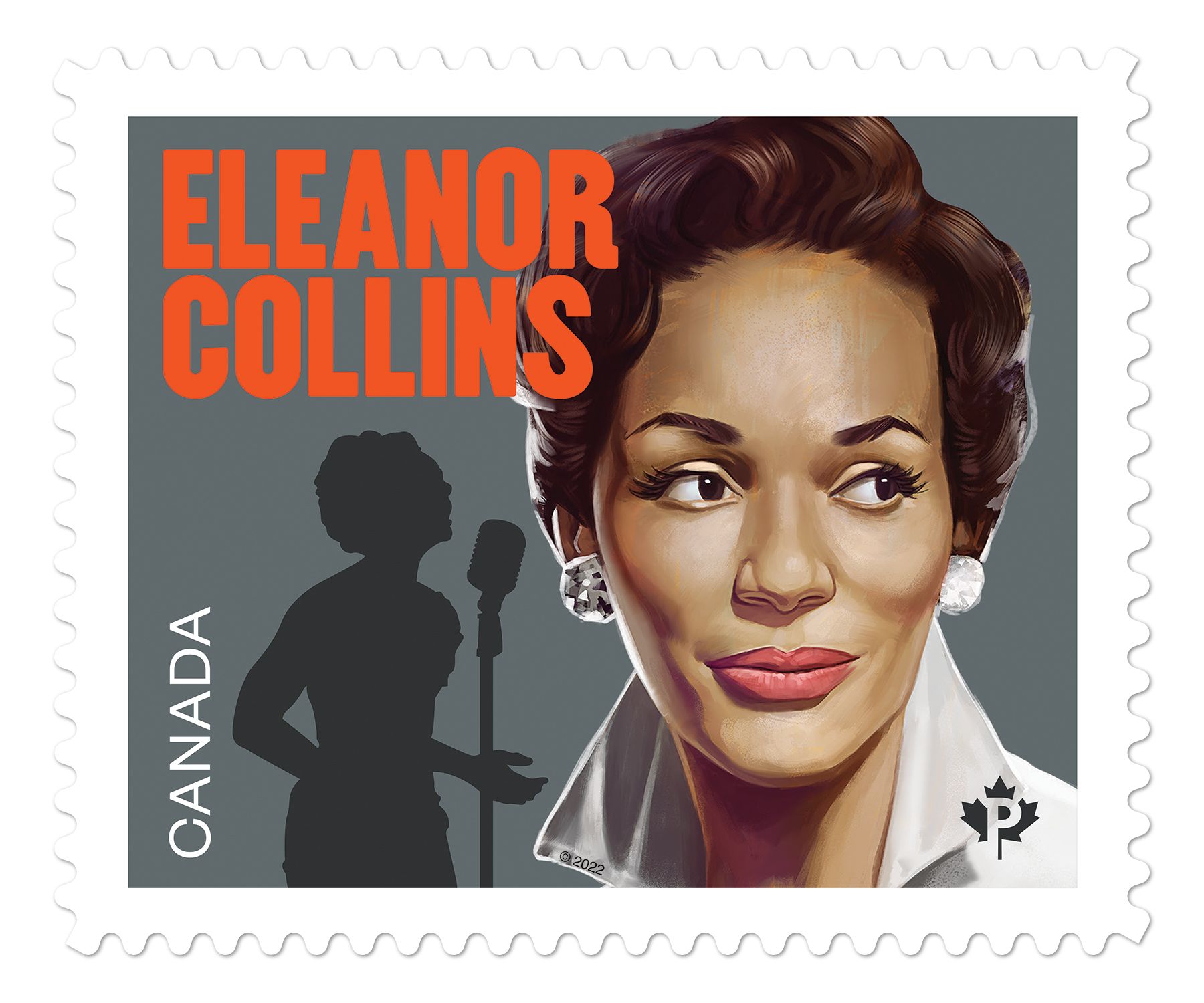
Breaking Barriers in Music and Television
As Black History Month 2025 unfolds, the legacy of Eleanor Collins, Vancouver’s First Lady of Jazz, remains a defining moment in Canada’s musical and cultural history. Collins, an accomplished singer, civic leader, and television pioneer, was the first Black Canadian woman to host a national television show.
Her groundbreaking work in music, media, and social advocacy transformed Canadian entertainment and laid the foundation for generations of Black artists to follow.
“In a time when representation was scarce, Eleanor Collins shattered expectations,” says Marcus Mosely, jazz musician and Black Canadian historian. “She not only had the voice and elegance to lead on stage but also the strength to fight for inclusivity in the arts.”
Early Life: From Alberta to Stardom
Eleanor Collins was born Elnora Ruth Proctor in 1919 in Edmonton, Alberta, to Black and Creole Indian parents who were among 1,000 Black pioneers from Oklahoma who settled in the Canadian prairies. Growing up, she demonstrated an extraordinary ear for music, a gift that would guide her career.
At 15 years old, Collins won a talent competition, an early indication of her abilities. However, her journey would not be without its challenges.
“Being Black and female in the 1930s and 1940s meant that doors didn’t just open for you,” explains Melanie Florence, author of The Meaning of Home: A History of Black Canadians. “Eleanor Collins had to force them open with her talent and perseverance.”
Moving to Vancouver and Entering the CBC
In 1939, Collins moved to Vancouver, where she met her husband, Richard (Dick) Collins. While raising their four children, she took on work as a studio musician for CBC Radio in 1945, helping to supplement the family’s income.
Her career took off when she became the featured vocalist in Ray Norris’ jazz quintet. Their show, Serenade in Rhythm, was a major hit, even being broadcast internationally to Canadian troops in Europe through CBC Radio International.
“She had this unique ability to make every note mean something,” says Michael Fraser, a Vancouver jazz historian. “Her phrasing, her elegance—it was all pure jazz.”
Television’s First Black Woman Host
In 1955, Collins made history when she was given her own CBC TV show, The Eleanor Show. The summer series was so well-received that CBC later brought it back in 1964 under the title Eleanor.
“At a time when even Black background actors were rare on television, here was Eleanor Collins—headlining a national series,” says Cassandra Henry, a media studies professor at Ryerson University. “She set a precedent for every Black performer who came after her.”
Her show came nearly a decade before Diahann Carroll’s Julia (1968), marking Collins as the first Black artist in North America to host a national music variety show.
“Eleanor had the kind of presence that made people forget about race and just see excellence,” said Ron Small, a CBC producer from the 1960s. “And that, in itself, was revolutionary.”
Legacy in Music and Activism
Beyond television, Collins remained a sought-after live performer. She recorded songs for She-Bop, a historic Canadian album celebrating female musicians.
“She embodied the essence of jazz,” says Daphne Richardson, a contemporary Canadian jazz vocalist. “Her control, her effortless improvisation—she was way ahead of her time.”
But Eleanor Collins was more than just a singer; she was also an activist for racial equality and representation in the arts. In the late 1980s, she was featured in the documentary Hymn to Freedom: On This Rock, which highlighted the struggles and triumphs of Black Canadians in music.
“She was outspoken about the racism she faced,” explains Sharon Taylor, a diversity consultant for Canadian Heritage. “Eleanor Collins never let it define her, but she also never ignored it. She used her platform to speak about it.”
Honors and Recognition
By the late 1980s, Collins was recognized as a living legend, with numerous organizations seeking to honor her contributions to music and social progress.
She received:
- The Centennial Distinguished Pioneer Award (1986)
- ACTRA’s Sam Payne Award
- Induction into the BC Entertainment Hall of Fame
- Black Canadian Awards from the Toronto Black Diversity Network
- Black Women in Jazz Award (Atlanta)
In 2014, at the age of 94, Collins made a surprise appearance at Marcus Mosely’s Black History Month concert, where she performed live to a standing ovation.
“I had chills,” says Jean Paulé, a longtime fan. “Here she was, in her nineties, still as commanding as ever.”
Eleanor Collins in Black History 2025
Eleanor Collins’ contributions to Canadian music, television, and civil rights continue to shape the Black Canadian artistic landscape.
“She paved the way for artists like me,” says Kellylee Evans, a Juno-winning jazz singer. “If Eleanor hadn’t done what she did, I don’t know where we’d be today.”
In a time when representation remains a crucial issue, Collins’ life and career remind us that the fight for visibility, excellence, and justice is ongoing.
“Her legacy is not just about being first,” says Desmond Cole, activist and author of The Skin We’re In. “It’s about being excellent in a world that told her she couldn’t be.”
As Black History Month 2025 honors trailblazers, Eleanor Collins’ name stands tall among those who changed Canadian history—one note at a time.
References
- CBC Archives, Eleanor Collins: The First Lady of Jazz
- Ryerson University, Media Representation in 20th Century Canada
- Interviews with Marcus Mosely, Cassandra Henry, and Kellylee Evans
- ACTRA Awards Archives, Sam Payne Award Recipients
- Toronto Black Diversity Network, Black Canadian Awards Honorees
Follow Canada News Media
Get the day's top Canadian stories and our two daily 60-second news videos wherever you scroll.