

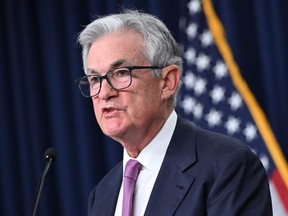
WASHINGTON — The United States Federal Reserve raised its key interest rate Wednesday for the 11th time in 17 months, a streak of hikes that are intended to curb inflation but that also carry the risk of going too far and triggering a recession.
Some Fed officials have said they worry that the still-brisk pace of job growth will lead workers to demand higher pay to make up for two years of inflationary prices. Sharp wage gains can perpetuate inflation if companies respond by raising prices for their customers.
The steady easing of inflation pressures has lifted hopes that the Fed can pull off a difficult “soft landing,” in which its rate hikes would continue to cool inflation without sending the economy tumbling into a painful recession.
Economists at Goldman Sachs Inc. have downgraded the likelihood of recession to just 20 per cent, from 35 per cent earlier this year. Those at Deutsche Bank, among the first large banks to forecast a recession, have also been encouraged by the economy’s direction, though they still expect a downturn later this year.
Hiring has remained healthy, with employers having added 209,000 jobs in June, with the jobless rate reaching an ultra-low 3.6 per cent. That’s about where it was when the Fed began raising rates in March 2022 — a sign of economic resilience that almost no one had foreseen.
Year-over-year inflation in June was three per cent, according to the government, down sharply from a peak of 9.1 per cent in June 2022. One cautionary note is that an inflation measure preferred by the Fed, which excludes volatile food and energy costs, was still up 4.6 per cent in May from a year earlier.
When the Fed’s policymakers last met in June, they signalled that they expected to raise rates twice more. By the time they meet again Sept. 19-20, they will have much more economic data in hand: Two more inflation reports, two reports on hiring and unemployment and updated figures on consumer spending and wages. Some economists think the Fed might decide to forgo a rate increase in September before weighing a possible hike at its meeting in November.
Other experts say they think the recent mild inflation readings can be sustained. Rental cost increases, which have already fallen, should drop further as more apartment buildings are completed.
Though the Fed began tightening credit before central banks in many other developed countries did, most others are now following suit. The European Central Bank is expected to announce its own quarter-point rate hike on Thursday. Though inflation has declined in the 20 countries that use the euro, it remains higher there than in the United States.
On Friday, the U.S. government will release fresh data on consumer spending in June and an update on the Fed’s preferred inflation gauge. The inflation measure is expected to slow to just three per cent compared with a year earlier. That would match the figure most recently reported in the government’s better-known consumer price index. And it would be down sharply from a 3.8 per cent year-over-year increase in May.